


 Kashifa Jafar
Technology Writer & Contributor
Kashifa Jafar is a technology writer and contributor at FutureTechExpert with 4+ years of experience in technology writing and content creation.
Read Full Bio of Author →
Kashifa Jafar
Technology Writer & Contributor
Kashifa Jafar is a technology writer and contributor at FutureTechExpert with 4+ years of experience in technology writing and content creation.
Read Full Bio of Author →
 Sameena Begum
Health, Technology & Digital Content Reviewer
Sameena reviews selected health, wellness, technology, and digital content for clarity, factual presentation, and reader usefulness.
Read Full Bio of Reviewer →
Sameena Begum
Health, Technology & Digital Content Reviewer
Sameena reviews selected health, wellness, technology, and digital content for clarity, factual presentation, and reader usefulness.
Read Full Bio of Reviewer →
The Class of 2026 is capitalising on the favourable employment outlook that puts businesses more in need of entry-level tech talent in an era of cloud, AI, data, and cybersecurity. Even better is that an increasing number of tech jobs don’t always need the traditional computer science degree to get your foot in the door and land a good, stable pay. Able learners willing to put in the effort can get the necessary skills, certifications, and hands-on experience to start a serious long-term career in tech now.
Whether you just graduated from university, are looking to switch careers, or you‘re entirely self-taught and learning on your own, this article and list has all the best entry level jobs in tech that pay the most money, the skills you‘ll need, the job salaries and the fastest-growing careers in the tech industry.
Students exploring the tech industry often research the best-paying technology careers to identify high-growth opportunities for the future.
Why Entry-Level Tech Careers Are Growing in 2026
Several trends are driving demand:
- AI use cases in various industries
- Migration to cloud projects
- Rising incidences of hackers, malicious worms/probes, etc
- Business decisions based on data
- Development of remote work infrastructure.
They require capable professionals to support said technologies, providing thousands of incentives for novices.
Strong analytical thinking and technical problem-solving can help beginners prepare for data science and analytics careers in modern businesses.
 This article is part of
Paying Jobs in Technology Guide
Table of Contents
High Paying Entry-Level Tech Jobs
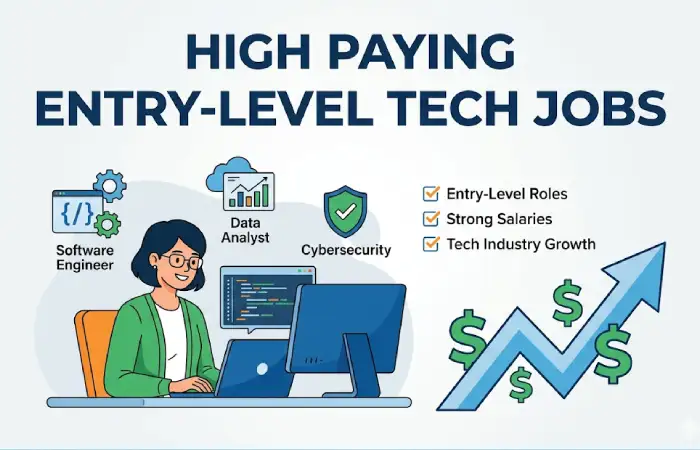
Within the tech industry, a few of the highest paying entry level jobs are IT security, cloud computing, data analytics, and software development. Here are just a few examples of how the industry certainly has some sweet entry level jobs with high pay and plenty of opportunity.
Beginners entering the industry may find opportunities through remote and freelance technology careers that help build practical experience.
Top Entry-Level Technology Careers Comparison (2026)
| Job Role | Average US Salary | Degree Required | Growth Outlook | Beginner Friendly |
| Cybersecurity Analyst | $78,000 | No | Very High | Yes |
| Cloud Support Associate | $75,000 | No | Very High | Yes |
| Data Analyst | $72,000 | Preferred | High | Yes |
| IT Support Specialist | $58,000 | No | Moderate | Very High |
| QA Tester | $68,000 | No | High | Yes |
| Junior Web Developer | $70,000 | No | High | Moderate |
| Help Desk Technician | $52,000 | No | Stable | Very High |
| Technical Support Engineer | $74,000 | No | High | Yes |
Many beginners interested in automation and intelligent systems eventually transition into AI and machine learning careers after building foundational technical skills.
Tech Jobs Without a Computer Science Degree
The common misconception is that all technology careers require 4-year degrees.
Many employers now prioritise:
- Skills-based hiring
- Industry certifications
- Portfolio projects
- Practical experience
Best Degree-Free Tech Careers
| Career | Recommended Certification |
| IT Support | Google IT Support Professional Certificate |
| Cybersecurity | CompTIA Security+ |
| Cloud Computing | AWS Certified Cloud Practitioner |
| Data Analytics | Google Data Analytics Certificate |
| Web Development | Meta Front-End Developer Certificate |
| QA Testing | ISTQB Foundation Certification |
When going in for interview, candidates who establish real world projects perform better than degree holders.
Entry-level professionals can strengthen their digital protection knowledge by exploring opportunities in cybersecuri… careers across multiple industries.
Beginner-Friendly IT Careers
For someone who‘s totally new to everything technical this group may be the easiest to get started with.
Recommended Starting Careers
- Help Desk Technician
Responsibilities:
- Troubleshoot user issues
- Configure devices
- Reset accounts
- Install software
Required Skills:
- Basic networking
- Windows and Linux fundamentals
- Customer service
- IT Support Specialist
Responsibilities:
- Manage business systems
- Resolve technical problems
- Support remote teams
Advantages:
- Low entry barriers
- Excellent career progression
- High demand globally
- Junior QA Tester
Responsibilities:
- Test applications
- Report bugs
- Verify software functionality
Why Beginners Like It:
- Minimal coding required
- Strong remote opportunities
- Pathway into software engineering
Exploring emerging technology careers can help newcomers identify fast-growing fields.
Best Online Courses for Tech Careers
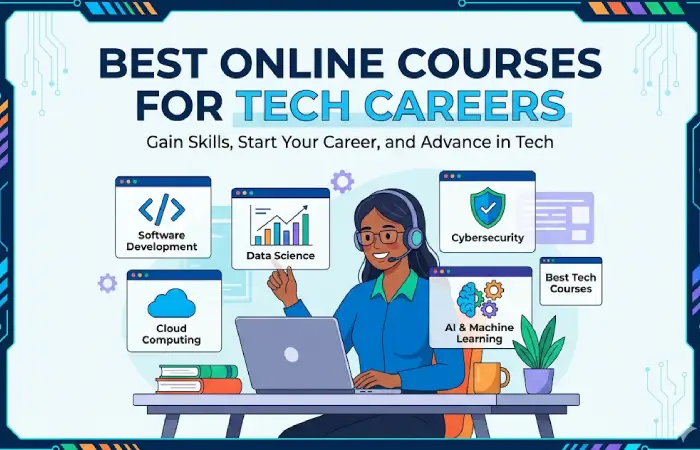
Studying online can a shortcut and cheaper way of obtaining a education than learning in a traditional setting.
Foundational technology certifications and education programs can improve employability for entry-level candidates.
Top Technology Learning Platforms
| Platform | Best For | Key Features | Pricing Model | Official Resource |
| Coursera | Professional Certificates & University Courses | Courses from top universities & companies, career certificates, guided projects | Free courses + Paid certificates | Visit Coursera |
| Udemy | Affordable Skill-Based Learning | Large course library, lifetime access, & practical tech training | One-time course purchases | Visit Udemy |
| edX | University-Level Education | Courses from leading universities, MicroBachelors, & MicroMasters | Free audit + Paid certificates | Visit edX |
| LinkedIn Learning | Professional Development | Business, technology, & creative courses with LinkedIn integration | Monthly subscription | Visit LinkedIn Learning |
| Pluralsight | IT, Cloud & Cybersecurity | Skill assessments, certification paths, & hands-on labs | Subscription | Visit Pluralsight |
| Codecademy | Programming & Web Development | Interactive coding exercises & career paths | Free + Pro plans | Visit Codecademy |
| freeCodeCamp | Free Coding Education | Project-based learning, certifications, & coding challenges | Completely free | Visit freeCodeCamp |
| DataCamp | Data Science & Analytics | Python, SQL, AI, & machine learning tracks | Subscription | Visit DataCamp |
| Skillshare | Creative & Digital Skills | Short classes on design, productivity, & tech topics | Subscription | Visit Skillshare |
| Khan Academy | Foundations & Computer Science Basics | Beginner-friendly lessons in computing, math, & science | Free | Visit Khan Academy |
Most Valuable Beginner Certifications
| Certification | Career Path |
| Google IT Support | IT Support |
| AWS Cloud Practitioner | Cloud Computing |
| CompTIA A+ | Technical Support |
| CompTIA Security+ | Cybersecurity |
| Google Data Analytics | Data Analysis |
| Microsoft Azure Fundamentals | Cloud Computing |
Many aspiring programmers begin their journey through soft… development careers to gain practical coding and application-building experience.
Fastest Growing Technology Jobs
The technology is changing so fast that it creates so many opportunities a year.
Fastest-Growing Careers (2026)
| Career | Growth Rate | Industry Demand |
| AI Operations Specialist | Very High | Extremely High |
| Cloud Engineer | Very High | Extremely High |
| Cybersecurity Analyst | Very High | Extremely High |
| Data Analyst | High | High |
| DevOps Engineer | High | High |
| Automation Specialist | High | Growing |
| Business Intelligence Analyst | High | Growing |
These positions provide excellent long-run job security and salary growth.
Developing strong salary and career planning strategies can support long-term professional growth.
Recommended Career Roadmap for Beginners
Month 1–2
- Learn computer fundamentals
- Understand networking basics
- Explore different tech career paths
3–4 Months
- Complete beginner certification
- Build hands-on projects
- Create LinkedIn profile
Month 5–6
- Develop portfolio
- Practice interview questions
- Apply for internships and junior roles
Month 7–12
- Earn advanced certification
- Gain practical experience
- Specialize in a technology niche
Students interested in infrastructure and networking often pursue cloud computing careers to work with scalable digital platforms.
FAQ
What is the best entry-level tech career in 2026?
Cybersecurity Analyst, Cloud Support Associate and Data Analyst, are among the best entry level technology careers due to their highly demand and good pay.
Can I start a tech career without a degree?
Yes. A good many employers value credentials, a portfolio and experience working in the field far more than a degree.
Which tech field grows fastest?
Currently the one being-grows being most are the Artifical Intelligence, Cloud Computing and the Cybersecurity.
How long does it take to get an entry-level tech job?
Most beginners are ‘prepared for work’ 3–12 months after starting with focused study and courses.
What certification should beginners earn first?
For many people, the Google IT Support Professional Certificate and the CompTIA A+ are good points to start.
Conclusion
The tech sector is now more so, a sector in which entry-level positions are ever more available for beginners. From security, to cloud, to data analysis to IT support, entering the tech industry by getting tech certifications, online courses and experience has never been easier. With a focus on practical skills and a portfolio, choosing an ever-expanding specialization, and proactive job seeking, you can start a successful tech career without even having a degree in computer science.
Kashifa Jafar is a technology writer and contributor at FutureTechExpert with 4+ years of experience in technology writing and content creation.
Read Full Bio of Author →Sameena reviews selected health, wellness, technology, and digital content for clarity, factual presentation, and reader usefulness.
Read Full Bio of Reviewer →