

Last Updated: June 22, 2026
‘Future Consumer Technology Predictions’ play an essential role in a rapidly evolving world where AI, connected gadgets, automation and immersive technologies are changing people ‘s daily lives, how they work, talk, buy and play.
As consumer technology continues to develop rapidly into 2026, it is AI-based products, smart home systems, wearable computing and spatial computing that dominate the pace of progress. According to industry experts, we can expect it not to be about isolated gizmos anymore but intelligent systems.
Table of Contents
Key Technologies Shaping the Future
Some of the new-generation innovative technologies that are being pushed that will shape the future of user experiences as we enter a new generation are:
- Agentic AI
Beyond the ability to run isolated commands, agentic AI agents will be able to categorise, recommend and carryout multi-part business procedures. Looking ahead, our industry experts predict AI agents helping us with daily chores like managing our calendars and shopping, planning travel etc. Organising everyday life.
- Spatial Computing
Mixed-reality devices (such as Augmented Reality glasses) are increasingly making their way into peoples’ lives. Consumers eager for more, are awaiting future gadgets capable of delivering immersive shopping, education, and entertainment experiences.
- Edge AI
Nowadays, more and more data is handled locally instead of being uploaded to cloud servers. As a consequence, privacy is increased, longer delays are avoided and decisions can be made more quickly. Smartphones, laptops and even wearables as well as home appliances are already using this technique.
- AIoT (Artificial Intelligence of Things)
The integration of AI and IoT makes intelligent systems in which interconnected devices learn user activity and execute tasks automatically. AIoT will function in intelligent house-hold, healthcare monitoring, and energy control systems.
AI, IoT, and Automation Trends
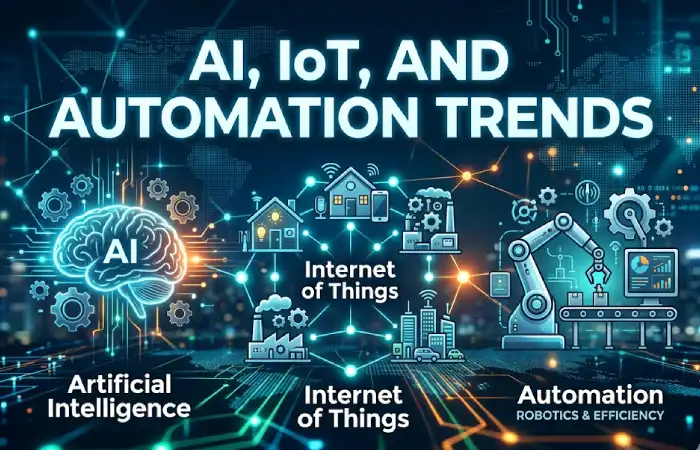
AI, IoT, and automation are merging into one intelligent technology stack.
Major Trends for 2026 and Beyond
| Trend | Consumer Impact | Growth Potential |
| AI Personal Agents | Automated scheduling, shopping, and support | Very High |
| Smart Home Automation | Energy savings and convenience | High |
| Autonomous Devices | Self-managing appliances and robots | High |
| Predictive Healthcare Wearables | Early health monitoring | Very High |
| AI-Powered Retail Experiences | Personalized shopping journeys | High |
According to recently research consumer‘s confidence in AI agents is increasing, many consumers agree to let AI agents compare products, arrange subscriptions, take care of routine, ordinary work.
Smart Homes Become Truly Intelligent
In the future, smart homes will no longer rely on voice commands. Instead, the AI system will elicit preferences from the user, automates power usage, security, and control of built-in appliances.
Interoperability standards like Matter that are being adopted at scale are enabling inter-operability to be less of a problem as it used to be.
Consumer Electronics Innovations to Watch
Absolutely not, the consumer electronics industry is turning away from small updates on existing electronic devices and toward true innovation.
Top Innovations Expected by 2030
| Technology | Current Status (2026) | Future Outlook |
| AI Smartphones | Early mainstream adoption | Universal standard |
| Smart Glasses | Emerging market | Mass adoption |
| AI PCs | Rapid growth | Enterprise standard |
| Wearable Health Devices | Advanced monitoring | Predictive healthcare |
| Home Robots | Limited adoption | Broader consumer use |
AI-Native Devices
The trend among manufacturers is moving towards using AI, embedded within hardware rather than on the cloud. This allows:
- Faster processing
- Better privacy
- Personalized experiences
- Improved battery efficiency
AI-native mobile phones and laptops are anticipated to provide next upgrade cycle to consumers.
Smart Glasses and Spatial Computing
Smart glasses remain predicted to be the next major mass media platform after smartphones. With sleek new designs, improved displays and intelligent AI, AR glasses will go mainstream.
Home Robotics
Moves toward the “physical” side of AI and robotics are receiving a lot of financial attention as hardware costs fall and AI performance improves. Household robots of the future will likely help with cleaning, security, caregiving, and regular chores.
Challenges Facing Future Technology Adoption
The future is seemingly bright but there could remain a few barriers which might prevent its being adopted.
Technology Adoption Challenges
| Challenge | Impact | Possible Solution |
| Privacy Concerns | Consumer hesitation | Stronger data controls |
| High Costs | Limited accessibility | Economies of scale |
| Security Risks | Vulnerability to attacks | AI governance frameworks |
| Infrastructure Limitations | Slower deployment | Cloud and edge upgrades |
| Regulatory Compliance | Market restrictions | Standardized regulations |
Privacy and Security
The more personal data remain stored and accessed the greater the level of concern about privacy. Buyers want to know what is being done with their personal details and expect transparency of processes. Security and privacy will soon become essential purchase criteria rather an interesting option.
Supply Chain Challenges
Manufacturers however, remain still confronted by supply chain disruptions, increasing component costs and macroeconomic instability which may slow innovation and increase products costs to the end consumer.
How Investors Can Prepare for Future Tech Trends
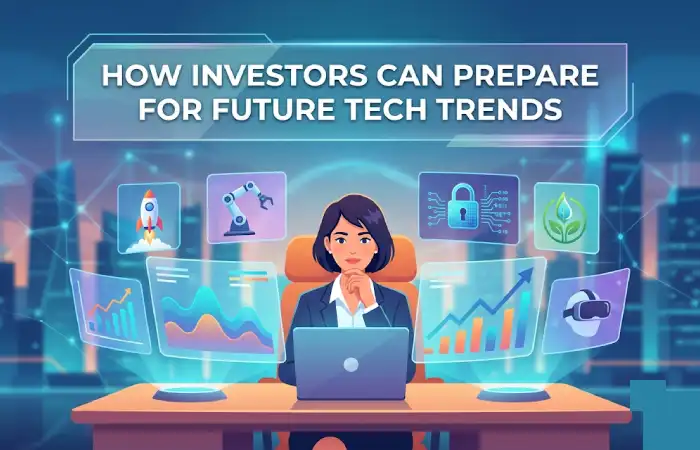
Other insights for the believers in technology:
Future Technology Investment Areas
| Sector | Opportunity Level | Why It Matters |
| Artificial Intelligence | Very High | Foundation of future products |
| Semiconductor Industry | Very High | Powers AI hardware |
| Smart Home Technology | High | Growing adoption |
| Robotics & Automation | High | Expanding use cases |
| Wearable Technology | High | Health-focused innovation |
| Spatial Computing | Emerging | Potential next computing platform |
Key Indicators Investors Should Monitor
- AI hardware demand
- Smart device adoption rates
- Semiconductor manufacturing capacity
- Wearable device growth
- AR/VR ecosystem expansion
- Consumer spending patterns
Most industry analysts see AI infrastructure, robotics, semiconductors, and intelligent consumer devices as arguably the best growth sectors for the 2000s.
Consumer Technology Comparison: Today vs Future
| Category | Today (2026) | Future Prediction |
| Smartphones | AI-assisted | Fully AI-native |
| Smart Homes | Connected devices | Autonomous ecosystems |
| Wearables | Activity tracking | Predictive healthcare |
| Shopping | Personalized recommendations | AI purchasing agents |
| Computing | Screen-based interfaces | Spatial computing environments |
| Robotics | Specialized tasks | Multi-purpose household assistants |
Resources for Further Research
| Resource | Focus Area | Link |
| IEEE Technology Predictions | Future technologies | https://www.computer.org |
| IBM Think | AI trends | https://www.ibm.com/think |
| TechInsights | Consumer electronics forecasts | https://www.techinsights.com |
| TechTarget | Emerging technologies | https://www.techtarget.com |
| CES | Consumer technology innovations | https://www.ces.tech |
FAQ
What lies ahead for consumer technology?
The consumer technology of the future will remain influenced by the AI enabled experiences, intelligent ecosystems, wearable computing, spatial computing and self-driving devices that are capable of making current lives easier.
Will AI Put an End to Use of Smartphones?
AI is probably not going to kill the smart phone just yet. Instead, smart phones will be AI native, but they‘ll remain used along side wearables and smart glasses.
What major trends will have the most influence in the technology space after 2026?
Major trends are agentic AI, smart glasses, home robots, edge AI, wearable devices for anticipatory health intervention, and AI for automation.
Worth investing in the future of technology?
Interestingly, many investors have identified AI, semiconductors, robotics, and smart devices as a sustained investment theme; however, investment decisions remain a matter of risk appetite.
Conclusion
Looking ahead, the story for consumer technology is one of a realm where less visible, customer experience management is the new norm and machines work jointly to deliver the ultimate consumer experience. Whether it is through autonomous assistants, highly secure intelligent homes, wearable health care devices or spatial computing, future consumer technology is all about convenience, personal experiences and highly capable, intentionally invisible automation.
Despite future challenges such as privacy, security and pricing, the long term direction for consumer technology is unmistakably that it will continue to transform from interconnected devices to intelligent ecosystems that anticipate what we want and need, often before we realize it ourselves. Companies, consumers and investors who recognize these trends early will be those who capitalize on the innovations of tomorrow.