

Last Updated: August 5, 2026
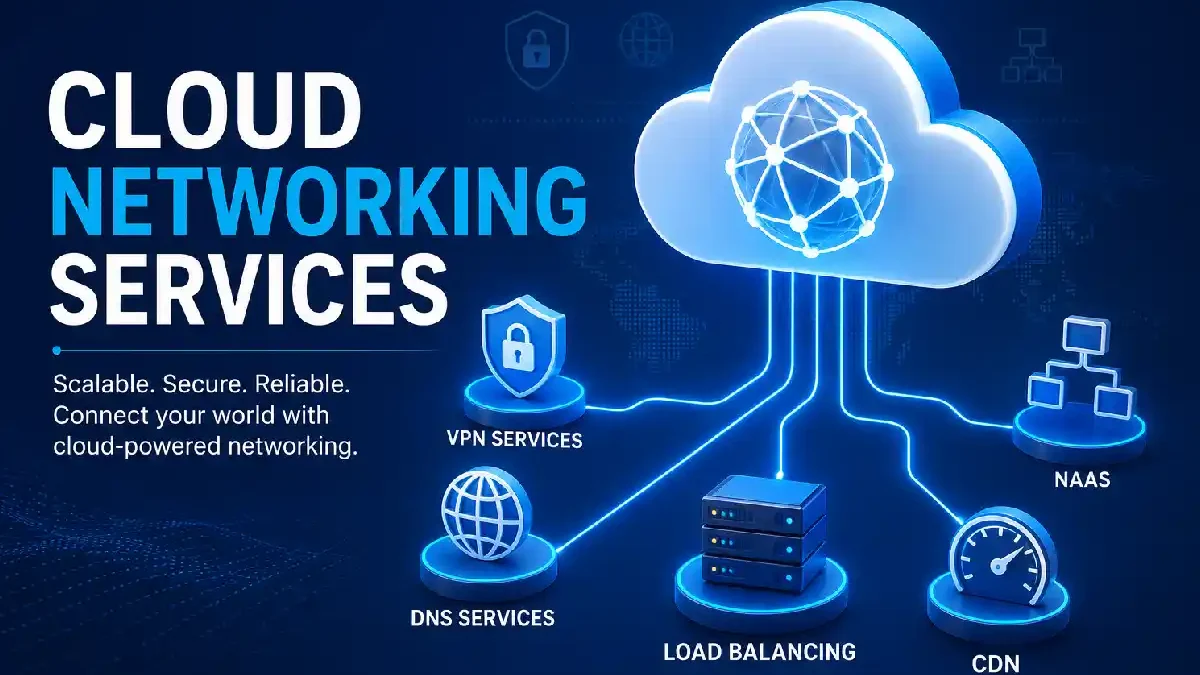
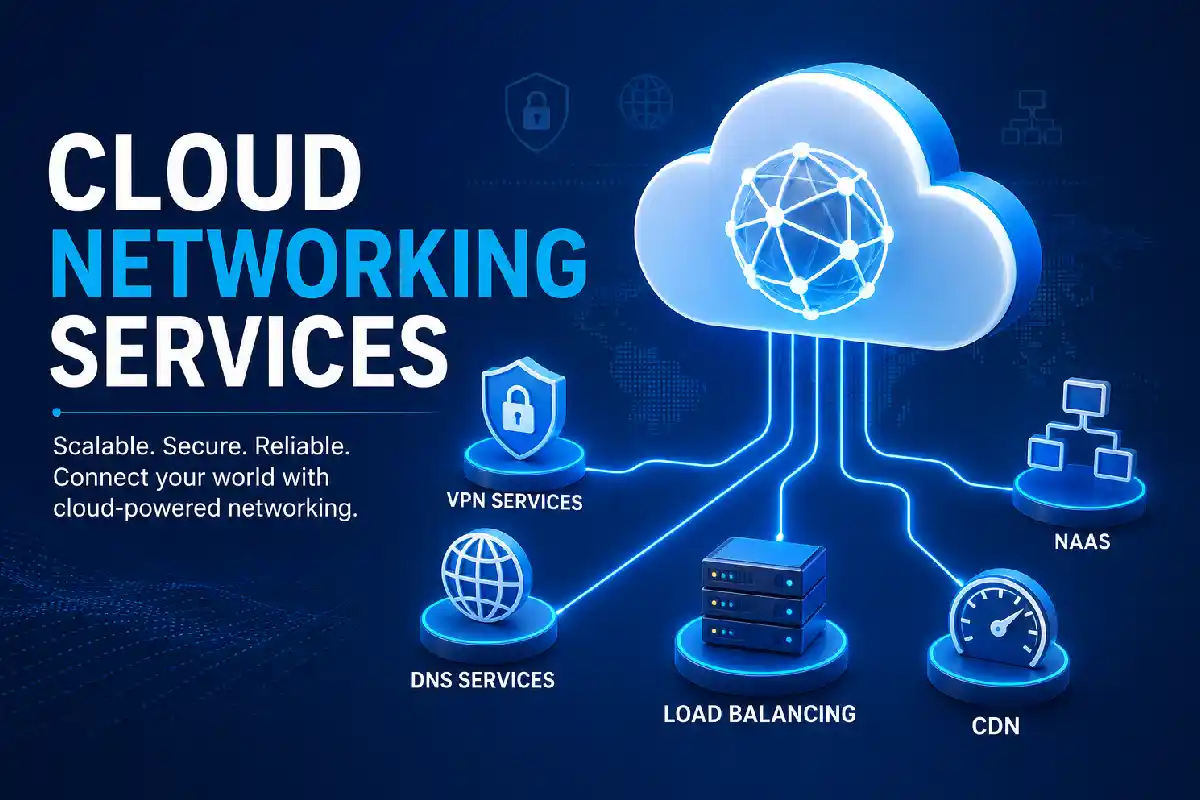
Current cloud networking is used by enterprises to connect users, applications, branch offices and cloud resources securely from anywhere in the world. Cloud managed networking platforms replace costly on-premises hardware with networks that are more flexible and scaleable and secure.
Whether you own a startup, a web shop, or a multinational corporation, cloud networking services make network management easier and lower infrastructure expenses. This article will describe all major cloud networking service available in 2026, how they operate and their decision factors.
For organizations looking to modernize their infrastructure, our cloud networking services help connect users, applications, and distributed environments with greater flexibility and performance. Learn more about cloud networking architecture and deployment strategies.
 This article is part of
Networking Resources
Table of Contents
Network as a Service (NaaS)
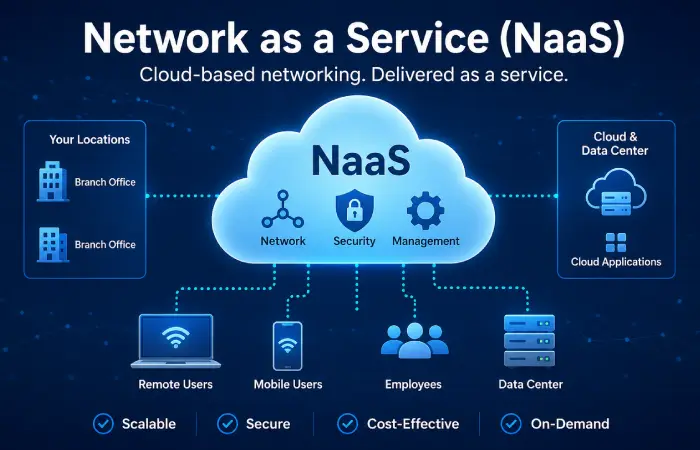
NaaS Network as a Service is a cloud-based networking service model that provides network infrastructure and services using a subscription or pay-as-you go basis. Rather than buying and maintaining physical networking equipment like routers, switches, and firewalls, companies may delegate responsibility of this equipment to a cloud service provider and control it through a single console.
NaaS allows easily deploying networks, reduces capital spending and enables organizations to extend their networks over time without requiring additional hardware equipment. With more companies moving to hybrid and multi-cloud architectures in 2026, NaaS has become an essential part of modern IT architecture.
Instead of purchasing:
- Routers
- Switches
- Firewalls
- WAN Equipment
Businesses simply subscribe to networking capabilities.
Advantages
- Pay-as-you-go pricing
- Easy scalability
- Reduced maintenance
- Faster deployment
- Simplified management
- Built-in monitoring
Best Use Cases
- Hybrid workforce
- Growing businesses
- Multi-location enterprises
- Retail chains
- Healthcare
- Education
As businesses transition from legacy infrastructure, understanding traditional networking limitations in cloud environments can help identify the right migration path and avoid unnecessary operational bottlenecks.
Load Balancing
Load balancer manages the network traffic. Cloud networking service will distribute the network traffic among multiple computers, applications, or cloud resources. The load balancer will not direct all user requests to a central server. It will distribute the requests depending on the availability and current server workload.
As the demand for services in today‘s cloud increases, the need for load balancing occurs. Load balancing is necessary to deal with increasing levels of traffic, to avoid overload on individual servers and ensure that services keep running even during hardware failures or busy time.
How Load Balancing Works
A load balancer is the intermediary between the users and the back-end servers. If a user makes a request to a web site or application, the load balancer will determine if the request will be handled based on server health, capacity and response time and then login the request to the most suitable server.
Traffic Flow:
User Request → Load Balancer → Multiple Backend Servers → Response to User
If a server fails, the load balancer directs traffic away from the failed server to the working servers.
Many enterprises require a combination of on-premises and cloud resources to support compliance, performance, and scalability requirements. Our team can help design hybrid cloud networking solutions for enterprise environments that balance flexibility with security and operational control.
DNS Services
DNS (Domain Name System) Services domain name system services are cloud networking services that translate domain names (made up of the text that usually describes the website address, like www.example.com) into numerical IP addresses so that computers can find websites and applications. Commonly called the “phonebook of the internet”, DNS allows users to surf the net without having to remember 12-word IP references.
The DNS services are provided via cloud dedicated – which are managed by providers who provide faster queries addressing, high-availability, security enhancements, and simple management. In 2026, they are vital for websites, applications, cloud services to stay accessible, secured, and responsive globally.
How DNS Services Work
The DNS then performs a lookup on the address that has been entered into the browser by the user and when an IP address is found the web browser will then connect to the appropriate website.
DNS Lookup Process:
User Enters Domain → DNS Resolver → Authoritative DNS Server → IP Address Returned → Website Loads
This entire process typically takes only a few milliseconds.
For distributed teams and branch locations, we also provide guidance on SD-WAN implementation for secure cloud connectivity, enabling optimized traffic routing and improved application performance across multiple sites.
VPN Services
Virtual Private Network (VPN) Services VPNs are a form of cloud networking, providing an encrypted, secure connection to users, devices, branch offices, and resources in the cloud over the public internet. VPNs secure the data in transit, allowing employees to connect securely to their corporate network from just about anywhere.
Working from home, hybrid office, multi-cloud environment on the rise in 2026 that‘s why VPN service still a must in cloud networking for SMBs and enterprises.
How VPN Services Work
A VPN creates a protected network “tunnel” between your computer and the VPN gateway or cloud network. This encrypted “tunnel” ensures that all of your internet traffic cannot be read by hackers, your ISP or any third party.
Connection Flow:
User Device → Encrypted VPN Tunnel → VPN Gateway → Corporate Network or Cloud Resources
The right application is the encriptor. This encryption can make sure our communication is safe, even users access through public Wi-Fi.
Successful cloud adoption requires careful planning around security, latency, visibility, and compliance. Explore the common cloud networking challenges organizations face and how proactive network design can reduce risk and improve reliability.
Content Delivery Networks (CDNs)
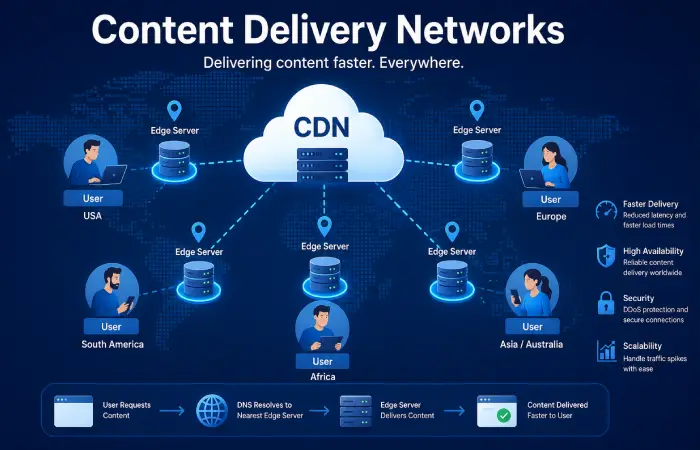
CDN is a cloud-based network service that accelerates the distribution of online content such as websites, applications and videos by caching copies of them across a worldwide network of edge servers and delivering the content more efficiently to the end user. Whenever possible, instead of fetching content from a single origin point, it is retrieved from the nearest CDN node and is distributed closer to the end user.
With the websites and cloud applications offering contents to the global users from all over the world, CDNs had become an important component of cloud networking, providing higher performances, better security and higher availability.
How a CDN Works
In the event a users requests a web page, image or video, the content from the request is looked for on the CDN to see if it has the content cached the edge server closest to the user. If it has the content it will deliver it directly from the edge server. If not it pulls the content from the server, caches it and delivers it to the user.
Content Delivery Process:
User Request → Nearest CDN Edge Server → Cached Content (or Origin Server if Needed) → Fast Content Delivery
This can also help to reduce how far the data has to travel which will give faster response times for the users.
To maximize long-term performance and resilience, we recommend following cloud networking best practices for security, scalability, and monitoring when deploying or expanding cloud-based network infrastructure.
FAQ
What is different about cloud networking services?
Cloud networking services are a collection of internet based, mixing network services that include VPN, DNS, load balancing, firewall and NaaS Network as a Service from that simplify network management and enhanced scalability.
Introduction to Network as a Service (NaaS)?
NaaS, Network-as-a-Service, is a pay-as-you-go model which provides networking infrastructure/services from the cloud rather than owning the physical networking hardware.
What are the advantages of load balancing?
Load balancing is placing traffics on many servers. It enhances the performance, availability, and resilience to host failure of an application.
What is the added value of an infrastructure CDN for the performance of a site?
A content Delivery Network: a CDN caches the content of websites on edge servers around the globe. This means bringing content from the locations closest to users.
Are cloud networking services secure?
Yes. Contemporary cloud networking solutions have encryptions, Zero Trust access, are continuously monitored and have all the compliance features.
Conclusion
Cloud Networking services are revolutionizing the way businesses create, operate and secure their IT networks. Instead of expensive on premise networking hardware, organizations can create scalable, reliable and fast. Networks using cloud networking services like NaaS, Load Balancing, DNS Services, VPN Services and CDNs.