
 Kashifa Jafar
Technology Writer & Contributor
Kashifa Jafar is a technology writer and contributor at FutureTechExpert with 4+ years of experience in technology writing and content creation.
Read Full Bio of Author →
Kashifa Jafar
Technology Writer & Contributor
Kashifa Jafar is a technology writer and contributor at FutureTechExpert with 4+ years of experience in technology writing and content creation.
Read Full Bio of Author →
 Sameena Begum
Health, Technology & Digital Content Reviewer
Sameena reviews selected health, wellness, technology, and digital content for clarity, factual presentation, and reader usefulness.
Read Full Bio of Reviewer →
Sameena Begum
Health, Technology & Digital Content Reviewer
Sameena reviews selected health, wellness, technology, and digital content for clarity, factual presentation, and reader usefulness.
Read Full Bio of Reviewer →
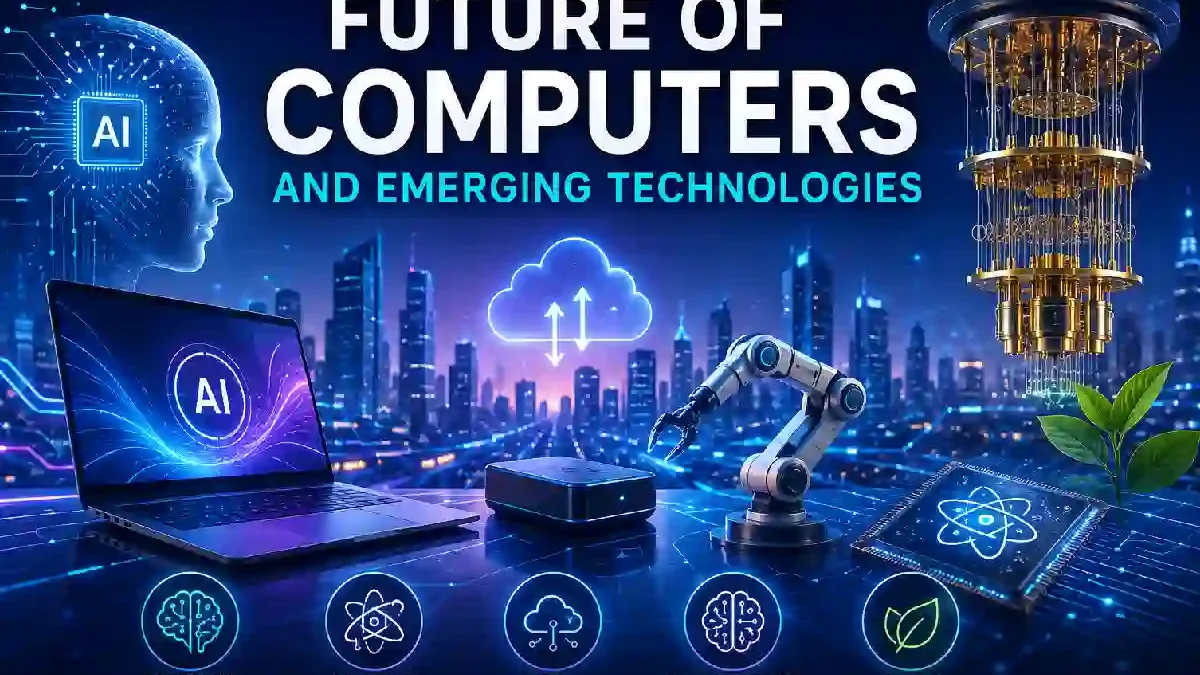
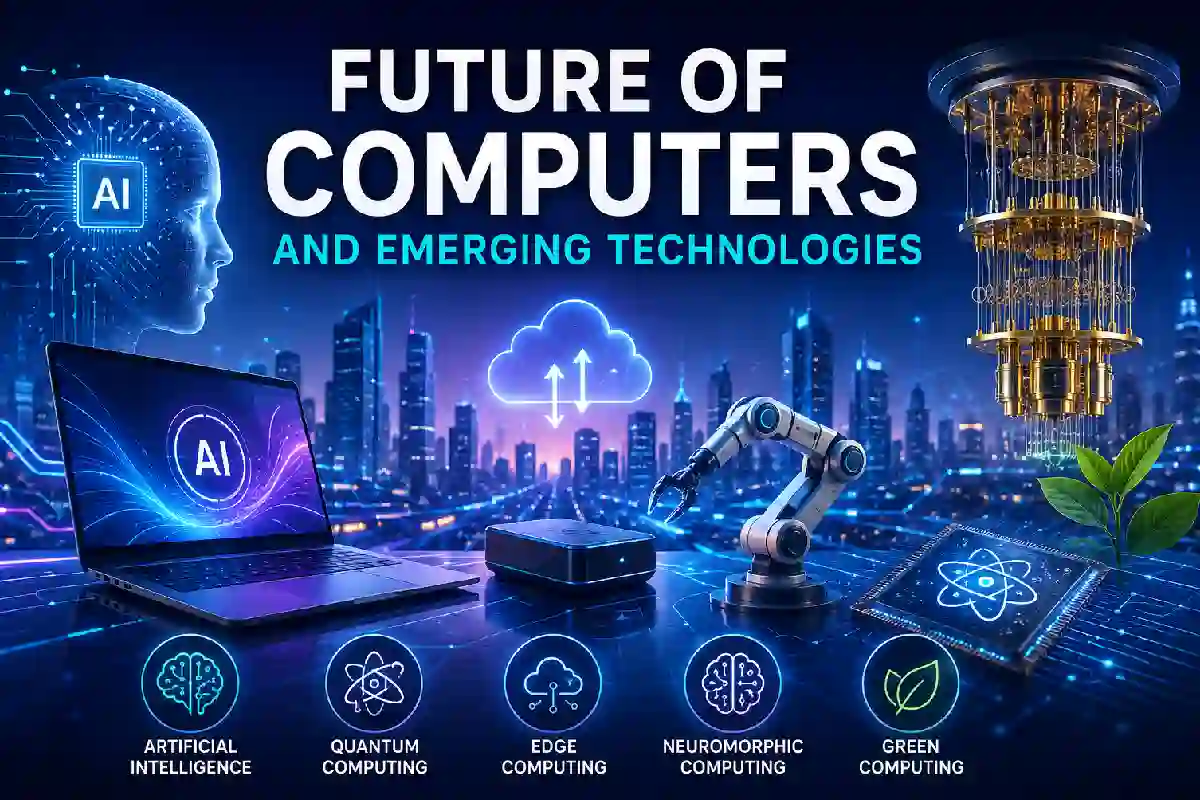
Computers are developing at an unprecedented rate. Artificial intelligence (AI), Quantum computing, Edge computing, Neuromorphic processors, and green computing are the cutting edge of the future of computers and emerging technologies. These technology trends are innovating new ways and helping us to advance various industries by making them more productive, intelligent and environmentally sustainable.
Whoever you are in the end–a student, an IT professional, a business owner or simply a technology buff understanding these technologies will help you get ready for the next generation of computing.
Before exploring future innovations, it’s helpful to understand the types of computers used today, from personal devices to specialized enterprise systems.
 This article is part of
Computers Resources
Table of Contents
Artificial Intelligence Computers
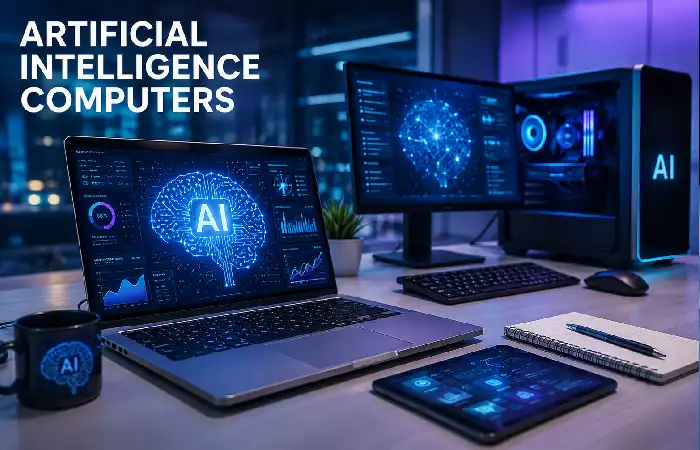
AI computers are built in such a way as to run AI-based tasks faster than a traditional PC. Unlike regular computers that lean heavily on the CPU, AI computers integrate multiple CPUs, graphics processing units (GPUs), and neural network processing units (NPUs) to speed up the process of machine learning, natural language processing, image recognition, and more.
In 2026, More laptops and desktops with AI-acceleration are in use, delivering faster computation, more power-efficient, and better privacy with running AI workload.
Today’s AI PCs can:
- Generate content
- Translate languages
- Edit videos
- Enhance images
- Automate workflows
- Run AI assistants offline
Advantages
- Faster performance
- Better battery optimization
- Improved cybersecurity
- Intelligent automation
- Personalized user experiences
Even as AI-powered devices become more common, personal computers (PCs) will continue evolving with faster processors, smarter software, and improved energy efficiency.
Popular AI Computer Platforms (2026)
| Platform | AI Capability | Best For | Resource |
| Intel AI PC | Local AI processing | Productivity | https://www.intel.com/ |
| AMD Ryzen AI | AI acceleration | Creators | https://www.amd.com/ |
| Apple Silicon | Neural Engine | Professionals | https://www.apple.com/mac/ |
| Qualcomm Snapdragon X | AI laptops | Mobile users | https://www.qualcomm.com/ |
Quantum Computing
Quantum computers work with ‘qubits’ rather than bits, the one zero binary system in traditional computing. This data can be manipulated in ways that traditional computers cannot match: it can solve particular problems in a fraction of the time.
Potential Applications
- Drug discovery
- Climate modeling
- Financial forecasting
- Cryptography
- Logistics optimization
- Scientific simulations
Classical vs Quantum Computing
| Feature | Classical Computer | Quantum Computer |
| Data Unit | Bit | Qubit |
| Speed | Sequential | Massive parallelism |
| Best Use | Everyday tasks | Complex simulations |
| Availability | Widely available | Limited access |
While quantum computing is still in early stages of development, cloud-based quantum computing services, that are increasingly available, have provided researchers and experimenters more opportunities.
High-performance computing will play a major role in scientific research, making it useful to understand the differences between a supercomputer vs mainframe computer.
Edge Computing
Edge computing is a new paradigm of computing that takes processing closer to the source of the data instead of relying on centralized cloud infrastructure. In an edge environment, data can be processed locally or on available nearby edge nodes leading to reduced latency, performance and data privacy improvements.
Already, by 2026, edge computing is used as a foundation technology for cities, transport, industry automation, medicine and IoT.
Examples include:
- Smart factories
- Autonomous vehicles
- IoT devices
- Healthcare monitoring
- Retail automation
- Smart cities
Benefits
- Reduced latency
- Faster response times
- Improved privacy
- Lower bandwidth usage
- Enhanced reliability
As computing becomes more portable, many users still ask whether a desktop vs. laptop comparison favors performance or mobility for future workloads.
Neuromorphic Computing
Neuromorphic computers bring the brain to the machine by replicating its functions through dedicated microprocessors using low energy AI.
Potential use cases include:
- Robotics
- Autonomous systems
- Medical diagnostics
- Smart sensors
- Real-time decision making
And while still in the early days, neuromorphic computing is poised to take over the hardware for AI within the next decade.
Future technologies will expand the applications of different types of computers across healthcare, education, manufacturing, finance, and smart cities.
Green Computing
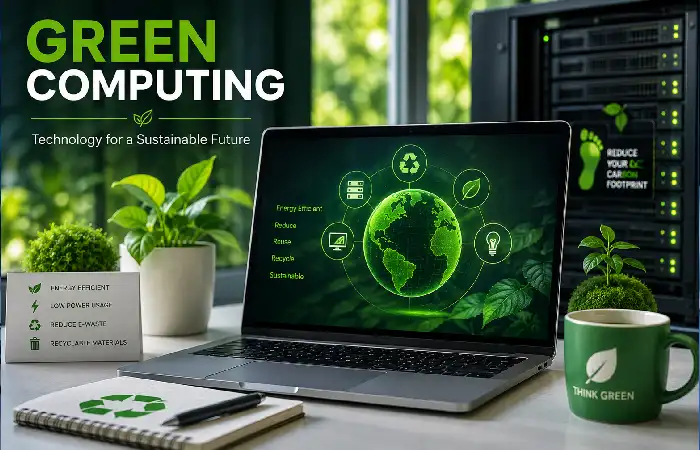
Green computing refers to the environmentally responsible design, use and disposal of computers, servers and related subsystems such as monitors, printers, storage devices and networking and communications systems. The main objectives of green computing are to optimize energy efficiency and to minimize the e-waste produced by the environment.
Given the growth of the cloud computing, artificial intelligence and high performance computing, green computing is certainly an increasingly important solution to techno-environmental balancing.
Green Computing Strategies
- Energy-efficient processors
- Low-power data centers
- Hardware recycling
- Cloud optimization
- Virtualization
- Carbon-aware software development
Organizations with green computing can save operating cost and those can reduce carbon emissions.
The Internet of Things (IoT), autonomous vehicles, and smart homes rely heavily on embedded computers that operate efficiently with minimal power consumption.
Future Trends
The future of computers is fueled by rapid progress in Artificial Intelligence (AI), quantum computing, edge computing, neuromorphic computing and more sustainable technologies. As these technologies reach their full potential, computers will evolve into smarter, more efficient devices deeply integrated in our daily lives.
By 2010, these new technologies are predicted to have transformed industry sectors such as the medical field, financial institutions, education, manufacturing industries, and researchers.
AI-First Computers
The advent of personal computers, laptops and workstations will some with giant new capabilities. AI-enabled personal computers and workstations will be able to automate boring everyday tasks, provide instant help and advice, run more efficiently and effectively and secure our computers better. There will be dedicated hardware such as Neural Processing Units (NPUs) for faster AI computation on devices, better battery life and all the other benefits of AI.
Growth of Quantum Computing
Quantum computing will evolve even further with the help of cloud quantum services. It won‘t entirely displace traditional computer systems, but it will crack really advanced cases such as drug finding, financial modeling, climate science, and encryption. More companies and research heads will be able to utilize quantum computer systems without having to buy the hardware themselves.
Expansion of Edge Computing
As the size of 5G, Internet of Things (IoT) devices and smart cities grows, edge computing will play a more significant role. Edge computing is processing data near the data source, which will reduce delays, increase dependability, and enable use cases such as autonomous cars, industrial automation, and health care.
Neuromorphic Computing Breakthroughs
Powered by a brain-inspired architecture, neural networks are the future of intelligent computing. The next generation of smart machines will be built using neuromorphic chips, which will drastically increase AI speed and learning ability, while providing tremendous energy savings.
Sustainable and Green Computing
Environmental sustainability will continue to be a factor. Manufacturers and cloud providers are making investments in low energy processors, data centers powered by renewable resources, more efficient cooling solutions, and hardware recycling programs. Green computing will enable organizations to improve their bottom line while minimizing their ecological impact.
Frequently Asked Questions (FAQ)
What does the future hold for computers?
In the future, there‘ll be computers enabled with AI, quantum computer, edge computing, neuromorphic chips or processors and green sustainable computing made to enable faster, smarter and efficient computing.
Will they replace our computers?
No. Quantum computers are only useful for certain types of calculations, whereas classical computers are the best choice for general information processing (eg web browsing, work on the computer, playing games).
What are AI computers?
AI computers are computers that have specific hardware that accelerates artificial intelligence work, providing capabilities like off-device AI assistants, image creation, or translating languages in real time.
Significance of edge computing?
Edge computing has several advantages; it reduces latency, enhances privacy, and enables data to be processed near the source. It is suitable for the Internet of Things, Autonomous driving, and Industry 4.0.
What exactly do we mean by ‘green computing’?
Green computing refers to the study and practice of designing, manufacturing, using and disposing computer components, devices and systems to minimize their environmental impact, while improving energy efficiency and other factors.
Conclusion
Computers are revolutionizing how we work, learn, communicate and innovate. Advances in artificial intelligence, quantum computing, edge computing, neuromorphic computing and green computing are delivering smarter, more sustainable computer systems to drive the digital world forward.
Although already gaining popularity such as AI or edge computing, quantum and neuromorphic computing are only just opening the door for some specific new applications that classical computers cannot do efficiently.
Kashifa Jafar is a technology writer and contributor at FutureTechExpert with 4+ years of experience in technology writing and content creation.
Read Full Bio of Author →Sameena reviews selected health, wellness, technology, and digital content for clarity, factual presentation, and reader usefulness.
Read Full Bio of Reviewer →