

Last Updated: September 19, 2026
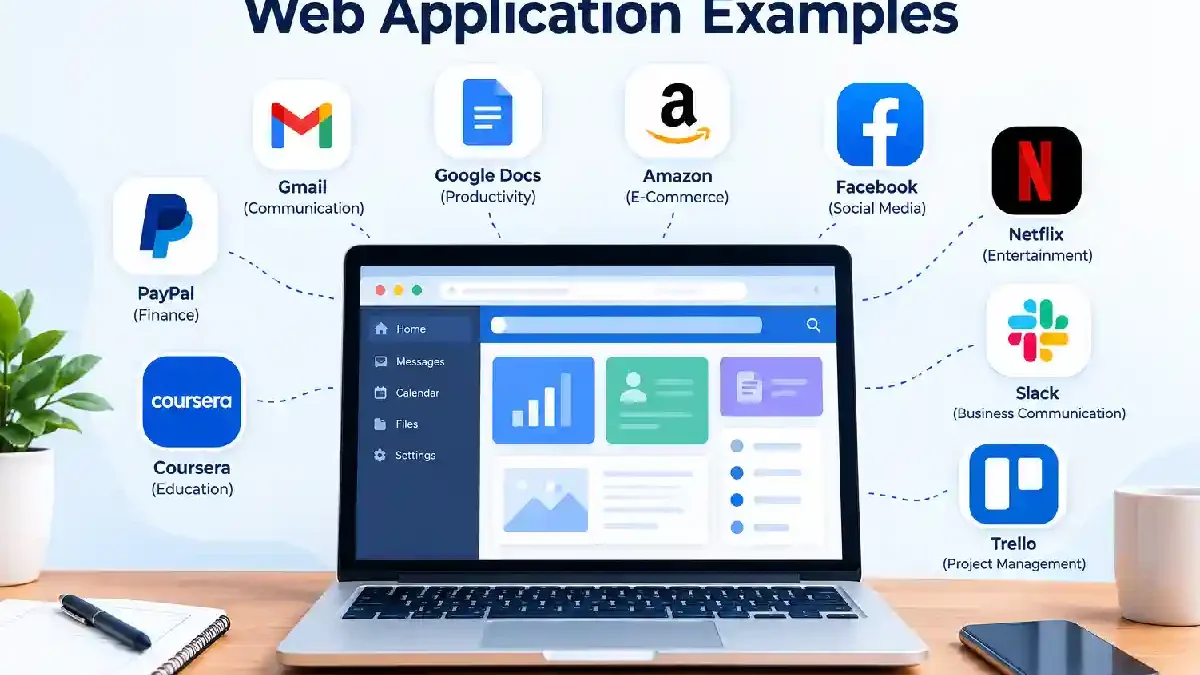
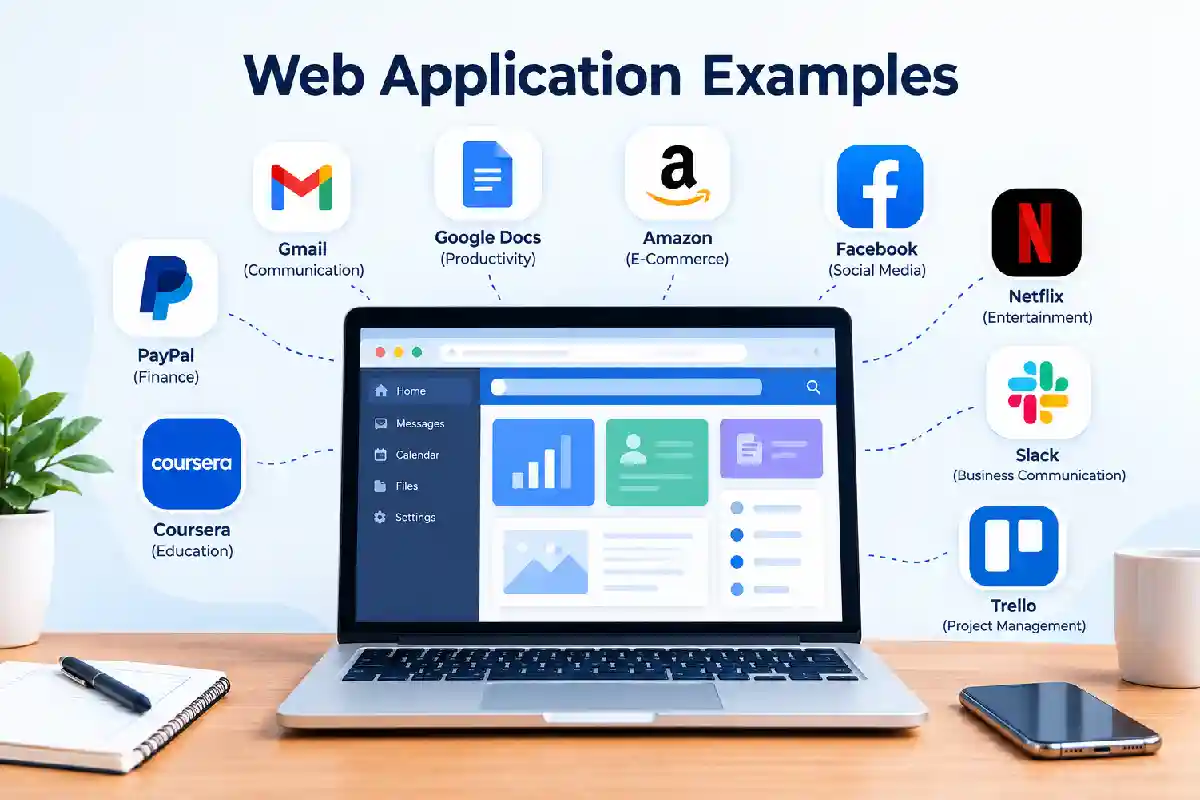
Examples of Web applications are all around us. From using Gmail for your emails, surfing the web with Amazon, creating documents on Google Docs, taking an online class, handling your money through online banking are all examples of a web application.
Web applications are different from regular desktop software; they run in the browser and can be accessed from anywhere the Internet is available. In 2026, the flexibility, scalability and accessibility of web applications have made them the core of any digital business.
In this handout, we cover the most commons examples of web applications used in various industries, and give an overview of how each one enhances our daily lives.
Table of Contents
What Are Examples of Web Applications?
Web application examples are computer software programs that are accessible by a web browser and allows the user to perform a task, access services and interact with data without being obliged to use traditional desktop software programs. Web applications are more interactive service than a simple webpage and give the possibility for every user to login, produce data, buy or sell over the internet, communicate, collaborate and edit data in real time.
Currently, web applications are being implemented by most industries, such as e-commerce, financial, education, healthcare, and business productivity. The usage of web applications has brought us the benefit of being to access these services using whatever device is available and everywhere, and all of the data is stored in secure cloud.
Common Web Application Examples
| Category | Popular Examples | Primary Purpose |
| Gmail, Outlook Web | Communication | |
| Productivity | Google Docs, Notion | Collaboration |
| E-Commerce | Amazon, Shopify | Online Shopping |
| Social Media | Facebook, LinkedIn | Networking |
| Banking | PayPal, Revolut | Financial Services |
| Education | Coursera, Google Classroom | Online Learning |
| Healthcare | Practo, Zocdoc | Telemedicine |
| Entertainment | Netflix, Spotify | Media Streaming |
E-Commerce Web Applications
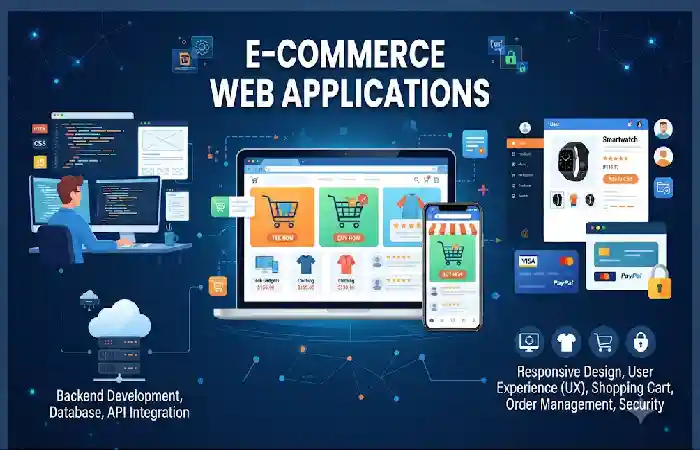
E-commerce web applications are sites available over the internet that enable an organization to sell products or services directly over the internet using a web browser. They offer a set of functionalities that simulate the services found in a physical shop; where users can make searches, compare prices, make purchase orders, make secure payments, check orders status, etc., from any device with an internet connection.
Today, 2026, e-commerce on the net is a major tool for global retail with thousands of daily transactions. All types and sizes of companies rely on web applications to access a worldwide customer base and provide customized services with convenient purchasing method.
Popular Examples
| Application | Main Feature |
| Amazon | Global online marketplace |
| Shopify | E-commerce platform |
| Etsy | Handmade products marketplace |
| WooCommerce | WordPress online stores |
Key Features
- Product catalogs
- Shopping carts
- Secure payment gateways
- Order tracking
- Customer accounts
E-commerce web apps can run around the clock and also provide a means by which companies are able to access the consumers all around the world.
Social Media Web Applications
Social media sites are among the most popular web applications today.
Popular Examples
| Platform | Purpose |
| Social networking | |
| Professional networking | |
| X (Twitter) | Microblogging |
| Instagram Web | Content sharing |
Benefits
- Real-time communication
- Content sharing
- Community building
- Business marketing
Today, social web applications utilize machine learning and personalized recommendations to enhance user interaction through AI-driven news feeds.
Online Banking Web Applications
Financial institutions are becoming more and more sophisticated where the provision of secure digital banking services is concerned.
Popular Examples
| Banking App | Service |
| PayPal | Online payments |
| Stripe Dashboard | Payment management |
| Wise | International transfers |
| Online Banking Portals | Account management |
Features
- Balance monitoring
- Money transfers
- Bill payments
- Fraud detection
- Investment management
Financial web application has used encryption and multi factor authentication to protect the sensitive information.
Educational Web Applications
The evolution of the web interfaces in education has revolutionized the way education is delivered.
Popular Examples
| Platform | Use Case |
| Coursera | Professional courses |
| Udemy | Skill development |
| Google Classroom | School management |
| Khan Academy | Free education |
Benefits
- Self-paced learning
- Virtual classrooms
- Progress tracking
- Certifications
Educational web applications open-up the learning opportunities for students around the world.
Healthcare Web Applications
More and more healthcare providers use application on the web to deliver health services and manage health system.
Popular Examples
| Platform | Function |
| Practo | Appointment booking |
| Zocdoc | Doctor scheduling |
| Talkspace | Online therapy |
| Telemedicine Portals | Remote consultations |
Features
- Online appointments
- Medical records access
- Prescription management
- Video consultations
Web apps in healthcare at work making patient experience more convenient and less time consuming and complex.
Business and Productivity Web Applications
Numerous companies rely on web-based applications that are driven by productivity.
Popular Examples
| Application | Purpose |
| Google Docs | Document collaboration |
| Notion | Workspace management |
| Trello | Project management |
| Slack | Team communication |
Benefits
- Real-time collaboration
- Cloud storage
- Task tracking
- Workflow automation
These applications have become indispensable in the context of remote and hybrid work
Entertainment Web Applications

Multimedia Another example Web applications can be very rich multimedia experiences as show by entertainment sites.
Popular Examples
| Platform | Content Type |
| Netflix | Video streaming |
| Spotify Web Player | Music streaming |
| YouTube | Video sharing |
| Disney+ | Streaming media |
Key Features
- Personalized recommendations
- Multi-device access
- Streaming technology
- Subscription management
Entertainment web apps handle hundreds of thousands of user requests every single day.
Communication Web Applications
Communication web applications allow us to stay in touch with people all over the world.
Popular Examples
| Application | Communication Type |
| Gmail | |
| Outlook Web | |
| Slack | Team messaging |
| Microsoft Teams | Workplace collaboration |
Features
- Instant messaging
- Video conferencing
- File sharing
- Group collaboration
To communicate specific information from one source to another instantly. Use of this form of communication has become a standard to enable real-time communication.
How Web Applications Are Used in Everyday Life
An average internet user spends a few dozens of interactions each day to sign up new desktop web applications.
Daily Activity Examples
| Activity | Web Application Example |
| Sending Email | Gmail |
| Shopping Online | Amazon |
| Watching Movies | Netflix |
| Listening to Music | Spotify |
| Learning New Skills | Coursera |
| Online Banking | PayPal |
| Team Collaboration | Slack |
| Document Editing | Google Docs |
Whether it’s work or play, your web application makes managing everything simple and seamlessly available on every device.
Frequently Asked Questions
What is a web application?
A web application is software that is accessed via a Web browser and these applications provide the user with a flexible way to perform a task, manage data and access services online.
What are the best examples of web applications?
Common indicators of relevance include Gmail, Google documents, Amazon, Netflix, PayPal, Coursera, Slack and Facebook.
What is the difference between a website and a web application?
A web site is only used to display information rather than allow the user to manipulate them, a web application offers the user a chance to play with data such as edit word documents, buy products.
Are web applications secure?
Yes, most websites now use encryption, authentication and implement security updates for the protection of the user.
Why are web applications important?
Offering the advantages of applying their cross platform existence, less maintenance expenses, with everybody at the same time working without delay, together.
Conclusion
The web application examples are everywhere, from shopping (e-commerce) and financial transactions (online banking), to education, health-care, communications and entertainment. With an ever-increasing number of applications in the cloud, artificial intelligence, PWAs and so on, web applications would be more powerful, ubiquitous and business-critical than ever in 2026.