
 Kashifa Jafar
Technology Writer & Contributor
Kashifa Jafar is a technology writer and contributor at FutureTechExpert with 4+ years of experience in technology writing and content creation.
Read Full Bio of Author →
Kashifa Jafar
Technology Writer & Contributor
Kashifa Jafar is a technology writer and contributor at FutureTechExpert with 4+ years of experience in technology writing and content creation.
Read Full Bio of Author →
 Sameena Begum
Health, Technology & Digital Content Reviewer
Sameena reviews selected health, wellness, technology, and digital content for clarity, factual presentation, and reader usefulness.
Read Full Bio of Reviewer →
Sameena Begum
Health, Technology & Digital Content Reviewer
Sameena reviews selected health, wellness, technology, and digital content for clarity, factual presentation, and reader usefulness.
Read Full Bio of Reviewer →
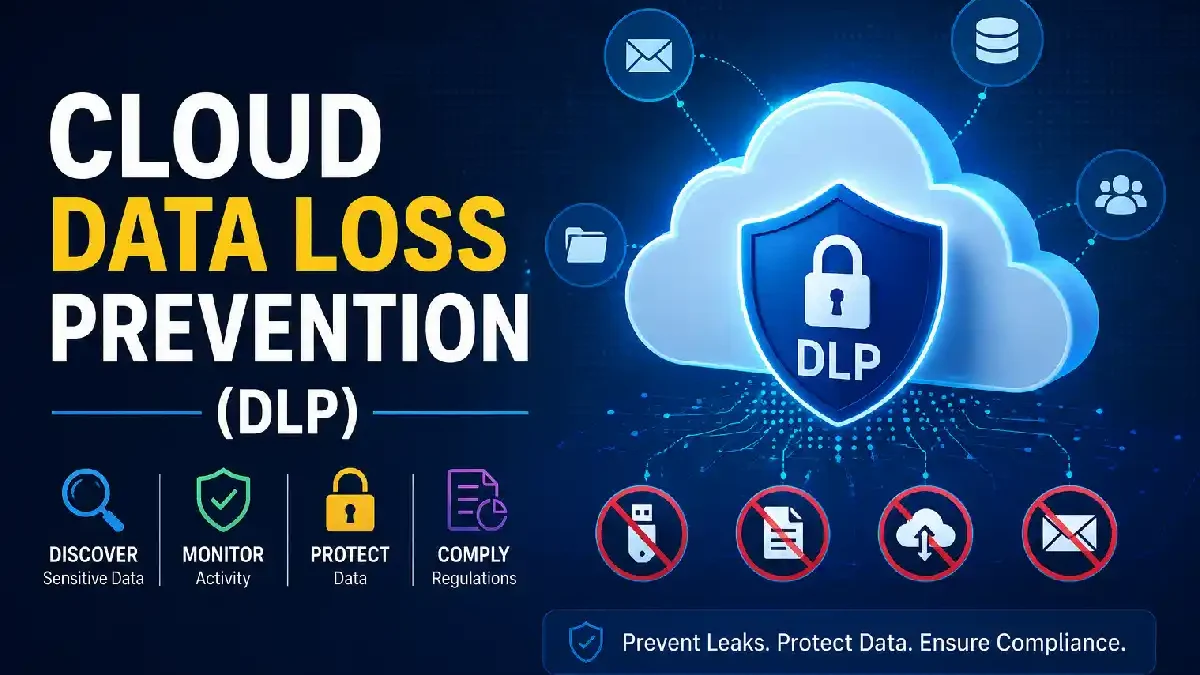
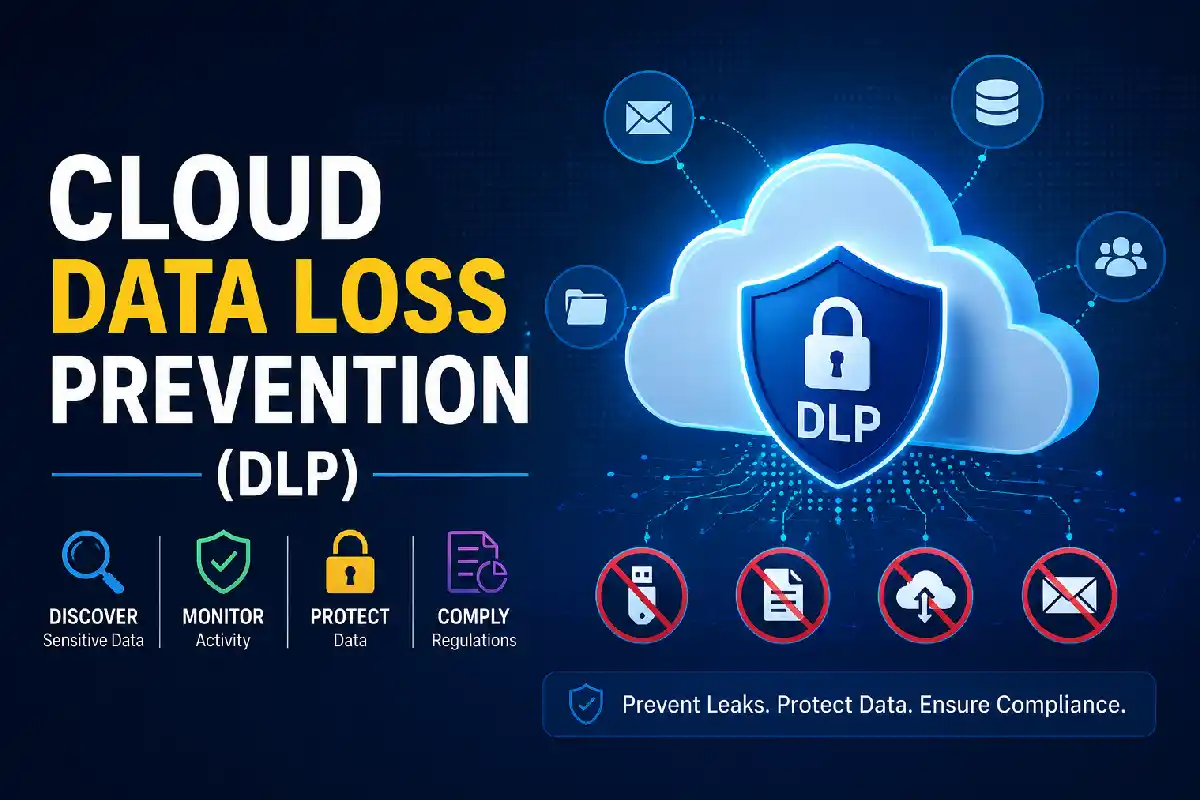
Cloud Data Loss Prevention (DLP) is by far one of the most widespread data security techniques used to provide protection to sensitive business data located in the cloud. With the supply of SaaS applications, cloud storage and working from remote locations expanding rapidly, avoiding the unintended or intentional release of critical data has become one of the greatest concerns.
Based on the 2025 Cost of a Data Breach Report by IBM, the average global data breach cost in 2025 was up from $3.86 million in 2025 to just over $4.66 million and as per the annual Verizon Data Breach Investigations Report, the third year running, that human error and credential misuse continue to be the top sources of breaches.
Modern cloud DLP enables organizations to discover, categorize, track, and secure sensitive data prior to its exfiltration from business environments.
Encrypting sensitive files before and during transmission is a key part of cloud data encryption and greatly reduces the risk of unauthorized access.
 This article is part of
Security Resources
Table of Contents
What Is Data Loss Prevention?
Data Loss Prevention (DLP) is a business approach in cybersecurity that helps identify, monitor and protect sensitive data.
Cloud DLP specifically protects data stored in:
- Cloud storage
- SaaS applications
- Cloud databases
- Collaboration platforms
- Email services
- Cloud backups
Examples of sensitive information include:
- Customer records
- Financial data
- Healthcare records
- Intellectual property
- Employee information
- Government documents
Other form of traditional endpoint security is cloud DLP that provides continuous monitoring of cloud workloads and enforces security policies in an automated fashion.
Following proven cloud security best practices helps organizations minimize data exposure and strengthen overall protection.
Common Causes of Data Loss
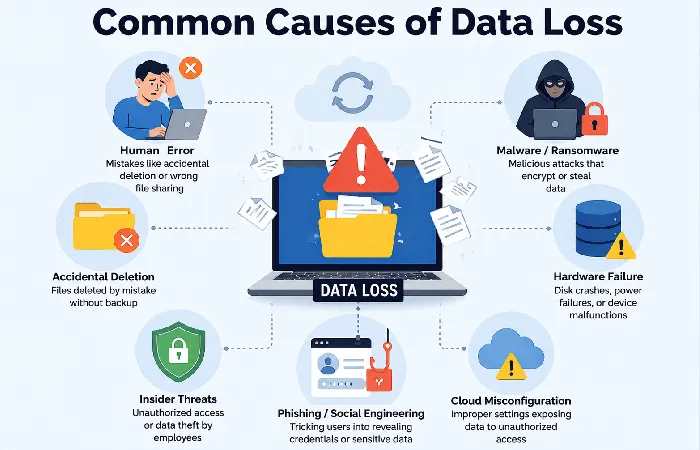
Data loss can happen to any organization with no regard to its size or industry. In the cloud, hundreds of sensitive data is being shared, accessed, stored across multiple devices and applications. Knowing the most common reasons for data loss is the first step in making an effective Cloud DLP strategy.
Human Error
Many problems can arise from human error. Staff members may have accidentally deleted crucial data, sent emails with confidential data to the wrong person or set up incorrect permissions on the cloud storage. For instance any polluting data with the access to the world may jeopardize the security of the business.
Misconfigured Cloud Storage
Offering the advantage of flexibility, cloud services can be riddled with misconfigurations that tempt organized hackers with easy access to data. When buckets are exposed to the public, permissions are too loose or databases have been left unlocked, hackers will find a way in. Security audits and automatic configuration audits are key.
Insider Threats
Insider threats can be carried out intentionally or unintentionally. An angry employee could take away intellectual property before quitting. An ignorant employee will not realize he/she is leaking data. Cloud DLP solutions keep track of activities of user and alert administrators of abnormalities.
Phishing and Credential Theft
Cybercriminals often use phishing emails and fake login pages to obtain user credentials. Attackers can then download sensitive files, change data or share it externally from a cloud account. The risk of credential-based attacks can be decreased by implementing multi-factor authentication (MFA), training employees on its use and implementing Data Loss Prevention (DLP) monitoring.
Malware and Ransomware Attacks
Malware and ransomware continue to be high risks for cloud security. Ransomware may lock up vital business data or stop all activity, and various malware types may surreptitiously upload sensitive data to hackers.
Today, DLP solutions can work with endpoint protection applications and cloud security solutions to monitor for abnormal file behavior and block unauthorized data uploads.
Even with strong DLP policies, businesses should implement cloud backup and disaster recovery plans to recover quickly from accidental deletion or ransomware attacks.
DLP Policies
Data Loss Prevention (DLP) policies are collection of rules which are set to guide the organization. These rules are made to identify, monitor and secure sensitive/important enterprise data in the cloud environment. These policies guide how the sensitive data is to be handled, who can access the data and take action if there is a suspicion of data leak. The policies also “can” assist to monitor the compliance of DLP policies with (GDPR, HIPAA, PCI DSS, ISO 27001 etc)
Modern cloud DLP solutions use a combination of pattern matching, content inspection, machine learning, and sensitivity labels to Policy- driven automatically enforce thewell-defined policies, there through email, cloud storage, collaboration and SaaS apps.
Types of DLP Policies
Different organizations have different policies depending on the nature of data they want to protect. Here are some of the most Common DLP Policy categories.
| DLP Policy Type | Protected Data | Example Action |
| Personal Information (PII) | Names, addresses, passport numbers, Aadhaar numbers, Social Security Numbers | Block external sharing and alert administrators |
| Financial Data | Credit card numbers, bank account details, invoices | Encrypt files and restrict downloads |
| Healthcare Data | Patient records, medical reports, insurance information | Prevent unauthorized access and maintain audit logs |
| Intellectual Property | Source code, product designs, patents, research documents | Restrict copying and external transfers |
| Human Resources Data | Payroll information, employee records, contracts | Limit access to HR personnel only |
| Legal Documents | Contracts, confidential agreements, legal correspondence | Apply encryption and access controls |
Combining DLP with Zero Trust cloud security ensures that every user and device is continuously verified before accessing sensitive resources.
Monitoring Sensitive Data
Monitoring of sensitive data is a fundamental component of any Cloud DLP solution. It entails ongoing supervision of data location, user‘s activity around it, and flow of data in and out of the organization.
Whenever a company is compelled to comply with industrie specific regulations like: GDPR, HIPAA, PCI DSS or ISO 27001, they have to make sure that their Cloud DLP is keeping constant watch on their sensitive data in order to react promptly in case of potential threats or security breach.
Traditional security solutions typically only monitor network traffic. Today’s cloud DLPs are able to detect sensitive cloud storage, SaaS, email applications, databases and collaboration software as well.
Why Continuous Data Monitoring Matters
Without a good continuous monitoring system organizations may not find out that such data was released until after a security breach has happened. Monitoring system should:
- Detect unauthorized access to confidential files.
- Identify unusual user behavior and potential insider threats.
- Prevent accidental sharing of sensitive information.
- Monitor data movement across cloud services.
- Generate audit logs for compliance and investigations.
- Reduce the risk of costly data breaches.
What Data Should Be Monitored?
Cloud DLP automatically scans and monitors the following types of sensitive data:
| Data Type | Examples |
| Personally Identifiable Information (PII) | Names, addresses, Aadhaar numbers, passport numbers |
| Financial Information | Credit card numbers, bank account details, invoices |
| Healthcare Records | Patient files, prescriptions, insurance information |
| Intellectual Property | Source code, product designs, patents, research documents |
| Human Resources Data | Payroll records, employee contracts, tax documents |
| Legal Documents | Confidential agreements, legal correspondence, case files |
Preventing Insider Threats
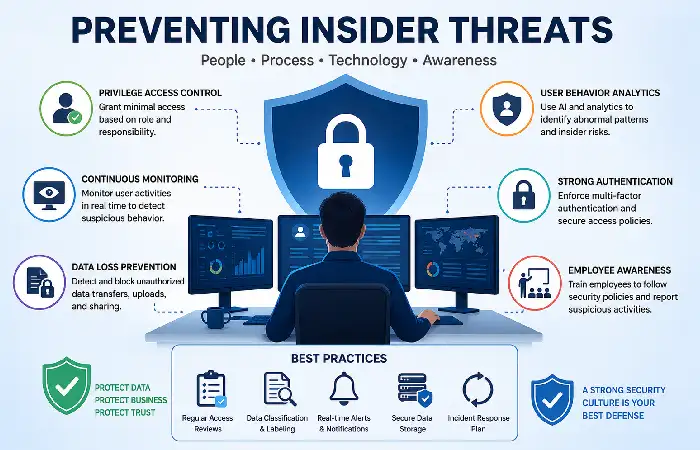
Insider threats are one of the most frequent and most difficult cyber security threats as they remain made by malicious or negligent insider which has remain granted an authorized access to an organization‘s network and data. The malicious insider may be a malicious employee, or a contractor, business partner or third party vendors who steal data in the process of their business.
They also could be non-malicious insiders who compromise organizational security due to their carelessness. According to the Verizon Data Breach Investigations Report (DBIR) 2026, 62% of data breaches are due to human error in 2010, which implies that insider threat prevention should be an integral part of any Cloud DLP.
How Cloud DLP Prevents Insider Threats
Insider threats remain reduced by multi layers protection on the Cloud Data Loss Prevention platforms.
- Continuous Activity Monitoring
The tools detects the indications of fraudulent activity that appears in any part of the user‘s online activity by pulling the data from cloud storage, email, collaboration tools and SaaS applications.
- Data Classification
Sensitive information remain automatically developed and classified according to its severity. Policies then make it possible to hold different protection levels for sensitive files.
- Role-Based Access Control (RBAC)
Only provided with the information need to do their jobs. By not providing each employee access to all data this limits the amount of data a person can remain exsposed to.
- User Behavior Analytics (UEBA)
Analytics with artificial intelligence Learning normal patterns of behavior of users, so that any anomalies, such as an abnormal number of downloads, an uncharacteristic Login location or odd sharing activity can remain detected.
- Automated Policy Enforcement
When a policy violation remain detected, the DLP system can automatically:
- Block file downloads.
- Prevent external sharing.
- Encrypt sensitive documents.
- Require manager approval.
- Trigger real-time security alerts.
- Log incidents for compliance investigations.
Modern cloud security tools provide data classification, monitoring, encryption, and threat detection to strengthen DLP strategies.
Best Practices
Follow these best practices for effective cloud DLP implementation:
- Discover all sensitive data.
- Classify data automatically.
- Apply least-privilege access.
- Encrypt data at rest and in transit.
- Enable continuous monitoring.
- Train employees regularly.
- Review DLP policies quarterly.
- Integrate DLP with SIEM platforms.
- Monitor third-party cloud apps.
- Test incident response plans frequently.
Comparison of Leading Cloud DLP Solutions (2026)
| Solution | Best For | AI Classification | Compliance | Resource |
| Microsoft Purview DLP | Microsoft 365 environments | Yes | GDPR, HIPAA, PCI DSS | https://learn.microsoft.com/purview |
| Google Cloud Sensitive Data Protection | Google Cloud | Yes | GDPR, HIPAA | https://cloud.google.com/sensitive-data-protection |
| Symantec DLP | Large enterprises | Yes | Multiple | https://broadcom.com |
| Forcepoint DLP | Insider threat protection | Yes | Enterprise | https://forcepoint.com |
| Proofpoint DLP | Email security | Yes | Enterprise | https://proofpoint.com |
FAQs
What is Cloud Data Loss Prevention (DLP)?
Cloud DLP is a security application that allows discovery, monitoring and protection of sensitive data stored in the cloud. It accomplishes this by achieving visibility and applying policies that stop data from being accessed, shared or taken out of the cloud elsewhere.
Why is it so important?
It helps organizations avoid data breaches, insider threats, inadvertent data leaks and non-compliance to regulations while offering visibility on sensitive data.
Which industrys are covering by the Cloud DLP?
All organizations operating within healthcare, financial services, government, legal, education, retail and technology sectors will benefit from the system‘s ability to process regulated or sensitive data.
Is Cloud DLP just for large companies?
No. There are a few cloud providers that have modern and scalable DLP solutions that are cheap enough to remain used by SMBs as well as enterprise companies.
Can we stop the ransomware by a Cloud DLP?
DLP is not an anti-ransomware solution in itself, however it can remain used alongside other anti-ransomware controls to reduce the impact of the attack by preventing data exfiltration, helping to identify the normal behavior of a system and integrating into a wider security environment.
Conclusion
As data is more and more stored and handled in the cloud, a Cloud DLP is now crucial in the security of an organization. From detecting sensitive information, enforcing security policies, to auditing the activity of users and preventing insider threats, a robust DLP solution reduces the exposure of sensitive data and the risk of penalties.
The right technology is only part of the answer. Companies should use Cloud DLP together with robust access controls, multi factor authentication, encryption, ongoing employee security training and Zero Trust security model for a robust data protection strategy.
Kashifa Jafar is a technology writer and contributor at FutureTechExpert with 4+ years of experience in technology writing and content creation.
Read Full Bio of Author →Sameena reviews selected health, wellness, technology, and digital content for clarity, factual presentation, and reader usefulness.
Read Full Bio of Reviewer →