
 Kashifa Jafar
Technology Writer & Contributor
Kashifa Jafar is a technology writer and contributor at FutureTechExpert with 4+ years of experience in technology writing and content creation.
Read Full Bio of Author →
Kashifa Jafar
Technology Writer & Contributor
Kashifa Jafar is a technology writer and contributor at FutureTechExpert with 4+ years of experience in technology writing and content creation.
Read Full Bio of Author →
 Sameena Begum
Health, Technology & Digital Content Reviewer
Sameena reviews selected health, wellness, technology, and digital content for clarity, factual presentation, and reader usefulness.
Read Full Bio of Reviewer →
Sameena Begum
Health, Technology & Digital Content Reviewer
Sameena reviews selected health, wellness, technology, and digital content for clarity, factual presentation, and reader usefulness.
Read Full Bio of Reviewer →
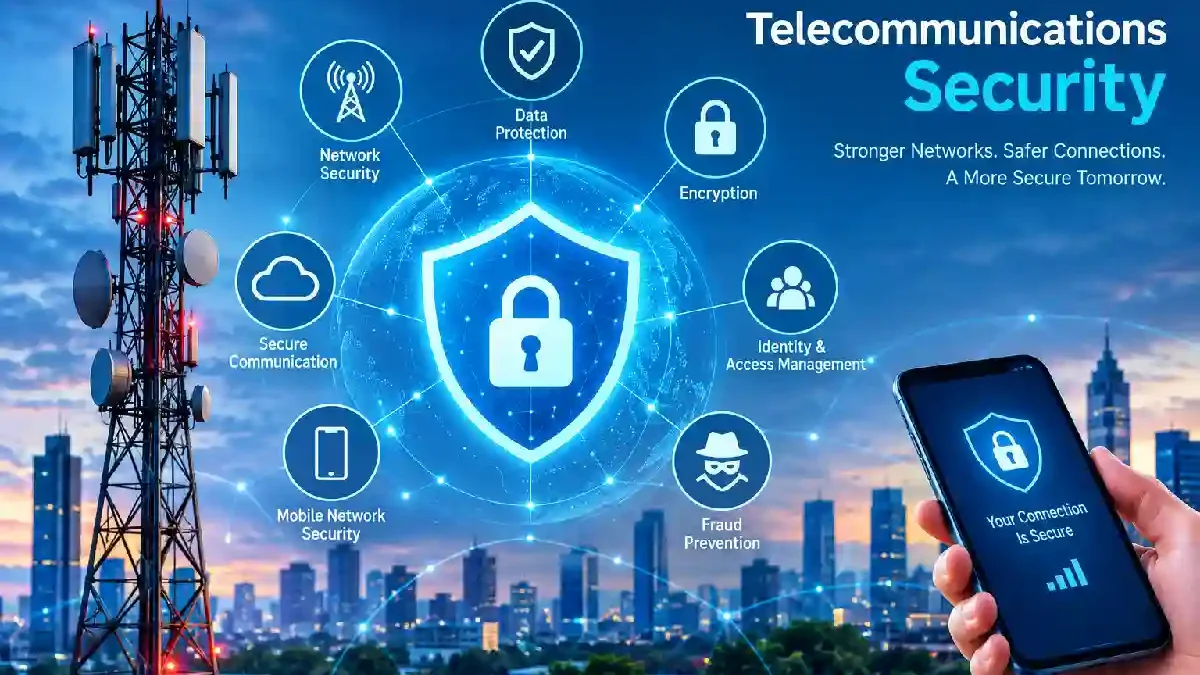
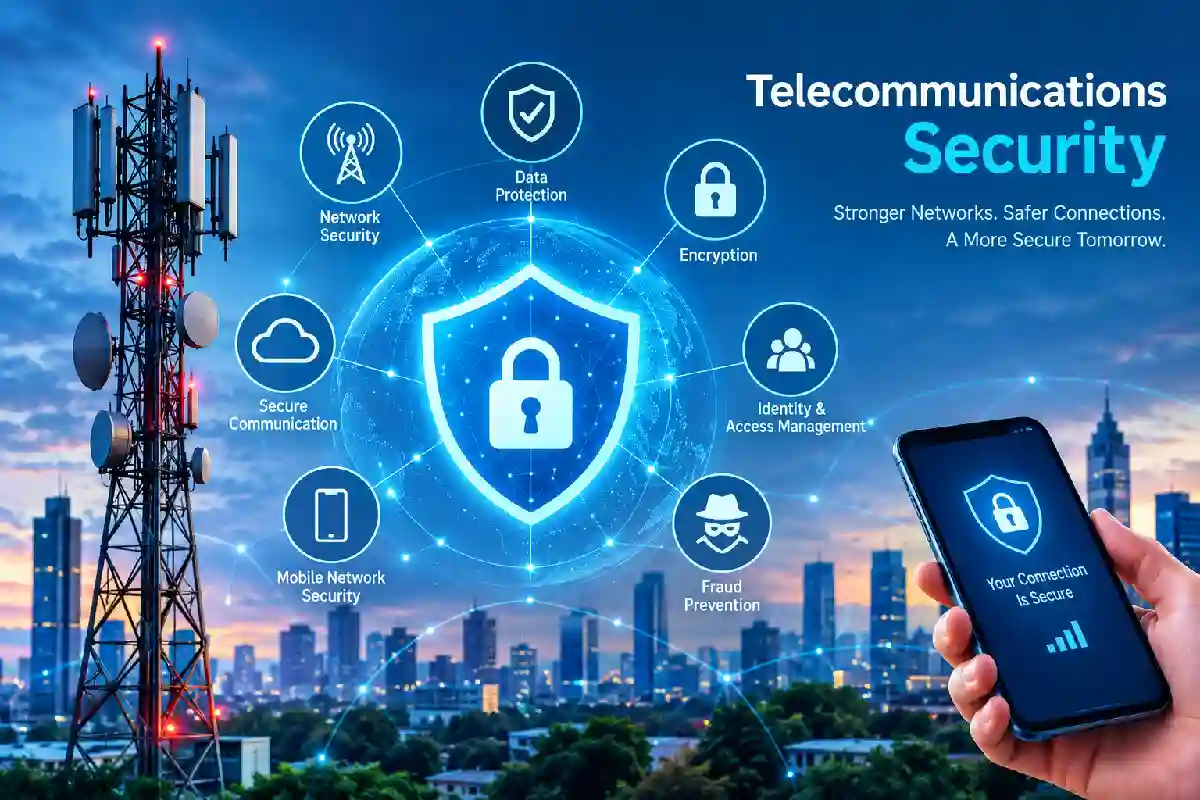
Telecommunications Security is a critical part of any secure communication system as it is vital for reliable operation. In the modern world there are many forms of communication such as cellular networks, internet, or cloud communications and the security is essential for any organization dependent on telecom to maintain data security, avoiding cyberattacks and continuous access.
With increased integration of 5 G, Internet of Things, edge computing, and cloud-based communications within telecom networks, security threats are rising. No matter how complex telecom networks become, knowing telecommunications security is beneficial for business.
 This article is part of
Telecommunications Services Resources
Table of Contents
What Is Telecommunications Security?
Communication security the application of security measures to secure telecommunications has become a prominent area of focus for end users, service providers, equipment manufacturers and technology providers. It encompasses the technology, policy, and processes used to provide communication security for data, voice, video, or any other moving information.
Its primary goals include:
- Protecting sensitive information
- Maintaining network availability
- Preventing unauthorized access
- Ensuring regulatory compliance
- Detecting and responding to threats
Core Components of Telecommunications Security
| Security Area | Purpose |
| Network Security | Protect telecom infrastructure |
| Mobile Security | Secure cellular communications |
| Data Protection | Safeguard customer information |
| Encryption | Secure transmitted data |
| Identity Management | Control user access |
| Fraud Prevention | Detect telecom fraud |
Telecommunications security plays a critical role in protecting modern telecommunications systems and infrastructure from cyber threats, unauthorized access, and service disruptions. Strong security measures ensure reliable communication across voice, data, and mobile networks.
Common Telecommunications Security Threats
Travel increasingly sophisticated cyber threats and are more prone to attacks on telecommunications networks.
Most Common Threats
| Threat | Impact |
| DDoS Attacks | Service outages |
| SIM Swapping | Account takeover |
| Phishing Attacks | Credential theft |
| Insider Threats | Data leaks |
| Malware | Network compromise |
| Ransomware | Operational disruption |
| Signaling Attacks | Mobile network exploitation |
Telecom Threat Landscape (2026)
| Threat Category | Risk Level |
| Ransomware | Very High |
| DDoS Attacks | Very High |
| Insider Threats | High |
| Identity Theft | High |
| Supply Chain Attacks | High |
| Legacy System Vulnerabilities | Medium |
Mobile Network Security
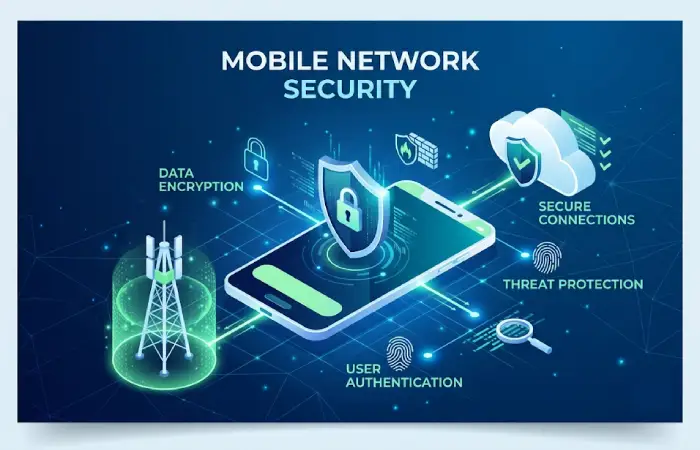
It‘s huge. The volume of voice, messaging and data traffic traveling over mobile networks is already massive. Security is of utmost importance for both telecoms operators and telecom consumers.
Key Mobile Security Challenges
- 5G infrastructure vulnerabilities
- Rogue base stations
- SIM swap fraud
- Device compromise
- IoT security risks
- Mobile malware
Security Measures for Mobile Networks
| Security Control | Benefit |
| SIM Authentication | User verification |
| Network Segmentation | Limits attack spread |
| Threat Monitoring | Real-time detection |
| 5G Security Controls | Protect next-generation networks |
| Device Management | Endpoint security |
Network operators must secure every component of the telecommunications infrastructure, including fiber-optic cables, data centers, cellular towers, routers, and switching equipment, to maintain network integrity and availability.
Network Security
It safeguards telecom network infrastructure against intrusions.
Essential Network Security Layers
- Firewalls
- Intrusion Detection Systems (IDS)
- Intrusion Prevention Systems (IPS)
- Security Information and Event Management (SIEM)
- Zero Trust Architecture
- Network Access Control (NAC)
Network Security Comparison
| Technology | Best For | Security Strength |
| Firewall | Traffic filtering | High |
| IDS | Threat visibility | Medium |
| IPS | Threat blocking | High |
| SIEM | Incident monitoring | Very High |
| Zero Trust | Access control | Very High |
Helpful Resources
| Resource | Purpose |
| NIST Cybersecurity Framework | Security guidance |
| ENISA Telecom Security Reports | Telecom threat analysis |
| GSMA Security Resources | Mobile security standards |
| CISA Security Advisories | Emerging threats |
Data Protection in Telecommunications
Telecommunications providers handle enormous quantities of confidential customer information.
Examples include:
- Personal data
- Call records
- Billing information
- Location data
- Communication metadata
Data Protection Best Practices
| Practice | Benefit |
| Data Classification | Risk management |
| Encryption | Prevents interception |
| Backup Systems | Disaster recovery |
| Data Loss Prevention (DLP) | Prevents leaks |
| Access Controls | Reduces insider risks |
Compliance Standards
| Regulation | Region |
| GDPR | Europe |
| CCPA | California |
| ISO 27001 | Global |
| NIST Framework | United States |
Advances in telecommunications technology such as 5G, cloud networking, artificial intelligence, and software-defined networking introduce new capabilities while also creating additional security challenges that must be addressed.
Encryption and Secure Communication
Encryption is one of the most critical of the controls for telecommunications security.
It encrypts intelligible data into an encoded form that can only be deciphered with a valid decryption key.
Common Encryption Technologies
| Encryption Type | Use Case |
| AES-256 | Data storage |
| TLS 1.3 | Web communications |
| IPSec | VPN connections |
| End-to-End Encryption | Messaging apps |
| Quantum-Resistant Encryption | Future networks |
Why Encryption Matters
- Prevents eavesdropping
- Protects customer privacy
- Supports regulatory compliance
- Secures remote communications
Organizations rely on secure telecommunications systems to support voice communications, internet connectivity, video conferencing, and business-critical data transmission across distributed environments.
Identity and Access Management
Identity and Access Management ensures that only authorized persons have access.
Core IAM Components
- Multi-factor authentication (MFA)
- Role-based access control (RBAC)
- Single sign-on (SSO)
- Privileged access management (PAM)
- Identity governance
IAM Security Comparison
| Method | Security Level |
| Password Only | Low |
| MFA | High |
| Biometric Authentication | Very High |
| Hardware Security Keys | Very High |
Telecommunications Fraud

The annual cost of telecommunications fraud is in the billions.
Common Types of Telecom Fraud
| Fraud Type | Description |
| SIM Swap Fraud | Unauthorized SIM transfers |
| Subscription Fraud | Fake customer accounts |
| International Revenue Share Fraud | Artificial traffic generation |
| Wangiri Fraud | Missed-call scams |
| PBX Hacking | Compromised phone systems |
Fraud Prevention Strategies
- Real-time monitoring
- AI-powered anomaly detection
- Customer verification
- Fraud analytics platforms
- Continuous auditing
Protecting telecommunications services is essential for ensuring uninterrupted access to mobile communication, broadband internet, VoIP, cloud communications, and other digital services used by consumers and businesses.
Best Practices for Telecommunications Security
Organizations can greatly enhance security by adopting the following best practices followed by many commercial organizations.
Security Checklist
Implement Zero Trust architecture
Enable multi-factor authentication
Encrypt sensitive data
Conduct regular vulnerability assessments
Monitor networks continuously
Train employees on cybersecurity awareness
Segment critical infrastructure
Maintain incident response plans
Security frameworks are designed to protect telecommunications networks from cyberattacks, malware, denial-of-service incidents, and data breaches that can impact network performance and user privacy.
Future of Telecommunications Security
Beyond what everyone knows and what is already found.
Key Trends for 2026 and Beyond
| Trend | Impact |
| AI-Powered Threat Detection | Faster response |
| Zero Trust Adoption | Stronger access security |
| 5G Security Enhancements | Improved mobile protection |
| Quantum-Resistant Cryptography | Future-proof encryption |
| Automated Security Operations | Reduced human error |
| Secure Edge Computing | Better distributed protection |
It is in the organization‘s best interests to make the investment today which will ensure the organization in the future.
Frequently Asked Questions
What is telecommunications security?
This term generally means protecting communications networks, data and systems from cyber access threats or interference.
What makes telecommunications security a significant issue?
It helps safeguard customers’ information, sustains service delivery, deters fraud, and ensures compliance with regulatory requirements.
How does encryption enhance telecom security?
Encryption is applied on other systems during transfer to protect information; it encodes the information into what appears to be incoherent symbolic code which later authorizes a authorized user to decrypt only.
What do you think are the most significant security risks faced by the telecom industry in 2026?
The most consequential risks, thugh, are: ransomware, DDoS, SIM swapping, insider threats, and supply chain attacks.
Can telecommunications security use the Zero Trust model?
Zero Trust conducts ongoing checks on all users and devices to ensure right of access, thus minimizing the chances of unauthorized access and lateral movement.
Conclusion
As communication networks evolve, telecommunications security has become an essential requirement for businesses, services providers and consumers of today. As telecom networks are growing exponentially with the emergence of 5G, cloud communications, IoT devices and edge computing, telecom network are under more complex threats such as ransomware, denial of service and identity theft, and telecommunications fraud.
Having a robust telecommunications security strategy involves multiple measures including network security, mobile security, encryption, data security, access & identity management, and proactive monitoring of potential threats. Companies implementing all of the best practices (e.g., Zero Trust security model, multi-factor authentication, and AI-based threat detection) listed above can better ensure the integrity of their data, the high availability of their services and compliancy with all relevant regulations.
Kashifa Jafar is a technology writer and contributor at FutureTechExpert with 4+ years of experience in technology writing and content creation.
Read Full Bio of Author →Sameena reviews selected health, wellness, technology, and digital content for clarity, factual presentation, and reader usefulness.
Read Full Bio of Reviewer →