
 Kashifa Jafar
Technology Writer & Contributor
Kashifa Jafar is a technology writer and contributor at FutureTechExpert with 4+ years of experience in technology writing and content creation.
Read Full Bio of Author →
Kashifa Jafar
Technology Writer & Contributor
Kashifa Jafar is a technology writer and contributor at FutureTechExpert with 4+ years of experience in technology writing and content creation.
Read Full Bio of Author →
 Sameena Begum
Health, Technology & Digital Content Reviewer
Sameena reviews selected health, wellness, technology, and digital content for clarity, factual presentation, and reader usefulness.
Read Full Bio of Reviewer →
Sameena Begum
Health, Technology & Digital Content Reviewer
Sameena reviews selected health, wellness, technology, and digital content for clarity, factual presentation, and reader usefulness.
Read Full Bio of Reviewer →
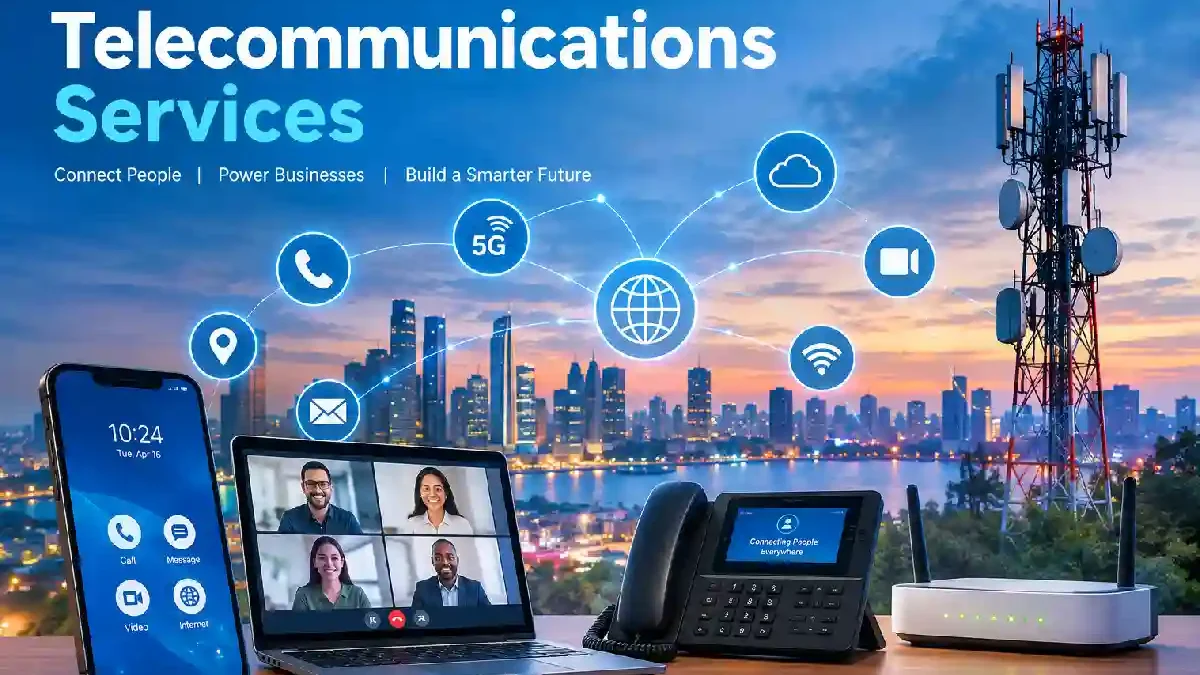
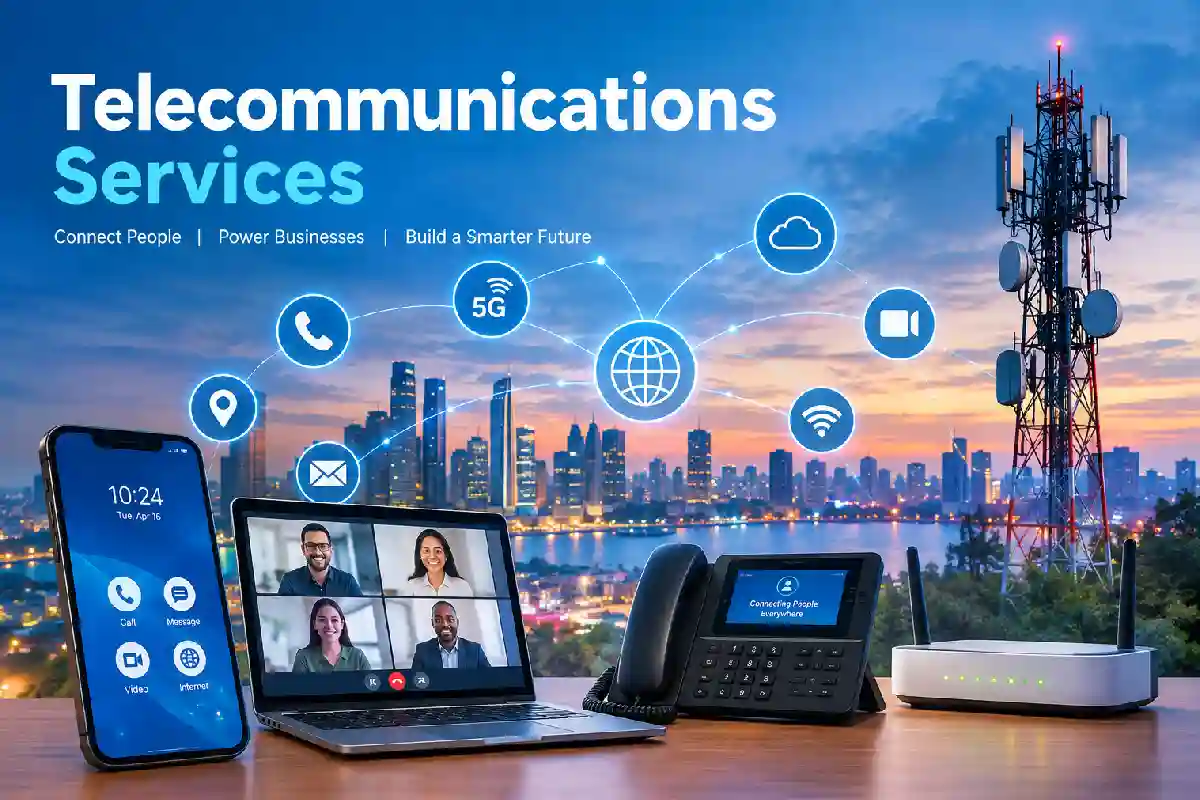
Telecommunications services are an essential component of contemporary communication, providing a medium for individuals and organizations to engage in voice calling, mobile services, internet browsing, video conferencing, chat messaging, and cloud-based communication services. By 2026, they will support all aspects of daily life and global economy.
With the continuous development of information technologies such as 5G, fiber broadband, cloud communications and unified communications. Selecting a suitable telecommunication service becomes more and more significant.
 This article is part of
Telecommunications Services Resources
Table of Contents
What Are Telecommunications Services?
Telecommunications services42 are technologies and networks that transmit voice, video, data and multimedia information from one place to another over a wired or wireless network.
These services enable communication between people, devices, applications, and organizations using:
- Telephone networks
- Mobile networks
- Internet connections
- Fiber-optic infrastructure
- Satellite communication
- Cloud communication platforms
Core Functions
| Function | Purpose |
| Voice Communication | Phone calls and VoIP |
| Data Transmission | Internet and networking |
| Video Communication | Conferencing and streaming |
| Messaging | SMS, chat, and collaboration |
| Cloud Connectivity | Remote business operations |
Telecommunications services form the backbone of modern communication, enabling voice, data, and internet connectivity across the globe. To understand the broader ecosystem that supports these services, read our comprehensive guide on telecommunications industry overview.
Types of Telecommunications Services
Telecommunication today can be divided into a small number of major services.
Telecommunications Services Comparison
| Service Type | Primary Use | Typical Users |
| Voice Services | Calling | Consumers & Businesses |
| Mobile Services | Wireless connectivity | Smartphone users |
| Broadband Services | Internet access | Homes & Offices |
| Cloud Communications | Remote collaboration | Businesses |
| Unified Communications | Integrated communication | Enterprises |
| Managed Telecom Services | IT outsourcing | Large organizations |
Voice Communication Services

Digital instant messaging have remained insignificant against voice communication, which is still one of the most important telecommunication services.
Traditional Telephony
Communication over a traditional telephone system involves the use of Public Switched Telephone Networks ( PSTN ).
Benefits include:
- Reliable connectivity
- Emergency service access
- Broad compatibility
VoIP Services
The voice over Internet protocol (VoIP) is used to carry calls through internet connections.
Popular business benefits include:
- Lower costs
- Scalability
- Advanced call routing
- CRM integrations
- Remote work support
Voice Service Comparison
| Feature | Traditional Phone | VoIP |
| Installation Cost | High | Low |
| Flexibility | Limited | High |
| Remote Access | No | Yes |
| Scalability | Moderate | Excellent |
| Maintenance | Complex | Easier |
The performance and reliability of telecommunications services depend heavily on robust network assets such as fiber-optic cables, cell towers, satellites, and data centers. Learn more about the critical role of telecommunications infrastructure in delivering seamless connectivity.
Mobile Telecommunications Services
Mobile telecommunications services the delivery of wireless communication using cellular technology.
Major Mobile Technologies
| Generation | Typical Speed | Key Features |
| 4G LTE | Up to 100 Mbps | Mobile internet |
| 5G | Up to 10 Gbps | Low latency, IoT |
| 5G Advanced | Enhanced 5G | AI-driven optimization |
Benefits of Mobile Telecommunications
- Nationwide connectivity
- Mobile productivity
- Video conferencing
- Cloud application access
- Real-time communication
Modern services continue to evolve through innovations such as 5G, cloud communications, artificial intelligence, and the Internet of Things. Discover how these advancements are shaping the future through the latest telecommunications technologies.
Internet and Broadband Services
The bandwidth provides high-speed internet access to homes and businesses.
Common Broadband Technologies
| Technology | Speed Range | Best For |
| DSL | 10–100 Mbps | Basic usage |
| Cable | 100 Mbps–1 Gbps | Families |
| Fiber | 1–10+ Gbps | Businesses & Power Users |
| Satellite | 25–250 Mbps | Rural areas |
| Fixed Wireless | 50–1000 Mbps | Alternative connectivity |
Fiber vs Cable Broadband
| Factor | Fiber | Cable |
| Speed | Faster | Moderate |
| Reliability | Excellent | Good |
| Latency | Lower | Higher |
| Future Scalability | High | Moderate |
Resource Links
| Resource | Purpose |
| Fiber Broadband Association | Fiber technology information |
| GSMA | Mobile network research |
| ITU | Global telecom standards |
| Broadband Forum | Broadband best practices |
Behind every phone call, text message, and internet connection are complex operational frameworks that manage routing and transmission. Explore how telecommunications systems and architecture ensure efficient and reliable communication services.
Business Telecommunications Services
There are many features that businesses need from telecommunications.
Common Business Services
- SIP Trunking
- Hosted PBX
- Contact Centers
- Dedicated Internet Access
- Managed WAN
- SD-WAN
- Cybersecurity Integration
Business Telecom Comparison
| Solution | Small Business | Enterprise |
| Hosted PBX | Excellent | Good |
| SIP Trunking | Good | Excellent |
| Contact Center | Moderate | Excellent |
| SD-WAN | Good | Excellent |
As digital communication grows, protecting networks and customer data becomes increasingly important. Understanding telecommunications security best practices can help organizations strengthen network resilience and minimize cyber threats.
Cloud Communication Services
Cloud communication services (also called ‘cloud communications’ or ‘cloud telephony’) provide communication services through the use of clouds.
Key Features
- Voice services
- Video meetings
- Messaging
- File sharing
- Contact centers
- AI assistants
Advantages
| Benefit | Impact |
| Lower Infrastructure Costs | Reduced capital expenditure |
| Scalability | Easy expansion |
| Remote Access | Supports hybrid work |
| Faster Deployment | Rapid implementation |
Popular Use Cases
- Remote workforce management
- Customer support
- Global collaboration
- Business continuity planning
Unified Communications
UC: Unified Communications. Bringing all the multiple channels of communications on one platform.
Components of UC
- Voice calling
- Video conferencing
- Team messaging
- Presence management
- File collaboration
- Mobile communication
Unified Communications vs Traditional Systems
| Feature | Traditional Telecom | Unified Communications |
| Voice Calls | Yes | Yes |
| Video Meetings | Limited | Yes |
| Team Chat | No | Yes |
| Mobile Integration | Limited | Extensive |
| Cloud Access | No | Yes |
How to Choose a Telecommunications Service
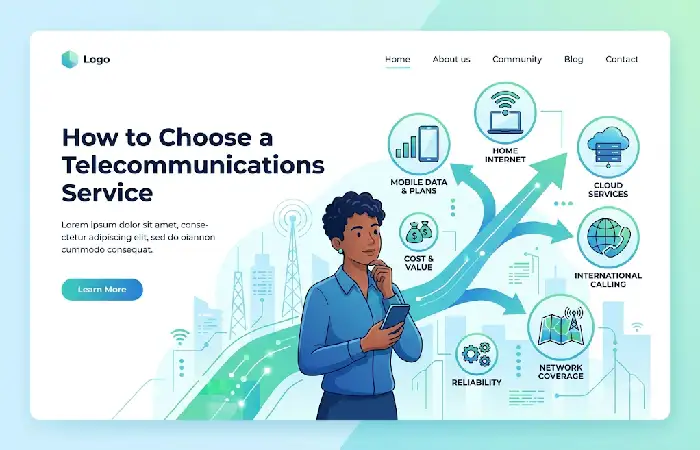
Choosing the best telecommunication provider can be complex.
Decision Checklist
Coverage and reliability
Speed requirements
Security features
Customer support
Pricing structure
Scalability
Integration capabilities
Provider Evaluation Matrix
| Criteria | Weight |
| Reliability | 30% |
| Performance | 25% |
| Security | 20% |
| Support | 15% |
| Cost | 10% |
Future of Telecommunications Services
The telecom industry is seeing various areas of innovation and advances that will define the future of telecoms provision. These are AI, 5G Advanced, cloud-native networks, edge computing, satellite connectivity, and the nascent implementation of 6G. Telecom providers are transitioning from just being connectivity providers to the role of digital service platforms that bring intelligent, automated, and highly personalized communication experiences.
Emerging Trends for 2026 and Beyond
| Trend | Impact |
| 5G Advanced | Faster mobile experiences |
| 6G Research | Next-generation connectivity |
| AI Network Management | Self-optimizing networks |
| Edge Computing | Reduced latency |
| Private 5G Networks | Enterprise transformation |
| Satellite Broadband | Global connectivity expansion |
| IoT Expansion | Billions of connected devices |
Industry Outlook
Analysts expect continued growth in:
- Cloud communications
- Unified communications as a service (UCaaS)
- Fiber deployment
- AI-powered telecom operations
- Enterprise mobility solutions
As such, adopting a flexible cloud-based telecommunications system will enable an organization to adapt to remote working, digital transformation and future communication needs.
Every service provider relies on advanced network technologies to support voice, video, and data traffic. Learn how telecommunications network technologies enable high-speed and dependable communication across regions.
Frequently Asked Questions
What do telecommunications services do?
They facilitate a means of sending voice, image, and data services through wired and wireless networks
What is the notion of using telecom and Internet service?
This is part of the Telecoms category, encompassing VoIP, mobile, internet, video, messaging, cloud communications and more.
What‘s behind the rise of cloud communication services?
Cloud enables the higher scalability, lower cost, remote access and quicker installation which traditional telecom infrastructure cannot provide.
What is UC?
Unified communication unites the following services.
What is the most suitable broadband technology?
Typically, fiber broadband has the fastest speeds, lowest latency, and most scalable.
Conclusion
Telecom services are always developing as businesses and individuals require more speed, efficiency and integration in their communication systems. Today, telecom services include everything from mobile networks, broadband internet to cloud communications, unified communications systems which still drive business and personal productivity, teamwork and change, and connect the digital world.
By becoming familiar with current offerings, exploring multiple providers and strategizing for the next generation of telecom equipment including AI-enabled telecom systems and 5G Advanced networks, business and consumers can be prepared for the years ahead.
Kashifa Jafar is a technology writer and contributor at FutureTechExpert with 4+ years of experience in technology writing and content creation.
Read Full Bio of Author →Sameena reviews selected health, wellness, technology, and digital content for clarity, factual presentation, and reader usefulness.
Read Full Bio of Reviewer →