

Last Updated: September 19, 2026
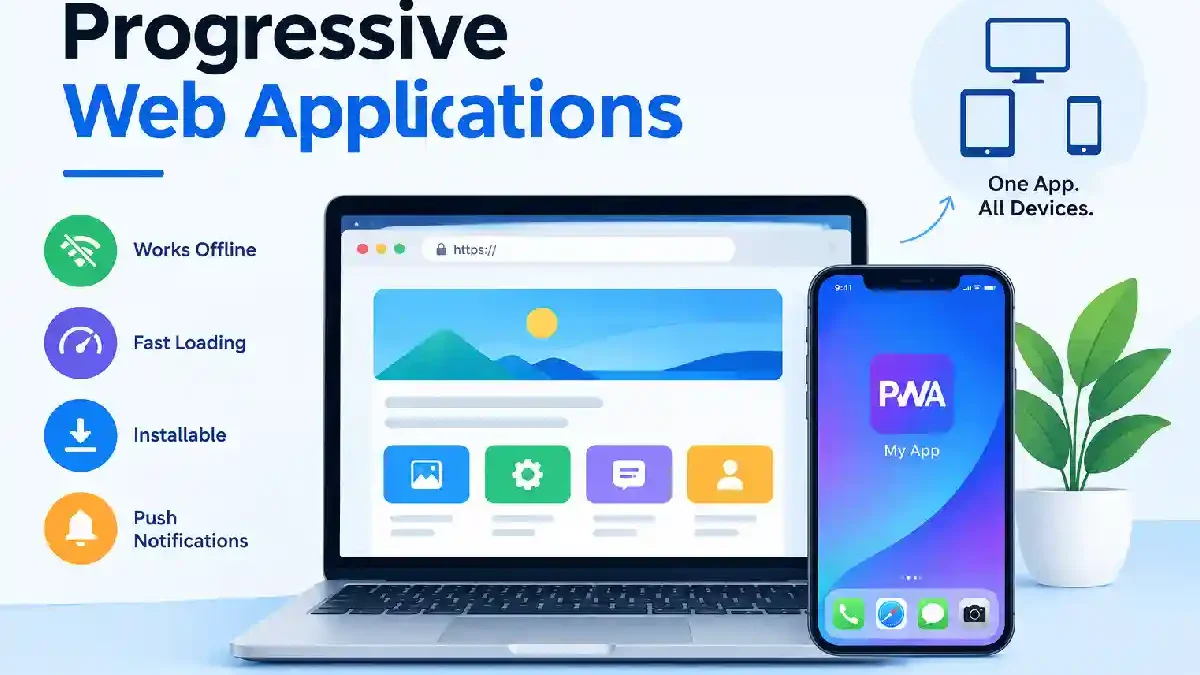
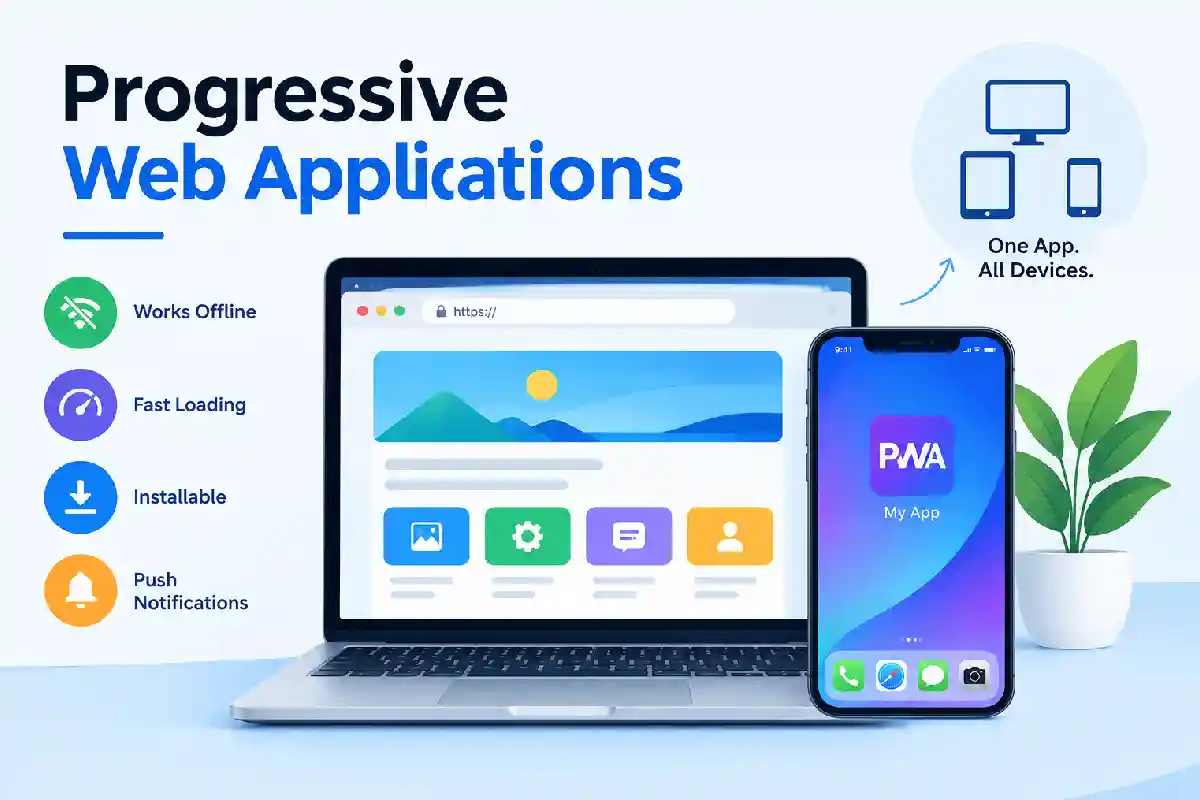
Think of a Pwa as the new way of building a modern Web, taking the best features of website and apps. Now more and more business deliver a great experience for the end-user without him needing to install a native application in his device.
By 2026, PWAs are still being widely adopted as they bring the ability of work offline, app-like, fast, and cross-platform, yet have lower development costs. So even if you are a business owner, developer or technology lover, having a better insight on PWAs has its own benefits.
Table of Contents
What Are Progressive Web Applications?
Progressive Web Apps (PWas) are a web application that has the panache of a native mobile app but the reach of a website. The built environment PWas are an extension of the modern web stack (HTML, CSS, JS) that allows the user to have fast, engaging and reliable experiences on a web browser and preserve the maximum capabilities of native applications such as offline storage, home screen install, push notifications.
However unlike websites, Progressive Web Applications can operate with unreliable internet connectivity through the use of advanced technologies such as service workers and local caching. A user could then access pages or part of content without Internet connection.
PWAs are very responsive; they can be used on phones, tablets, laptops and desktops. Since they run in a browser, they are easier for users to find than using an app store to download to their phone or tablet.
Unlike traditional websites, PWAs bridge the gap between web and mobile applications by offering:
- Installable experiences
- Offline access
- Faster loading speeds
- Responsive design
- Push notifications
- Cross-platform compatibility
Key Characteristics
| Feature | Traditional Website | PWA | Native App |
| Installable | No | Yes | Yes |
| Offline Access | Limited | Yes | Yes |
| App Store Required | No | No | Yes |
| Push Notifications | Limited | Yes | Yes |
| Cross-Platform | Yes | Yes | No |
| Development Cost | Low | Medium | High |
How Do Progressive Web Applications Work?
PWas operate through the use of a combination of modern web technologies and sophisticated browser behaviors to offer a mobile application‘s user experience. It operate apart from websites because they can be used offline, send push notifications, load quickly, and be added to a home screen without the use of app stores.
PWAs rely on three major technologies:
- Service Workers
Service workers run in the background and manage:
- Offline functionality
- Content caching
- Push notifications
- Background synchronization
They enable applications to access – or ‘load’ – data when the connection to the internet is unreliable or non-existent.
- Web App Manifest
A manifest file contains information such as:
- Application name
- Icons
- Theme colors
- Display mode
- Launch behavior
This makes one able to install freely from the browser.
- HTTPS Security
PWAs rely on HTTPS, as it provides a security layer that protects users data and also provides support for advanced browser features.
Simplified Workflow
User Visits Website
↓
Browser Downloads Manifest
↓
Service Worker Installed
↓
Content Cached
↓
PWA Available Offline
↓
User Can Install App
Key Features of PWAs
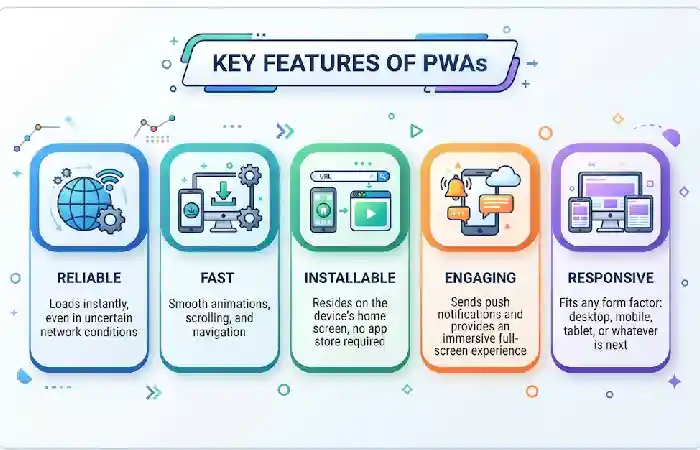
Current generation of Progressive Web Applications come with a plethora of increased features.
| Feature | Purpose |
| Offline Mode | Works without internet |
| Push Notifications | Re-engages users |
| Responsive Design | Fits all screen sizes |
| Fast Loading | Improved performance |
| App Installation | Add to Home Screen |
| Background Sync | Updates data automatically |
| Secure HTTPS | Enhanced security |
| App-Like UI | Native experience |
Progressive Web Applications vs Websites
There are many businesses asking if they require a PWA or a custom website.
| Factor | Website | PWA |
| Loading Speed | Good | Excellent |
| Offline Support | No | Yes |
| Installation | No | Yes |
| Push Notifications | No | Yes |
| User Engagement | Moderate | High |
| Performance | Moderate | High |
A conventional website is more fit for delivering a straightforward informational material, whereas a PWA is more suitable if high interaction and high involvement from the user are the key issues.
Progressive Web Applications vs Native Apps
| Factor | PWA | Native App |
| Development Cost | Lower | Higher |
| Time to Market | Faster | Slower |
| Maintenance | One Codebase | Multiple Codebases |
| App Store Approval | Not Required | Required |
| Device Access | Moderate | Full |
| Offline Support | Strong | Excellent |
PWAs can save a substantial amount of money while offering many of the built-in capabilities of a native-app. They do not, however, match native apps’ access to hardware.
Benefits of Progressive Web Applications
For Businesses
- Reduced development costs
- Faster deployment
- Improved customer engagement
- Increased conversion rates
- Better SEO visibility
For Users
- Faster loading speeds
- Offline functionality
- No app store downloads
- Lower storage requirements
- Consistent experiences across devices
Business Impact Examples (2026)
| Brand | Reported Outcome |
| Starbucks | 2× increase in daily active users |
| 60% increase in engagement | |
| Uber | Fast performance on low-bandwidth networks |
| Spotify | Improved user accessibility across devices |
Limitations of PWAs
However, there are some limitations to be observed in the PWAs.
Common Challenges
- Limited access to some device hardware
- Browser compatibility variations
- Restricted background processing
- Fewer advanced OS integrations
- Some iOS limitations remain
When Native Apps Are Better
Consider native apps for:
- High-performance gaming
- AR/VR applications
- Intensive hardware access
- Complex multimedia processing
Technologies Used to Build PWAs
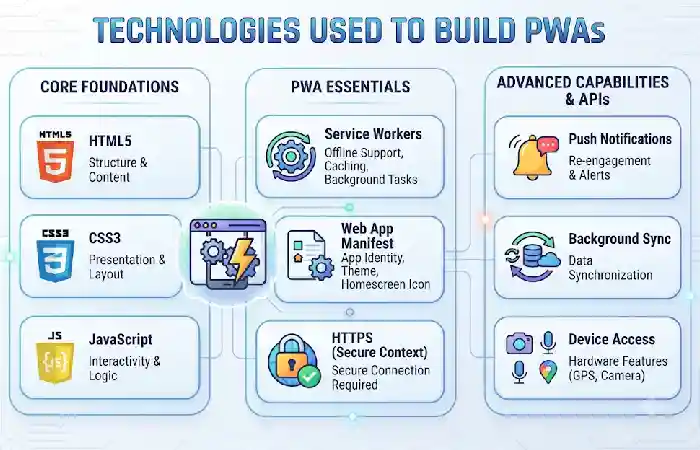
Modern web technologies are applied by developers to build Progressive Web Applications.
| Technology | Purpose |
| HTML5 | Structure |
| CSS3 | Styling |
| JavaScript | Functionality |
| React | Frontend Framework |
| Angular | Frontend Development |
| Vue.js | UI Development |
| Next.js | PWA Optimization |
| Service Workers | Offline Features |
| Workbox | Caching Management |
| IndexedDB | Local Storage |
Examples of Progressive Web Applications
A handful of major firms already make use of PWAs.
| Company | PWA Benefits |
| Starbucks | Offline ordering |
| Uber | Lightweight ride booking |
| Faster engagement | |
| Spotify | Cross-device music access |
| Twitter/X | App-like social experience |
| Google Maps Go | Lightweight navigation |
| Mobile web enhancement |
These instances clearly showcase how PWAs enhance usability, performance and engagement.
Frequently Asked Questions
What is a Progressive Web Application?
A PWA is a web application that provides native-like experiences, offline support, installation, and increased responsiveness etc.
Are PWAs better than native apps?
PWAs tend to be cheaper and easier to maintain, whereas native apps provide better integration with the hardware and greater access to device features.
Do PWAs work offline?
Yes. Service workers provide support for offline mode by caching application assets.
Are Progressive Web Applications SEO-friendly?
Yes, because PWAs are web-based they can be searched for by search engines and have SEO applied.
Which companies use PWAs?
Some of the most popular examples of the mentioned apps are Starbucks, Uber, Pinterest, Spotify, Twitter/X and Google Maps Go.
Conclusion
PWAs is among the most popular method to provide fast, engaging and low-cost digital experiences in 2026. Integrating the reach of the web with the functionality of apps, PWAs enable organizations to raise user engagement, boost conversions and cut down on expenses.
In the context of an organization that want to be future-proof with their web strategy, Progressive Web Apps strike a good compromise in term of scalability, user experience and performance. Since browsers support and technologies develop fast, PWAs will stay relevant for long.