
 Kashifa Jafar
Technology Writer & Contributor
Kashifa Jafar is a technology writer and contributor at FutureTechExpert with 4+ years of experience in technology writing and content creation.
Read Full Bio of Author →
Kashifa Jafar
Technology Writer & Contributor
Kashifa Jafar is a technology writer and contributor at FutureTechExpert with 4+ years of experience in technology writing and content creation.
Read Full Bio of Author →
 Sameena Begum
Health, Technology & Digital Content Reviewer
Sameena reviews selected health, wellness, technology, and digital content for clarity, factual presentation, and reader usefulness.
Read Full Bio of Reviewer →
Sameena Begum
Health, Technology & Digital Content Reviewer
Sameena reviews selected health, wellness, technology, and digital content for clarity, factual presentation, and reader usefulness.
Read Full Bio of Reviewer →
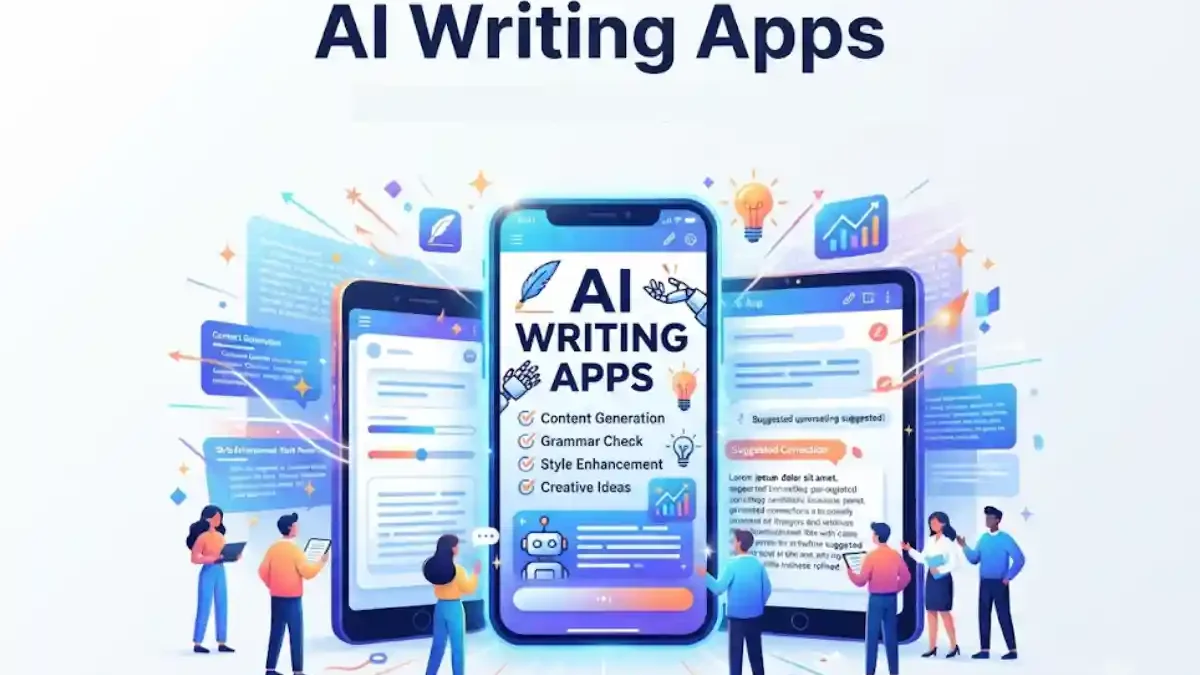
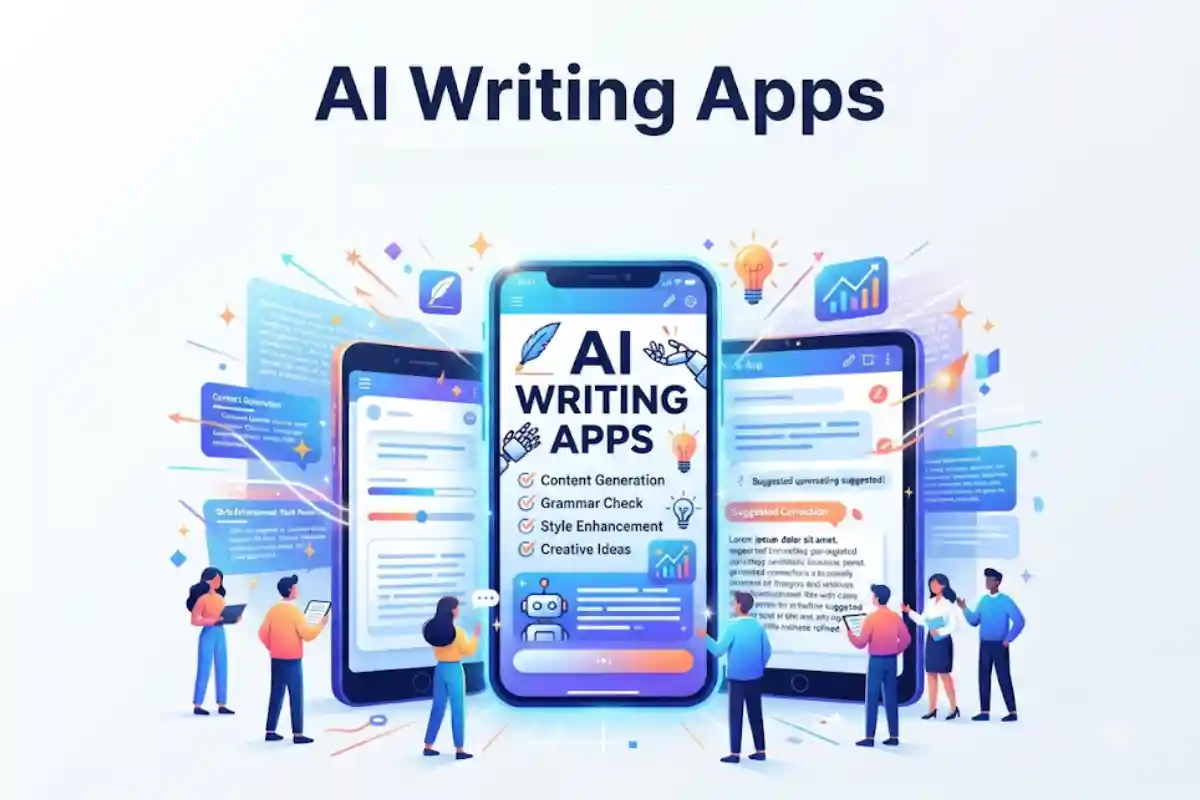
AI Writing Apps are computer programs applying artificial intelligence and strength of large language models (LLMs) to support user in writing, rewriting, editing, summarising, improving text. They are able to generate blogs, emails, reports, research briefs, social media, marketing text and others within seconds.
Four years forward AI Blogging apps are use all over the world by students, authors, marketing, businesses and persons and they are a critical tools of productivity. Nowadays solutions they combine artificial intelligence (AI) a at least one form of natural language processing (NLP), machine learning (ML), and generative AImodels.
 This article is part of
AI Apps Resources
Table of Contents
How AI Writing Apps Work
AI writing applications utilize cutting edge Artificial Intelligence to recognize natural language commands and produce human-like output. The backbone of these applications is a Cloud-Hosted Large Language Model (LLM) that has been trained on enormous datasets of textual information.
If you give a prompt to a writing tool like “write a blog post about productivity tools using AI” or “write a professional email” the AI processes the input, determines the intention and then predicts what the best word sequence might be to produce a meaningful output. Before you can blink it will deliver a draft that might be ready to publish, or could be edited and added to.
Core Process
- User enters a prompt
- AI analyzes context and intent
- Model predicts the most relevant text
- Content is generated
- User reviews and edits output
Key Technologies
- Natural Language Processing (NLP)
- Large Language Models (LLMs)
- Machine Learning
- Context Analysis
- Predictive Text Generation
These robots allow AIs to understand commands, keep track of context, and reliably produce an agreed flow of content in differing writing patterns.
AI Apps for Blog Writing

Automated blog writing AI apps have transformed the task of producing content for bloggers, marketers and business authors. Due to the progress made with AI tools, the production of content for blogging has become exponentially easier and quicker by enabling writers to alleviate idea production, first draft, search engine optimization and amending.
By 2026, AI writing applications have become general-purpose productivity aids that during for human authors to get comfortable with content production and free up time for feeI, reason and source validation.
Common Features
- Article outlines
- Blog introductions
- Long-form content generation
- SEO optimization
- Meta descriptions
- Content expansion
Popular Blog Writing Tools
| Tool | Best For | Resource |
| ChatGPT | General blog creation | ChatGPT |
| Jasper | Content marketing teams | Jasper |
| Writesonic | SEO blog writing | Writesonic |
| Copy.ai | Marketing content | Copy.ai |
Numerous companies now employ AI writing programs to produce initial drafts for quality editors to cover aspects like fact-checking and voice consistency.
AI Apps for Grammar and Editing
Any AI tool is a better word processor., if grammar focused.
Benefits
- Grammar correction
- Spell checking
- Tone improvement
- Readability enhancement
- Sentence restructuring
Leading Editing Apps
| Tool | Primary Strength |
| Grammarly | Grammar and style improvement |
| QuillBot | Rewriting and paraphrasing |
| Wordtune | Sentence refinement |
| ProWritingAid | Detailed writing analysis |
Likewise, many professional writers are known to couple tools that generate content with apps that offer editing features.
AI Apps for Summarization
AI summarization tools assist the users by reducing the content to a short summary.
Common Use Cases
- Research papers
- Business reports
- Meeting notes
- Articles
- Study materials
Key Benefits
- Faster information processing
- Improved productivity
- Better knowledge retention
- Reduced reading time
In common practice, QuillBot and ChatGPT are often utilized to provide a concise summary of lengthy papers and distill the salient learning points.
AI Apps for Research
Research oriented AI applications assists a user in gathering information, locating resources and compiling findings.
Popular Research Tasks
- Literature reviews
- Topic exploration
- Fact gathering
- Citation assistance
- Data analysis
Recommended Tools
| Tool | Research Strength |
| Perplexity | Source-based research |
| ChatGPT | General research assistance |
| Gemini | Google ecosystem integration |
| Claude | Long-document analysis |
The questions used in the research tools can help users find information much more quickly, but they should still double check the facts using reputable sources.
AI Apps for Email Writing
AI-based email assistants have made life for personal and business users much easier.
Capabilities
- Email drafting
- Professional responses
- Follow-up emails
- Sales outreach
- Customer support communication
Benefits
- Faster writing
- Consistent tone
- Improved professionalism
- Reduced response time
Businesses increasingly use AI email tools to improve productivity while maintaining communication quality.
AI Apps for Students
Students use AI writing apps for learning support rather than replacing critical thinking.
Common Uses
- Essay planning
- Note summarization
- Research assistance
- Grammar correction
- Study guides
Student Benefits
| Benefit | Impact |
| Faster Research | Saves study time |
| Better Grammar | Improves writing quality |
| Summarization | Easier revision |
| Organization | Better note management |
Responsible use helps students improve learning outcomes while maintaining academic integrity.
AI Apps for Professional Writing

Professionals rely on AI writing apps for workplace productivity.
Business Use Cases
- Reports
- Proposals
- Documentation
- Presentations
- Internal communication
- Marketing content
2026 AI Writing App Comparison
| Tool | Best For | Starting Price* | Resource |
| ChatGPT | General writing | Free / Paid Plans | OpenAI ChatGPT |
| Jasper | Marketing teams | From $39-$49/month | Jasper AI |
| Grammarly | Editing | Free / Premium | Grammarly |
| Copy.ai | Marketing workflows | Free / Paid Plans | Copy.ai Platform |
| Writesonic | SEO content | Free / Paid Plans | Writesonic AI |
*Pricing may change over time.
Limitations of AI Writing Apps
Despite significant advances, AI writing tools still have limitations.
Common Challenges
- Occasional factual errors
- Limited real-world understanding
- Generic content generation
- Potential bias in outputs
- Dependence on prompt quality
Best Practice
Use AI as a writing assistant rather than a complete replacement for human expertise, editing, and fact-checking.
FAQ
Should You Use An AI Writing Apps In 2026?
Yes. AI writing applications can dramatically increase productivity by helping to facilitate your writing, editing, research, and other tasks.
Can apps produce writing for me?
No. These AI tools are used to create content, but the handbook cannot be replaced by an AI as relevant, original, and strategic thinking still has to be contributed by people.
Are AI writing tools good for students?
Yes, sure, it can be responsibly utilized for NPL research help, artificial language checking, and artificial 2D composition about your own personal advancement.
How can an AI writing app help me to improve my SEO efforts?
Includes SEO-oriented tools Many AI writing tools offer SEO-oriented features that help optimize your content and include keywords.
Conclusion
Content creators, students, marketers, and many other professionals in 2026 rely on AI Writing Apps as some of their most powerful productivity enhancement tools. Today’s top Artificial Intelligence writing platforms are capable of providing blog articles, research summaries, email drafts, and grammar corrections at a fraction of the time and effort of traditional writing methods.
With some of these AI writing programs, it is possible to write high quality content quickly by creating a draft with Ai software then combining it with human review, fact-checking, and editing. This process allows for a trustworthy final product that reads well on Google Search and AI search.
Kashifa Jafar is a technology writer and contributor at FutureTechExpert with 4+ years of experience in technology writing and content creation.
Read Full Bio of Author →Sameena reviews selected health, wellness, technology, and digital content for clarity, factual presentation, and reader usefulness.
Read Full Bio of Reviewer →