

Last Updated: June 22, 2026
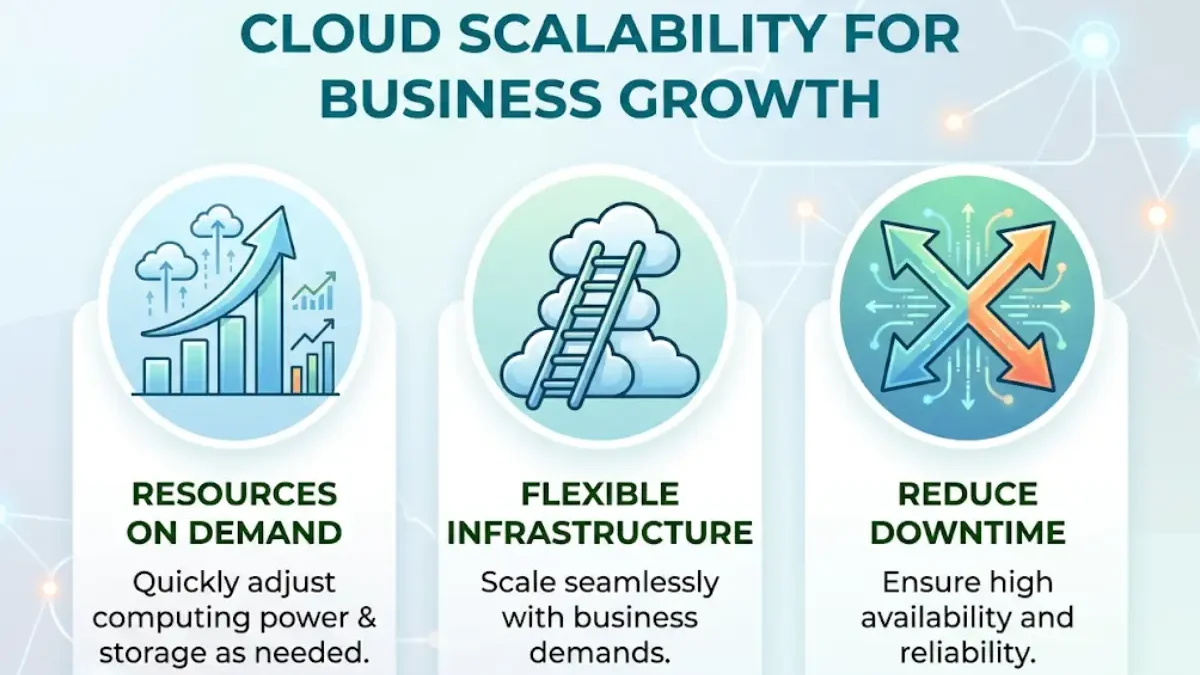
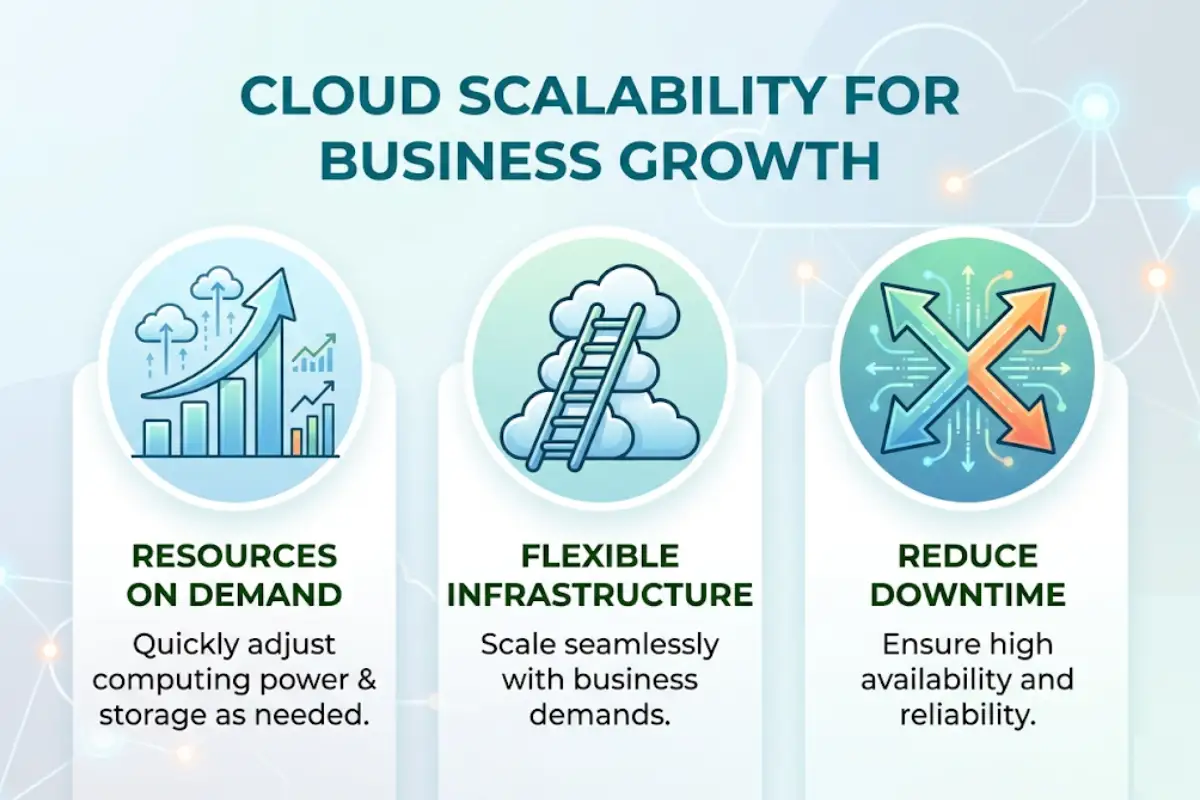
Today‘s organizations require solutions that are scalable, to match the speed of demand from customers. Cloud Scalability for Business Growth has emerged as one of the significant benefits of cloud computing as it enables organizations to scale up or down resources instantly without investing heavily in their infrastructure.
Cloud adoption will further accelerate from 2026 with a focus on AI workloads, digital transformation and cost optimization. Gartner predicts that public cloud spend in India will reach over $17.5 billion in 2026 and that IaaS will grow at 40% Y-o-Y, mainly driven by the need for scalable cloud infrastructure. 4.
No matter if you‘re a startup with rapid growth looming or an enterprise managing millions of transactions, scalable cloud infrastructure provides agility, resilience, and efficiency.
Table of Contents
What Is Cloud Scalability?
Cloud scalability is the ability of cloud infrastructure to scales in or out computational resources automatically according to the workload. Cloud environments have the ability to allocate resources in a matter of minutes or even seconds as compared to what would normally take longer to buy, install, and deploy on-premise systems.
As Microsoft Azure states, scalability in the cloud enables an organization to deliver performance, control costs and quickly adapt to changing business requirements by providing the ability to scale up or down the allocated resources.
Types of Cloud Scalability
| Type | Description | Example |
| Vertical Scaling | Increase power of existing servers | Adding CPU and RAM |
| Horizontal Scaling | Add more servers | Expanding server clusters |
| Auto Scaling | Automatic resource adjustments | Scaling during traffic spikes |
| Global Scaling | Expanding across regions | Serving worldwide customers |
Why It Matters
Businesses experience fluctuations in:
- Website traffic
- Application usage
- Data storage requirements
- AI processing workloads
- Seasonal demand
Provides scalable cloud infrastructure so it can be streamlined without over aggrandizement.
How Businesses Scale Resources Efficiently
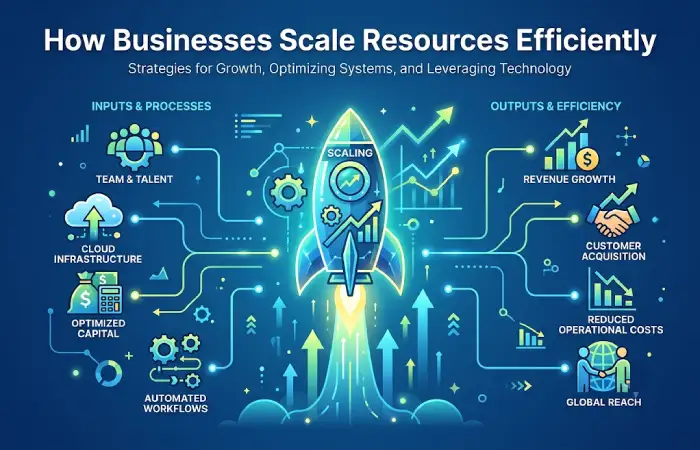
One of the biggest benefits of the cloud is the ability to simply scale resources up or down as needed. Cloud computing provides organizations with an anytime, anywhere, on demand return to demand, providing the ability to grow and shrink resources to meet the current needs of the business.
As 2026 rolls around, companies utilize the cloud ‘s great scalability to handle everything from spikes in traffic and telecommuters, to AI driven programs and international consumers. If a new feature or service needs to be scaled up, the company’s performance isn‘t compromised.
Key Scaling Mechanisms
- Auto-Scaling Groups
Automatically add or remove servers based on:
- CPU utilization
- Memory usage
- Network traffic
- User demand
- Load Balancing
Services multiple servers to avoid bottleneck.
- Containerization
Tools such as Kubernetes enable the size of each part of an application to be scaled up independently of each other, instead of scaling the whole system.
- Serverless Computing
Only pay for the resources used, no idle infrastructure.
Cloud Platform Scalability Comparison (2026)
| Feature | AWS | Azure | Google Cloud |
| Auto Scaling | Excellent | Excellent | Excellent |
| Kubernetes Support | Strong | Strong | Industry Leading |
| AI Workload Support | Excellent | Excellent | Excellent |
| Global Regions | 35+ | 60+ | 40+ |
| Hybrid Cloud | Good | Excellent | Good |
| Enterprise Integration | Strong | Outstanding | Strong |
Official Resources
| Provider | Documentation |
| AWS | https://aws.amazon.com/autoscaling/ |
| Azure | https://azure.microsoft.com |
| Google Cloud | https://cloud.google.com |
Benefits of On-Demand Infrastructure
Scalability of cloud provides real business benefits other than simply provision more resources.
- Cost Optimization
An entrepreneur using traditional infrastructure has to buy the hardware years before it is actually required.
Cloud platforms allow businesses to:
- Pay only for usage
- Eliminate hardware maintenance
- Reduce capital expenditures
- Improve cash flow
According to Microsoft, the benefits of a fully scalable cloud are huge as it enable implementing right size resources and no idle infrastructure costs.
- Improved Performance
Scalable systems react automatically when there is more demand for it.
Benefits include:
- Faster website loading
- Reduced downtime
- Better user experiences
- Consistent application performance
- Faster Innovation
Teams might offer new services without infrastructure procurement.
- Business Agility
Companies can:
- Launch products faster
- Enter new markets
- Support remote teams
- Adapt to changing customer needs
Cloud Market Growth Supporting Scalability
| Metric | Value |
| Global Cloud Market 2025 | $943.7 Billion |
| Global Cloud Market 2026 | $1.18 Trillion |
| Projected Market 2033 | $3.35 Trillion |
| CAGR (2026-2033) | 16% |
Real-World Examples of Scalable Cloud Solutions
E-Commerce Platforms
Online retailers experience massive traffic spikes during:
- Black Friday
- Cyber Monday
- Holiday sales
Cloud auto-scaling guarantees web sites stays operational when faced with abrupt traffic surges.
Benefits
- No downtime
- Better customer experiences
- Increased revenue
SaaS Companies
Developers are constantly bringing in new members
Scalable cloud infrastructure enables:
- Instant user provisioning
- Performance consistency
- Global expansion
AI-Powered Businesses
Large scale computing resources are demand by AI workloads.
While AI is expected to be critical to cloud decisions by 2026, industry insiders see a rise in adoption of hybrid/cloud and multi-cloud cloud strategies to meet the needs of growing AI infrastructure.
Streaming Platforms
Video streaming services scale resources dynamically based on:
- Viewer counts
- Geographic demand
- Content popularity
Best Practices for Managing Growth
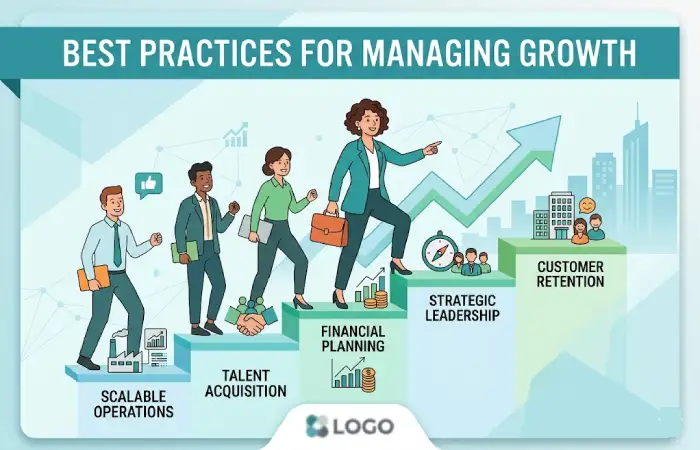
Planned and governed: To successfully scale cloud infrastructure.
- Implement Auto Scaling
Utilize automated policies rather than doing it all with resources.
- Monitor Performance Metrics
Track:
- CPU utilization
- Memory usage
- Response times
- Network throughput
- Adopt Multi-Cloud Strategies
Furthermore, numerous enterprises are utilizing multiple cloud providers to achieve increased resilience and alleviate vendor lock-in. According to some reports, multi-cloud adoption will continue to be one of the most significant cloud trends entering 2026.
- Establish FinOps Practices
FinOps helps businesses:
- Control cloud spending
- Improve resource efficiency
- Align technology investments with business goals
- Design for Failure
Cloud failures still happen, so disaster recovery is paramount. There are many suggestions from the industry to improve resiliency such as deploying data across numerous regions, or having backup systems and spreading workloads around.
Frequently Asked Questions
What is cloud scalability?
Cloud scalability, is the ability to add or remove computational resources in response to business requirements, with no significant modification to infrastructure.
Why is cloud scalability important for business growth?
Business can handle the increasing workloads, performance and also decrease the infrastructure cost.
Which cloud provider offers the best scalability?
All three AWS, Azure and Google Cloud provide the excellent scalability capabilities. The optimal option will be determined by business requirements, integrations and budget.
Does scalability reduce costs?
Yes. Resources are paid for only on what are used, eliminating expensive upfront hardware purchases.
What industries benefit most from cloud scalability?
E-commerce, SaaS, healthcare, finance, AI, media streaming and manufacturing are some of the areas that benefit from large-scale cloud infrastructure.
Conclusion
The ability to scale in the cloud has become an essential driver of growth for businesses today. With overall cloud consumption up and infrastructure needs diverging due to AI-enabled workloads, organizations require the ability to dynamically provision flexible, consumption-based platforms that can keep pace with evolving needs. By adopting auto-scaling, multi-cloud architectures, FinOps enabling practices and resilient design principles, organizations will be positioned for growth as they scale in the cloud in 2026.