

 Kashifa Jafar
Technology Writer & Contributor
Kashifa Jafar is a technology writer and contributor at FutureTechExpert with 4+ years of experience in technology writing and content creation.
Read Full Bio of Author →
Kashifa Jafar
Technology Writer & Contributor
Kashifa Jafar is a technology writer and contributor at FutureTechExpert with 4+ years of experience in technology writing and content creation.
Read Full Bio of Author →
 Sameena Begum
Health, Technology & Digital Content Reviewer
Sameena reviews selected health, wellness, technology, and digital content for clarity, factual presentation, and reader usefulness.
Read Full Bio of Reviewer →
Sameena Begum
Health, Technology & Digital Content Reviewer
Sameena reviews selected health, wellness, technology, and digital content for clarity, factual presentation, and reader usefulness.
Read Full Bio of Reviewer →
Careers in cloud computing are one of the fastest-growing tech careers of 2026. To migrate everything, their apps, databases, AI loads, and enterprise infrastructure to the cloud and recruit cloud architects, platform engineers, devops engineers, and security engineers.
The market forecast states that globally, spending on cloud computing will exceed US$1.1 trillion in 2026 and will 14 million worldwide. Companies migrating to the Amazon Web Services, Microsoft Azure, or Google Cloud Platform need specialists to plan, deliver and operationalise it.
Whether you are a student, IT worker or planning a career move, cloud computing offers lucrative salaries, the benefit of remote working and job security.
Professionals entering the tech industry often explore the broader benefits of cloud computing to understand why cloud expertise is in high demand.
Why Cloud Computing Careers Are Growing So Fast
Several factors are driving cloud job demand:
- AI infrastructure expansion
- Multi-cloud adoption
- Cloud security requirements
- Digital transformation initiatives
- Remote workforce infrastructure
- Growing demand for automation and DevOps
Research conducted has shown that almost 90% of the organisations today are making use of multi-cloud strategies, thereby increasing the demand for industry specialists who are well versed with AWS, Azure and Google Cloud.
Many employers seek candidates with experience using leading cloud computing platforms for infrastructure deployment and management.
 This article is part of
Benefits of Cloud Computing
Table of Contents
Best Cloud Computing Careers
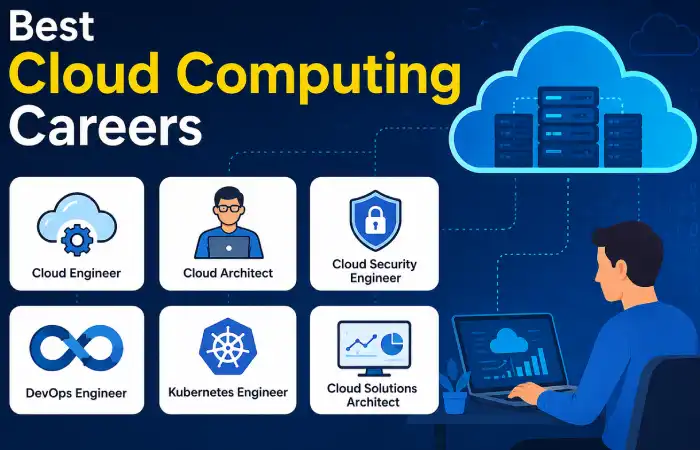
Cloud computing remains one of the hottest, most profitable and most future-proof technology areas in 2026. With huge investments being made in cloud infrastructure, AI platforms, security and automation everywhere, we‘re seeing unprecedented numbers of open positions for cloud skills. So whether you‘re just beginning or planning to take your IT career to the next level, cloud roles are well paid, secure and international.
Choose from several possible career specialisation paths in the cloud industry.
| Role | Experience Level | Career Growth | Demand |
| Cloud Engineer | Beginner–Mid | High | Very High |
| Cloud Architect | Senior | Excellent | Very High |
| DevOps Engineer | Mid–Senior | Excellent | High |
| Cloud Security Engineer | Mid–Senior | Excellent | Extremely High |
| Site Reliability Engineer (SRE) | Mid–Senior | High | High |
| Kubernetes Engineer | Mid–Senior | High | Growing |
| Platform Engineer | Mid–Senior | High | Growing |
| FinOps Analyst | Mid | Growing | Medium |
| Cloud Consultant | Senior | High | High |
| Multi-Cloud Engineer | Advanced | Excellent | Very High |
In 2026, for people starting the cloud industry, Cloud Engineer is suitable with the best salary and for long-term opportunity, Cloud Architect and Cloud Security Engineer are still the highest-paid job.
Professionals entering the tech industry often explore the broader benefits of cloud computing to understand why cloud expertise is in high demand.
Cloud Engineer Salary Guide
Salaries for clerks differ from state to state, depending on your level of training and years of experience.
| Cloud Role | Entry-Level Salary | Senior-Level Salary | Demand Level | Recommended Resource |
| Cloud Engineer | 90K–115K USD | $145K–$220K+ | Very High | AWS Skill Builder |
| Cloud Architect | 110K–130K USD | $160K–$250K+ | Very High | AWS Solutions Architect Learning Path |
| DevOps Engineer | 95K–120K USD | $155K–$230K+ | High | Docker Learning Center |
| Cloud Security Engineer | 100K–140K USD | $200K–$280K+ | Extremely High | Microsoft Learn Security Training |
| Site Reliability Engineer (SRE) | 105K–135K USD | $180K–$260K+ | High | Google SRE Resources |
| Platform Engineer | 100K–130K USD | $175K–$250K+ | Growing Fast | Kubernetes Documentation |
| Kubernetes Engineer | 105K–135K USD | $185K–$270K+ | Very High | CNCF Kubernetes Training |
| Multi-Cloud Engineer | 110K–145K USD | $190K–$280K+ | Very High | Google Cloud Skills Boost |
| FinOps Specialist | 90K–120K USD | 160K–220K+ USD | Growing | FinOps Foundation |
| AI Infrastructure Engineer | 120K–160K USD | 20K–350K+ USD | Explosive Growth | NVIDIA Deep Learning Institute |
India Salary Guide (2026)
| Role | Salary Range |
| Cloud Support Engineer | ₹4–8 LPA |
| Cloud Engineer | ₹8–28 LPA |
| Cloud Security Engineer | ₹12–55 LPA |
| Cloud Architect | ₹18–65 LPA |
| Multi-Cloud Engineer | ₹12–55 LPA |
Top Cloud Certifications in 2026
Certifications still yield substantial payoffs and benefits in employment.
Most Valuable Certifications
| Certification | Provider | Best For |
| AWS Solutions Architect Associate | AWS | Cloud Engineers |
| AWS Solutions Architect Professional | AWS | Architects |
| Azure Solutions Architect Expert | Microsoft | Enterprise Architects |
| Azure Administrator | Microsoft | Cloud Administrators |
| Google Professional Cloud Architect | Google Cloud | Architects |
| Associate Cloud Engineer | Google Cloud | Beginners |
| Certified Kubernetes Administrator | CNCF | Platform Engineers |
| Terraform Associate | HashiCorp | Infrastructure Automation |
Certification ROI Comparison
| Certification | ROI Score | Market Demand |
| AWS SAA-C03 | Very High | Excellent |
| Azure AZ-305 | Very High | Excellent |
| Google PCA | High | High |
| CKA | High | Growing |
| Terraform Associate | High | Growing |
The growing adoption of artificial intelligence in cloud computing is creating new career opportunities in automation and intelligent cloud services.
How to Become a Cloud Architect
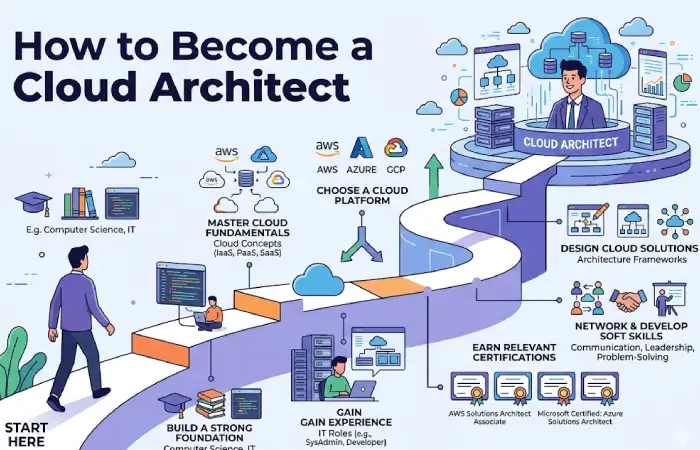
The number of cloud careers is still jobs are on the top earnings list.
Step 1: Learn Cloud Fundamentals
Understand:
- Networking
- Storage
- Virtualization
- Linux
- Security
Step 2: Master One Cloud Platform
Choose:
- AWS
- Azure
- Google Cloud
Step 3: Gain Hands-On Experience
Build projects involving:
- Virtual Machines
- Kubernetes
- Load Balancers
- Databases
- Infrastructure as Code
Step 4: Earn Certifications
Recommended path:
- Cloud Fundamentals
- Associate Certification
- Professional Architect Certification
Step 5: Learn Multi-Cloud Architecture
Today, companies tend to seek for professionals who have knowledge of more than one cloud provider.
Organizations increasingly hire cloud professionals to maximize the business benefits of cloud computing such as scalability and operational efficiency.
Skills Needed for Cloud Computing Jobs
Technical skills mean more than certifications today.
Core Skills
- Linux Administration
- Networking
- Cloud Security
- Virtualization
- Containers
- Kubernetes
- Terraform
- CI/CD
- Monitoring & Logging
Programming Skills
- Python
- Java
- Go
- Bash
- PowerShell
Emerging Skills for 2026
| Skill | Demand |
| Kubernetes | Very High |
| Terraform | Very High |
| Cloud Security | Extremely High |
| AI Infrastructure | Extremely High |
| FinOps | Growing |
| Multi-Cloud Architecture | Very High |
Cloud Career Roadmap (Beginner to Expert)
IT Fundamentals
↓
Cloud Practitioner / AZ-900
↓
Cloud Engineer
↓
DevOps / Security / Platform Engineer
↓
Cloud Architect
↓
Senior Architect / Multi-Cloud Expert
Expected timeline:
| Stage | Duration |
| Beginner | 3–6 Months |
| Junior Cloud Engineer | 6–12 Months |
| Mid-Level Engineer | 2–4 Years |
| Cloud Architect | 5+ Years |
Organizations increasingly hire cloud professionals to maximize the business benefits of cloud computing such as scalability and operational efficiency.
FAQ
Is cloud computing a good career in 2026?
Yes. The anticipated continuing growth of AI, digital corporate transformation and multi-cloud adoption seems to make sure that cloud remains an area of fast growth in technology.
What cloud job pays the most?
The median roles earning the highest salaries are identified as Cloud Architect and Cloud Security Engineer.
Which cloud certification has the greatest return on investment?
The AWS Solutions Architect Associate certification along with other professional certifications is generally the least ROI-intensive of cloud certifications.
Do I need a degree for cloud computing?
Not always. In fact, several employers value experience, certifications and real-world cloud projects more than academic qualifications.
Which cloud platform should beginners learn?
AWS still remains the most common point of entry, again due to market pressure, this time with Azure and Google Cloud being the second and third most common alternatives.
Conclusion
Cloud Computing Careers remains one of the most fulfilling and future-proof technology tracks in 2026. As companies increasing their use of cloud they will be searching for Web Developers, Cloud Engineers, Cloud Architects, Cloud and Infrastructure Engineers, DevOps Engineers, Cloud Security Specialists, to names a few, across all industries. Cloud computing has the appeal of high salaries, job security, working from home, and a fast developing, constantly innovating industry to attract new comers to the field.
Kashifa Jafar is a technology writer and contributor at FutureTechExpert with 4+ years of experience in technology writing and content creation.
Read Full Bio of Author →Sameena reviews selected health, wellness, technology, and digital content for clarity, factual presentation, and reader usefulness.
Read Full Bio of Reviewer →