
 Kashifa Jafar
Technology Writer & Contributor
Kashifa Jafar is a technology writer and contributor at FutureTechExpert with 4+ years of experience in technology writing and content creation.
Read Full Bio of Author →
Kashifa Jafar
Technology Writer & Contributor
Kashifa Jafar is a technology writer and contributor at FutureTechExpert with 4+ years of experience in technology writing and content creation.
Read Full Bio of Author →
 Sameena Begum
Health, Technology & Digital Content Reviewer
Sameena reviews selected health, wellness, technology, and digital content for clarity, factual presentation, and reader usefulness.
Read Full Bio of Reviewer →
Sameena Begum
Health, Technology & Digital Content Reviewer
Sameena reviews selected health, wellness, technology, and digital content for clarity, factual presentation, and reader usefulness.
Read Full Bio of Reviewer →
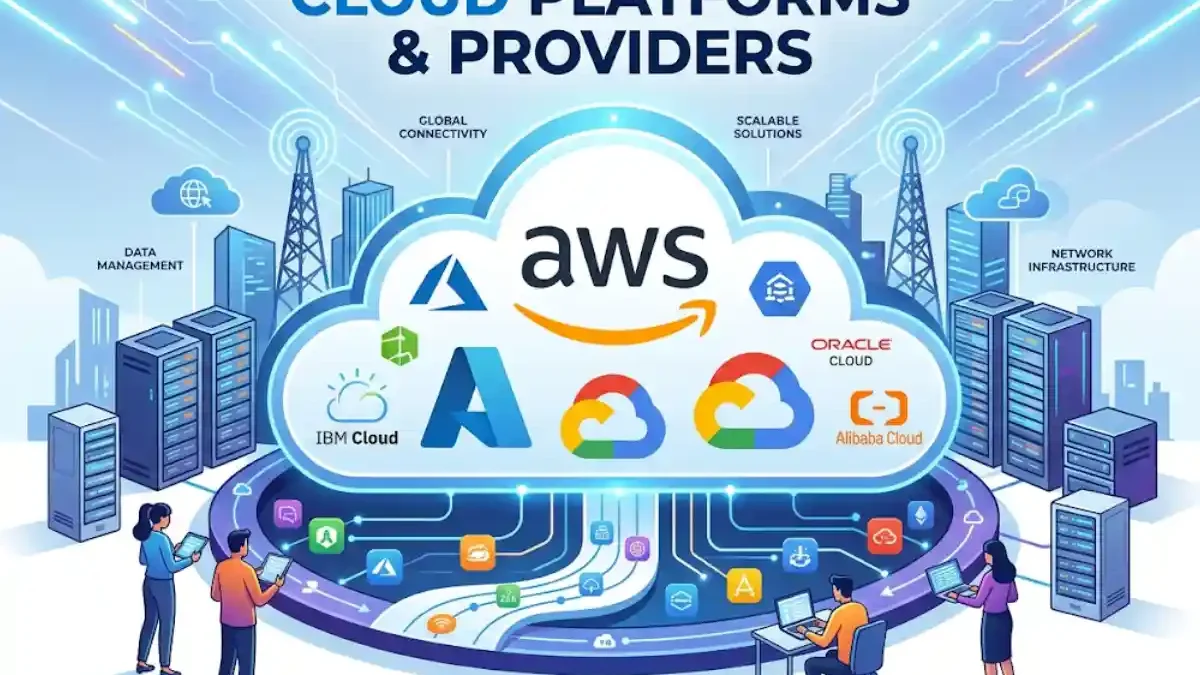
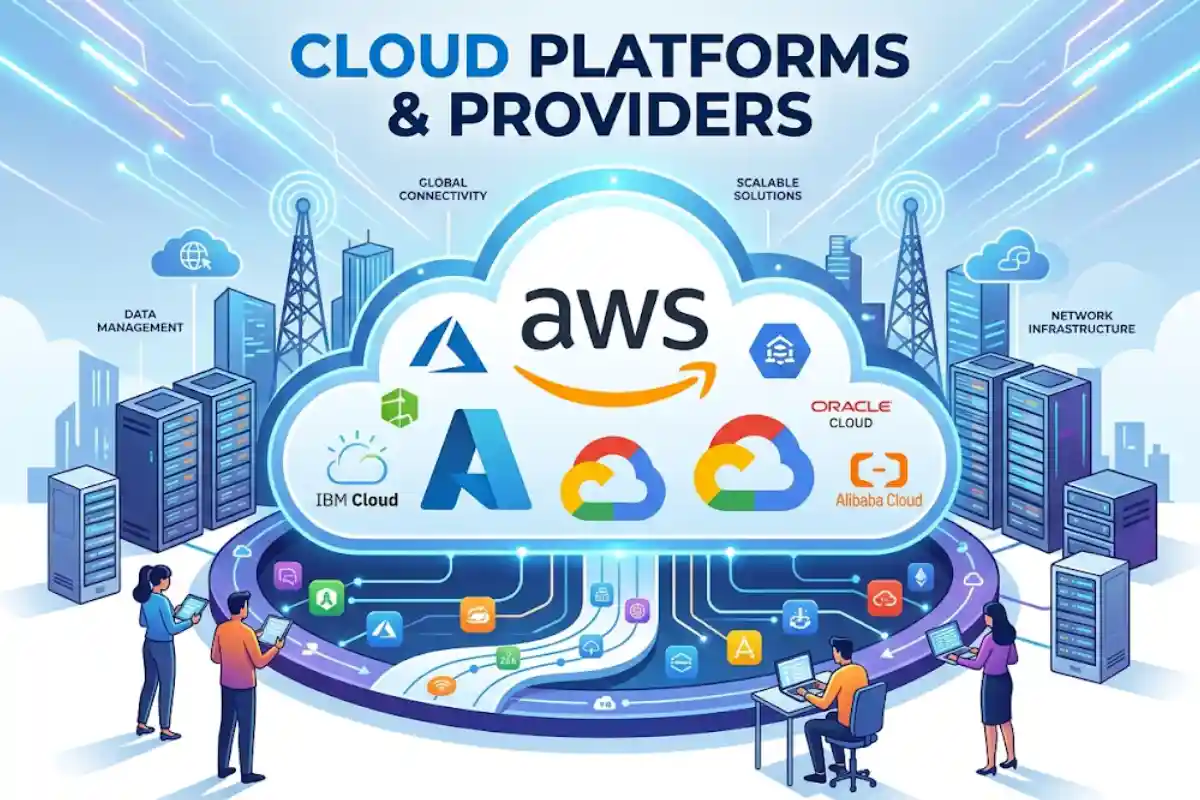
Cloud Platforms & Providers are what every company relies on in today‘s day-to-day operations. From establishing a start-up, an enterprise application or even deploying AI solutions. The cloud provider, when selected carefully, decides the show in terms of performance, scalability, security and price.
Emerging Market Trends Cloud computing remains a rapidly growing market as all organisations are to continue to shift from their traditional fixed infrastructure on-premise to a nimbler, aggregated and flexible pay-per-use cloud one.
Global public cloud spending is estimated to surpass US$500 billion in 2026, in the wake of digital transformation and the deployment of AI applications. Three players now battle for market share:
- Amazon Web Services (AWS)
- Microsoft Azure
- Google Cloud Platform (GCP)
Combined, they account for well over two-thirds of worldwide cloud infrastructure expenditures.
Businesses exploring digital infrastructure often research the overall benefits of cloud computing before selecting the right cloud platform for their operations.
Cloud Provider Market Share Comparison (2026)
| Cloud Provider | Approx. Market Share | Best For |
| AWS | 31–32% | Startups, Enterprises, AI Infrastructure |
| Microsoft Azure | 22–25% | Microsoft-Centric Businesses |
| Google Cloud | 11–12% | Data Analytics & AI |
| Others (Oracle, IBM, Alibaba, etc.) | 30%+ | Specialized Use Cases |
Source: Multiple 2026 industry analyses and cloud market reports.
 This article is part of
Benefits of Cloud Computing
Table of Contents
What Are Cloud Platforms?
Cloud platforms offer computational power according to the needs and over the internet. Organisations can rent cloud resources instead of buying servers and managing data centres. Resources that can be rented are:
- Virtual machines
- Storage
- Databases
- Networking
- AI services
- Security tools
- Serverless computing
Career development is often supported through practical cloud comparisons and tutorials.
Benefits include:
- Reduced infrastructure costs
- Faster deployment
- Global scalability
- Enhanced security
- Business continuity
- AI and machine learning integration
Understanding cloud computing basics helps organizations compare platform features, scalability, and deployment options effectively.
AWS vs Azure vs Google Cloud
The selection of the “Big Three” often depends on business requirements.
Leading providers offer specialized cloud industry solutions for various business needs.
Feature Comparison Table
| Feature | AWS | Azure | Google Cloud |
| Global Market Share | Highest | Second | Third |
| Number of Services | 200+ | 200+ | 150+ |
| AI & Machine Learning | Excellent | Excellent | Industry Leading |
| Enterprise Integration | Strong | Outstanding | Good |
| Kubernetes Support | Excellent | Excellent | Best-in-Class |
| Hybrid Cloud | Strong | Excellent | Good |
| Pricing Simplicity | Moderate | Moderate | Easier |
| Startup Adoption | Very High | Medium | Growing |
AWS Strengths
- Largest cloud ecosystem
- Broadest service catalog
- Extensive documentation
- Massive partner network
- Leading AI infrastructure
Azure Strengths
- Deep Microsoft integration
- Active Directory compatibility
- Strong hybrid-cloud capabilities
- Enterprise-focused security
Google Cloud Strengths
- Advanced analytics
- BigQuery platform
- Vertex AI ecosystem
- Kubernetes leadership
Modern providers are integrating artificial intelligence in cloud computing to improve automation, performance optimization, and system monitoring.
Best Cloud Computing Platforms
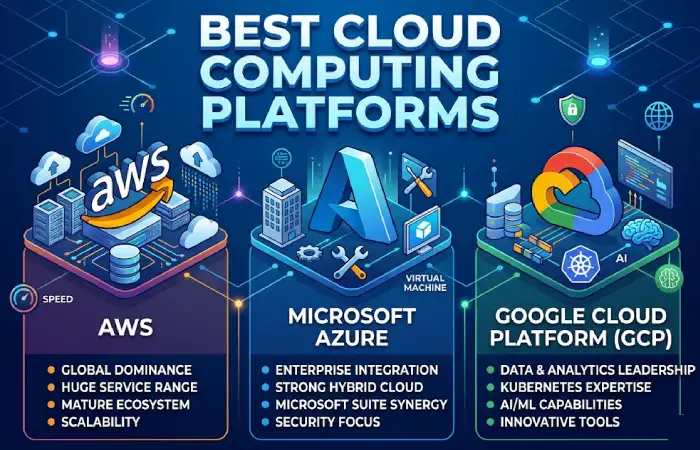
Absolutely AWS, Azure or Google Cloud is going to dominate your business so you should also consider some other platforms.
| Platform | Ideal Users |
| AWS | Enterprises & Startups |
| Azure | Microsoft Organizations |
| Google Cloud | AI & Analytics Teams |
| Oracle Cloud | Database Workloads |
| IBM Cloud | Regulated Industries |
| Alibaba Cloud | Asian Markets |
| DigitalOcean | Small Businesses |
| Linode (Akamai) | Developers |
How to Choose a Cloud Provider
Consider:
- Budget
- Compliance requirements
- Existing technology stack
- Geographic coverage
- AI requirements
- Support quality
- Future scalability
Professionals working with cloud industry solutions often develop highly valued technical skills.
Beginner’s Guide to Amazon Web Services
AWS remains the most widespread Cloud platform used by the world. Knowledge of cloud storage solutions is important for many cloud computing roles.
Core AWS Services
| Service | Purpose |
| EC2 | Virtual Servers |
| S3 | Object Storage |
| RDS | Managed Databases |
| Lambda | Serverless Computing |
| VPC | Networking |
| Bedrock | Generative AI |
AWS propelled a strong growth in 2026 as enterprises AI adoption boomed worldwide.
Platform performance often depends on integrated cloud storage solutions that support scalability.
Why Beginners Start with AWS
- Huge learning ecosystem
- Free Tier availability
- Large job market
- Broad certification paths
Microsoft Azure Benefits Explained

Azure became popular among organizations who were using the Microsoft products. Users frequently consult cloud comparisons and tutorials before choosing a platform.
Key Benefits
- Seamless Microsoft Integration
Works naturally with:
- Windows Server
- Microsoft 365
- Active Directory
- Power Platform
- Strong Hybrid Cloud Support
A lot of organizations have hybrid on-premise systems and Azure.
- Enterprise Security
Azure provides sophisticated governance, compliance and identity management.
- AI Innovation
The range of Azure AI services keep expanding rapidly by enterprise ai solutions and integrations, too.
Reliable infrastructure providers often include strong cloud security and data protection features to safeguard sensitive information and online systems.
Google Cloud Platform for Businesses
Google Cloud has established itself as a major player thanks to both its leadership in AI and Analytics. Job seekers can prepare for upcoming opportunities by studying future cloud computing trends.
Why Businesses Choose GCP
BigQuery Analytics
One of the best cloud data warehouses in terms of power.
Vertex AI Platform
Supports:
- Generative AI
- Machine Learning
- Model Deployment
- AI Operations
Kubernetes Leadership
Google established the container operating system Kubernetes and continues to lead in the management of containers.
Cost Efficiency
Several organizations like Google for its ease of pricing and automatic discounts. Platform developers regularly adapt to future cloud computing trends to remain competitive.
AI Capabilities Comparison (2026)
| AI Capability | AWS | Microsoft Azure | Google Cloud | Resource Link |
| Generative AI Platform | Amazon Bedrock | Azure AI Foundry | Vertex AI | AWS Bedrock: Amazon Bedrock Documentation |
| Foundation Models | Claude, Llama, Nova, Mistral, Cohere, OpenAI models | GPT, Phi, Llama, Mistral, Claude | Gemini, Gemma, Claude, Llama, Mistral, 200+ models | Google Model Garden: Vertex AI Model Garden |
| Enterprise AI Integration | Deep AWS ecosystem integration | Best Microsoft 365 & enterprise integration | Strong BigQuery and analytics integration | Azure AI: Azure AI Foundry Documentation |
| AI Agent Development | Bedrock Agents | Azure AI Agents | Agent Development Kit + Agent Studio | Google AI Agents: Google Vertex AI Documentation |
| Model Selection Flexibility | Very High | High | Very High | Vertex AI offers Model Garden with extensive model options. |
| Enterprise Security & Governance | Excellent | Excellent | Excellent | AWS Guardrails: AWS Bedrock Guardrails Guide |
| AI Training & MLOps | SageMaker + Bedrock | Azure Machine Learning | Vertex AI End-to-End MLOps | Vertex AI combines training, deployment, monitoring, and MLOps workflows. |
| Data Analytics Integration | Strong | Strong | Industry-Leading | BigQuery: Google BigQuery Documentation |
| Multimodal AI | Supported | Supported | Advanced Gemini Models | Gemini supports text, image, video, and multimodal AI workflows. |
| Enterprise Compliance | Excellent | Excellent | Strong | Enterprise compliance remains a major differentiator among hyperscalers. |
| Best For | Large Enterprises & AWS Users | Microsoft-Centric Organizations | AI, Analytics & Data-Driven Companies | Gartner Cloud Research: Google Cloud AI Resources |
AI adoption will be one of the major drivers of cloud provider choice for 2026.
Many enterprises adopt advanced platforms to maximize the business benefits of cloud computing such as flexibility, cost savings, and remote accessibility.
Frequently Asked Questions
Which cloud platform is best in 2026?
AWS still remains the elastic leader with the mature ecosystem, Azure is the robust enterprise partner, Google Cloud is the AI & analytics leader.
Is AWS better than Azure?
Neither is absolute better. AWS has a wider range of services, and Azure integrates more easily within Microsoft environments.
Is Google Cloud cheaper than AWS?
In a lot of cases, Google Cloud provides a more straightforward pricing plan and even has discounts built-in, but actual costs could be figured by workload patterns.
Which cloud platform is best for AI?
While Google Cloud, Azure, and AWS all offer robust AI services, Google Cloud finds itself preffered for its advanced analytics, Azure‘s enterprise AI and AWS for its AI infrastructure.
Should small businesses use cloud platforms?
Absolutely. All cloud providers remove the need for heavy initial investments into infrastructure by offering scalable resources.
Conclusion
Cloud platforms now prove essential for today‘s organizations. All of the big players AWS, Azure and Google Cloud provide robust ecosystems that can run everything from a startup‘s first app to a global-scale AI.
The rapid growth of digital services has increased demand for professionals pursuing cloud computing careers focused on infrastructure management and deployment.
For most businesses:
- Choose AWS for flexibility and scale.
- Choose Azure if you use Microsoft technologies.
- For analytics, AI, and Kubernetes, use Google Cloud.
The very first step is to select the cloud provider according to the technical limitations, as well as the company’s financial resources and growth strategy.
Kashifa Jafar is a technology writer and contributor at FutureTechExpert with 4+ years of experience in technology writing and content creation.
Read Full Bio of Author →Sameena reviews selected health, wellness, technology, and digital content for clarity, factual presentation, and reader usefulness.
Read Full Bio of Reviewer →