
 Kashifa Jafar
Technology Writer & Contributor
Kashifa Jafar is a technology writer and contributor at FutureTechExpert with 4+ years of experience in technology writing and content creation.
Read Full Bio of Author →
Kashifa Jafar
Technology Writer & Contributor
Kashifa Jafar is a technology writer and contributor at FutureTechExpert with 4+ years of experience in technology writing and content creation.
Read Full Bio of Author →
 Sameena Begum
Health, Technology & Digital Content Reviewer
Sameena reviews selected health, wellness, technology, and digital content for clarity, factual presentation, and reader usefulness.
Read Full Bio of Reviewer →
Sameena Begum
Health, Technology & Digital Content Reviewer
Sameena reviews selected health, wellness, technology, and digital content for clarity, factual presentation, and reader usefulness.
Read Full Bio of Reviewer →
Cloud Computing Comparisons & Tutorials are now often crucial for business and website owners seeking to enhance performance, scalability and security. By 2026 cloud computing will be used for everything from small personal blogs and eCommerce sites up to enterprise applications and AI applications.
Gassing the is cloud hosting a better alternative than normal hosting? How to move my website into the cloud? Which cloud platform should I subscribe to for my projects? The below answers these questions in the simplest of styles for noobs.
Readers often begin by exploring the overall benefits of cloud computing before comparing cloud services and solutions.
Why Cloud Computing Matters in 2026
Cloud computing refers to the delivery of delivering all computing resources using the internet instead of building traditional, costly physical set-ups. For example, rather than own and manage expensive servers, databases and other such hardware units firms can simply rent usage time over the web.
According to industry reports, over 90% of organizations are now leveraging some form of cloud services, with uptake for multi-cloud strategies expanding across industries.
Key Benefits
- Lower infrastructure costs
- Faster deployment
- Better scalability
- Improved disaster recovery
- Global accessibility
- Enhanced security controls
- Support for AI and automation workloads
Many beginners use guides covering cloud computing basics to better understand technical concepts and terminology.
 This article is part of
Benefits of Cloud Computing
Table of Contents
Cloud Computing vs Traditional Hosting
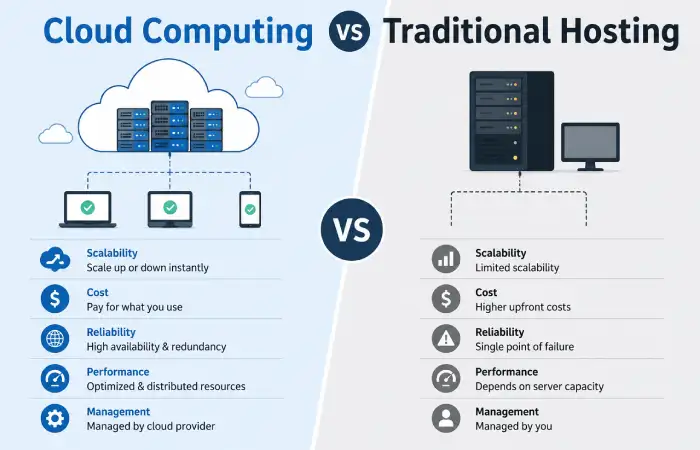
Very frequent question beginners ask is whether cloud hosting is better than traditional hosting.
Comparison Table: Cloud Hosting vs Traditional Hosting (2026)
| Feature | Cloud Hosting | Traditional Hosting |
| Scalability | Instant scaling | Limited upgrades |
| Cost Structure | Pay-as-you-go | Fixed monthly pricing |
| Performance | High availability | Hardware dependent |
| Downtime Risk | Very low | Moderate |
| Resource Allocation | Dynamic | Fixed |
| Backup & Recovery | Automated | Often manual |
| Global Reach | Worldwide data centers | Limited locations |
| Maintenance | Provider-managed | User-managed |
Which Option Is Better?
Cloud hosting is ideal for:
- Growing websites
- SaaS applications
- eCommerce businesses
- AI-powered platforms
- High-traffic blogs
Traditional hosting may still work for:
- Small static websites
- Personal portfolios
- Low-traffic projects
Expert tip: Most of them are opting for cloud hosting when they launch a new website in 2026 since scalability and uptime requirements will always be on the rise.
Comparing providers helps organizations maximize the business benefits of cloud computing while controlling costs.
Benefits of Cloud Hosting for Websites
There are substantial benefits to cloud hosting that can be rather beneficial not only from an SEO and business perspective but also for helping improve user experience;
- Faster Website Loading Speeds
Today‘s cloud infrastructure efficiently allocates resources with minimal latency. This improves page load times.
Benefits include:
- Better Core Web Vitals
- Improved SEO rankings
- Lower bounce rates
- Enhanced user experience
- Automatic Scaling
Traffic spikes no longer crash websites.
Cloud platforms automatically:
- Add resources during traffic surges
- Reduce resources during low demand
- Optimize operating costs
- Enhanced Security
Leading cloud providers offer:
- DDoS protection
- Firewall management
- Encryption
- Identity management
- Continuous monitoring
- Better Uptime
Nearly all major Cloud providers provide uptime guarantees of greater than 99.9%.
- Cost Efficiency
No need to buy expensive hardware but buy the resources used.
Security features are a major evaluation factor, making knowledge of cloud security and data protection strategies especially important.
Major Cloud Platform Comparison (2026)
Top Cloud Providers Comparison
| Cloud Provider | Best For | Key Strengths | Free Tier Available | Official Resources |
| Amazon Web Services (AWS) | Enterprises, Startups, Global Applications | Largest market share, extensive services, global infrastructure | Yes | AWS Documentation |
| Microsoft Azure | Windows Workloads, Hybrid Cloud, Enterprise IT | Strong Microsoft integration, hybrid cloud capabilities | Yes | Azure Documentation |
| Google Cloud Platform (GCP) | AI, Machine Learning, Data Analytics | Industry-leading AI tools, BigQuery, Kubernetes expertise | Yes | Google Cloud Documentation |
| Oracle Cloud Infrastructure (OCI) | Databases, Enterprise Applications | High-performance database services, competitive pricing | Yes | OCI Documentation |
| IBM Cloud | Hybrid Cloud, Regulated Industries | Strong security, Red Hat OpenShift integration | Yes | IBM Cloud Documentation |
| DigitalOcean | Developers, SMBs, Startups | Simple interface, predictable pricing | Limited Credits | DigitalOcean Docs |
| Alibaba Cloud | Asia-Pacific Expansion | Strong presence in Asia, competitive infrastructure services | Yes | Alibaba Cloud Documentation |
| Cloudflare | Edge Computing, CDN, Security | Global edge network, DDoS protection, serverless services | Yes | Cloudflare Docs |
Quick Recommendations
| Use Case | Recommended Platform |
| Enterprise Applications | AWS |
| Windows Workloads | Azure |
| AI Projects | Google Cloud |
| Startups | Google Cloud |
| Hybrid Cloud | Azure |
| Global Applications | AWS |
Many tutorials include side-by-side reviews of leading cloud computing platforms to help users choose the right solution.
How to Migrate to Cloud Computing
Cloud migration may appear to be complex but if there is a process to follow then the length of time is limited.
To stay current with innovation, many readers also follow future cloud computing trends shaping the next generation of cloud services.
Step 1: Assess Current Infrastructure
Identify:
- Servers
- Applications
- Databases
- Storage requirements
- Traffic patterns
Step 2: Choose a Cloud Provider
Evaluate providers based on:
- Pricing
- Performance
- Security
- Compliance requirements
- Geographic availability
Step 3: Create a Migration Plan
Include:
- Timeline
- Backup procedures
- Testing strategy
- Rollback plan
Step 4: Move Data and Applications
Migration methods include:
- Lift-and-shift
- Re-platforming
- Refactoring
- Hybrid migration
Step 5: Test Everything
Verify:
- Website functionality
- Application performance
- Database integrity
- Security settings
Step 6: Optimize Resources
After migration:
- Monitor usage
- Eliminate unused resources
- Configure auto-scaling
- Optimize costs
Professionals can improve their expertise and discover new cloud computing career opportunities through practical learning resources.
Beginner’s Cloud Computing Tutorial
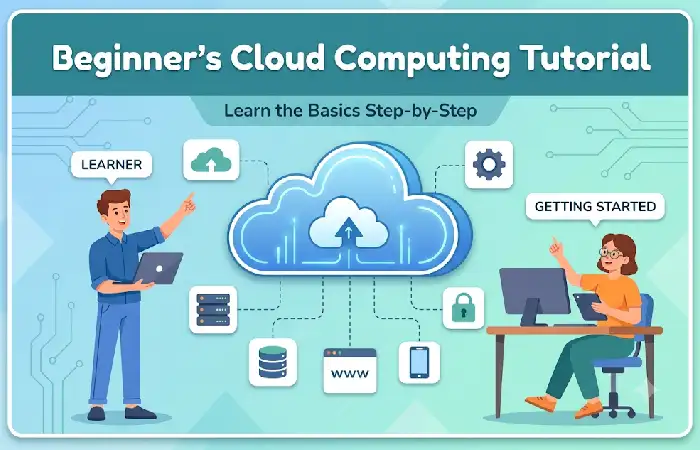
If new to cloud computing, then would be the basic concepts.
What Is the Cloud?
The cloud is a network of remote servers accessed via the internet. Furthermore, cloud providers will host and manage the infrastructure on your behalf rather than installing your applications on your machine.
Storage performance reviews commonly focus on modern cloud storage solutions and their scalability features.
Core Cloud Service Models
| Service Model | Description | Example Use |
| IaaS | Infrastructure as a Service | Virtual Servers |
| PaaS | Platform as a Service | Application Development |
| SaaS | Software as a Service | Productivity Tools |
Deployment Models
| Type | Description |
| Public Cloud | Shared provider infrastructure |
| Private Cloud | Dedicated environment |
| Hybrid Cloud | Combination of both |
| Multi-Cloud | Multiple cloud providers |
Essential Skills for Beginners
Learn:
- Virtual Machines
- Cloud Storage
- Networking Basics
- Security Fundamentals
- Monitoring Tools
- Cost Management
Technical comparisons frequently examine how artificial intelligence in cloud computing enhances performance and automation.
Common Cloud Computing Mistakes to Avoid
Many organizations overspend or expose themselves to security risks through avoidable errors.
- Ignoring Cost Management
Common issues:
- Idle servers
- Overprovisioned resources
- Unused storage
Solution:
Implement continuous cost monitoring.
- Poor Security Configuration
Incorrect permissions, continue to be one of the most common reasons for cloud breaches.
Solution:
Apply least-privilege access controls.
- No Backup Strategy
Even cloud-hosted workloads require backups.
Solution:
Maintain automated backup schedules.
- Skipping Performance Monitoring
Without monitoring, problems go unnoticed.
Solution:
Deploy observability and monitoring tools.
- Migrating Too Quickly
Uncontrolled migrations result in lost time and performance degradation.
Solution:
Use phased migration strategies.
Case studies often highlight successful cloud industry solutions used across healthcare, finance, and other sectors.
FAQ
Is cloud hosting better than traditional hosting?
Going back to the point I raised at the beginning, most sites or businesses these days actually require the scalability, uptime, flexibility, and performance that cloud hosting can give you.
Which cloud provider is easiest for beginners?
Overall Google cloud services seem to be the easier to start with. The GUI and learning materials are easier to use and known more user friendly.
How much does cloud migration cost?
Costs also depend on infrastructure size, complexity of the application, and migration strategy. Some small websites could migrate for hundreds of dollars, whereas enterprise migrations can be much more expensive.
Is cloud computing secure?
Yes. The large cloud providers put huge effort into security. However, the Client must know how to configure permissions/security properly.
Are you a small business? Why not take advantage of the benefits of cloud computing?
Yes, they do. Cloud service enables small businesses to access infrastructure of the same quality as used by larger organizations without huge capital investments.
Conclusion
Cloud Computing Comparisons & Tutorials will help you grasp how today‘s digital infrastructure operates in 2026. From cloud hosting vs traditional hosting, to migration or cloud at a glance, the reasons to go cloud are obvious and include increased scalability, security, better performance and reduced operational complexity.
Organizations that are leveraging cloud technologies now will be in a great position to handle growth, start incorporating AI into their tools, expand into other regions of the world, and meet the needs of their customers. Taking the right steps to follow best practices and choosing the right cloud platform can help deliver the most return on cloud investment with reassurance that it will work and be safe.
Kashifa Jafar is a technology writer and contributor at FutureTechExpert with 4+ years of experience in technology writing and content creation.
Read Full Bio of Author →Sameena reviews selected health, wellness, technology, and digital content for clarity, factual presentation, and reader usefulness.
Read Full Bio of Reviewer →