



Last Updated: June 22, 2026
Cybersecurity Analyst jobs are one of the fastest growing tech jobs in 2026. As cyberattacks grow across industry sectors, companies will be bolstering their Security Operations, Threat Detection and Incident Response teams. If you‘re a student, working in IT, or making a career change, a cybersecurity analyst role offers excellent job security, high salaries and career growth.
Emerging trends indicate that globally employment in information security continues to be robust and demanding as innovative threats such as AI necessitate workforces to identify, analyze and efficiently respond to security breaches. Firms are also significantly amplifying out-sourcing operations in the areas of SIEM tools, threat intel, cloud security and automation.
Table of Contents
Role of a Cybersecurity Analyst
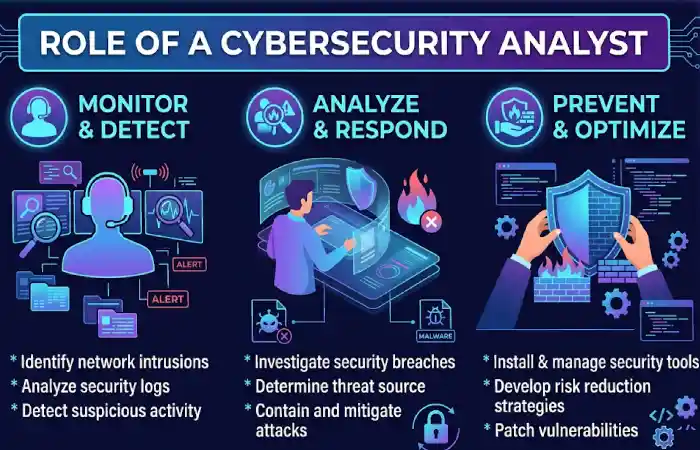
Cybersecurity analyst is the position of a security professional that protects a company’s digital infrastructure from cyber-attacks. What they do in the course of a day: monitor networks, investigate anomalies, analyze security alerts.
Typical responsibilities include:
| Responsibility | Description |
| Security Monitoring | Reviewing logs and alerts |
| Threat Detection | Identifying suspicious activities |
| Incident Response | Investigating and containing attacks |
| Vulnerability Assessment | Finding security weaknesses |
| Risk Management | Reducing organizational risks |
| Compliance Support | Supporting security frameworks and audits |
Cybersecurity Analysts are often the first responders within Security Operation Centers (SoC‘s). They utilize threat intelligence, Endpoint detection and response platforms and security information and event management systems to detect potential intrusions before they happen.
Cybersecurity Market Outlook in 2026
Cybersecurity industry is still struggli to live with critical talent shortages. To the increase of ransomware attacks, cloud adoption, AI-enabled hackers, regulation security teams of companies increasingly extend.
2026 Industry Growth Indicators
| Metric | 2026 Outlook |
| Employment Growth | 28%+ projected growth |
| Cloud Security Demand | Very High |
| AI Security Roles | Rapidly Growing |
| SOC Analyst Hiring | Strong |
| Threat Intelligence Jobs | Increasing |
| Remote Opportunities | Widely Available |
Demand for jobs in this field is expected to grow much faster than the median occupation, another one of best technology jobs.
Key Skills and Tools Used by Security Analysts
To qualify for cybersecurity analyst jobs, it helps to have the above-mentioned existing awareness of safety tools, along with important skills in technical know-how, analysis, and experience. As threats evolve, so do this IT pros analysts are also the entry point for computer security.
As cybercriminals utilize AI-enabled attack strategies and cloud settings grow increasingly intricate, firms demand analysts to have diverse security skills.
Core Technical Skills
Networking Fundamentals
Understanding:
- TCP/IP
- DNS
- HTTP/HTTPS
- VPNs
- Firewalls
Security Monitoring
Analysts must understand:
- Log analysis
- Threat detection
- Alert triage
- Incident response
Cloud Security
Growing demand exists for:
- AWS Security
- Microsoft Azure Security
- Google Cloud Security
Most Requested Security Tools in 2026
| Category | Popular Tools | Resource |
| SIEM | Splunk | https://www.splunk.com |
| SIEM | Microsoft Sentinel | https://learn.microsoft.com/azure/sentinel |
| SIEM | IBM QRadar | https://www.ibm.com/qradar |
| EDR/XDR | CrowdStrike Falcon | https://www.crowdstrike.com |
| EDR/XDR | Microsoft Defender XDR | https://www.microsoft.com/security |
| Threat Intelligence | VirusTotal | https://www.virustotal.com |
| Network Analysis | Wireshark | https://www.wireshark.org |
| SOAR | Cortex XSOAR | https://www.paloaltonetworks.com |
However, year-over-year, SIEM solutions, endpoint detection tools, and threat intelligence methods are still common sights on information security job descriptions in 2026.
Cybersecurity Analyst Career Path
Cyber security provides a number of career opportunities.
Career Progression Roadmap
| Experience | Role |
| 0–1 Years | Junior SOC Analyst |
| 1–3 Years | Cybersecurity Analyst |
| 3–5 Years | Senior Security Analyst |
| 5–8 Years | Security Engineer |
| 8+ Years | Security Architect |
| 10+ Years | Security Manager / CISO |
Specialized Career Paths
- Threat Hunter
- Incident Responder
- Cloud Security Engineer
- Security Consultant
- Security Architect
- Governance, Risk & Compliance (GRC)
- Digital Forensics Specialist
Numerous professionals initially work as SOC analysts prior to transitioning into engineering, architecture or executive roles.
Average Salary and Job Demand
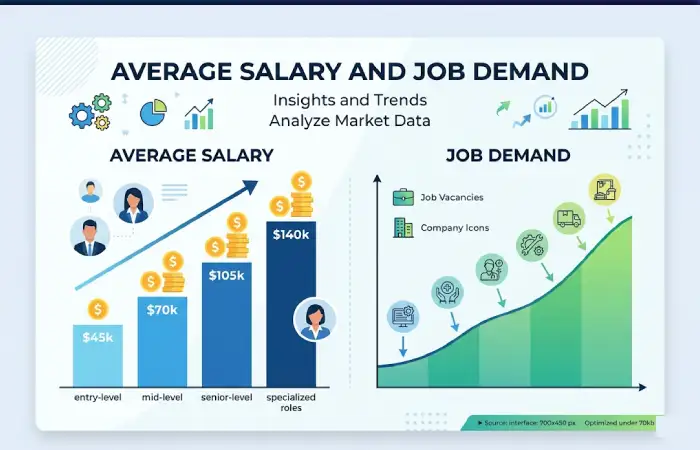
Cybersecurity analyst jobs remain among the highest paying jobs and best individual hiring conditions within the technology industry. As cyber threats become more sophisticated and companies are subjected to burgeoning new compliance mandates, the need for experienced security specialists has never been greater.
Small and large businesses alike including startups and multinational corporations are dedicating significant resources to their cybersecurity teams to safeguard critical infrastructure, digital assets, and sensitive information.
Increasing usage of Cloud computing, work remotely, use of Artificial Intelligence and device of Internet of the Things devices has increased attack surface in the organizations across the globe. Therefore, cyber security analyst are no more either want or needed but is an inevitable entity in IT and security departments.
Global Salary Comparison (2026)
| Experience Level | Average Salary |
| Entry Level | $60,000 – $85,000 |
| Mid-Level | $90,000 – $130,000 |
| Senior Analyst | $130,000 – $170,000+ |
India Salary Trends (2026)
| Experience | Average Salary |
| Fresher | ₹4–8 LPA |
| 2–4 Years | ₹8–15 LPA |
| 5+ Years | ₹15–30+ LPA |
Actual salaries depend on certifications, experience and the level of cloud security required by a given employer. Higher salaries are paid to specialized analysts in the areas of threat intelligence, SIEM engineering and cloud security.
Comparison: Cybersecurity Analyst vs Security Engineer vs Threat Hunter
| Feature | Cybersecurity Analyst | Security Engineer | Threat Hunter |
| Monitoring | High | Medium | Medium |
| Incident Response | High | Medium | High |
| Security Tool Management | Medium | High | Medium |
| Threat Investigation | Medium | Medium | Very High |
| Salary Potential | High | Very High | Very High |
| Entry-Level Friendly | Yes | No | Limited |
This comparison benefits the newcomers to choose the specialization that better fit them then they can have a better career development.
How to Get Hired as a Security Analyst
To secure entry level position to be a cybersecurity analyst; hands on work beats the drudgery of jargon.
Step 1: Learn Security Fundamentals
Study:
- Networking
- Linux
- Windows Security
- Security Concepts
Step 2: Build Hands-On Labs
Practice using:
- TryHackMe
- Hack The Box
- Blue Team Labs Online
- Security Onion
Step 3: Learn One SIEM Platform
Recommended:
- Splunk
- Microsoft Sentinel
Employers usually want hands on SIEM experience.
Step 4: Earn Certifications
Beginner Certifications
| Certification | Provider |
| Security+ | CompTIA |
| ISC2 CC | ISC2 |
| Google Cybersecurity Certificate |
Intermediate Certifications
| Certification | Provider |
| CySA+ | CompTIA |
| SC-200 | Microsoft |
| CEH | EC-Council |
Step 5: Build a Portfolio
Include:
- Threat detection projects
- SIEM dashboards
- Incident response reports
- GitHub repositories
- Security blog content
FAQ
Is cybersecurity analyst a good career in 2026?
Yes. The high demand for information security hiring, high salaries, and long-term career growth still exist.
Do I need a degree to become a cybersecurity analyst?
Not always. For many kind of jobs, employers put more weight on certifications, skills and working experience.
Which certification should beginners pursue first?
IGC2 & CompTIA Security+ are among the most recognized beginning certifications.
Can AI replace cybersecurity analysts?
Existing AI tools help analysts, but do not replace people‘s decisions in investigations, incident response and threat hunting. Human value-adding is essential.
How long does it take to become a cybersecurity analyst?
Most novices can take 6–12 months to be job ready if followed by structured training, lab work, certifications.
Conclusion
Cybersecurity Analyst Jobs are one of the most solid technology careers in 2026. Clients in the financial, healthcare, government, and cloud computing industries are rushing to bring in staff to combat the sophisticated threats faced by many organizations today. Skills that are gained on-the-job, proficiency in leading-edge security solutions, certifications that are valued by the industry and an application-ready portfolio can prepare aspiring analysts for a successful security life.