
 Kashifa Jafar
Technology Writer & Contributor
Kashifa Jafar is a technology writer and contributor at FutureTechExpert with 4+ years of experience in technology writing and content creation.
Read Full Bio of Author →
Kashifa Jafar
Technology Writer & Contributor
Kashifa Jafar is a technology writer and contributor at FutureTechExpert with 4+ years of experience in technology writing and content creation.
Read Full Bio of Author →
 Sameena Begum
Health, Technology & Digital Content Reviewer
Sameena reviews selected health, wellness, technology, and digital content for clarity, factual presentation, and reader usefulness.
Read Full Bio of Reviewer →
Sameena Begum
Health, Technology & Digital Content Reviewer
Sameena reviews selected health, wellness, technology, and digital content for clarity, factual presentation, and reader usefulness.
Read Full Bio of Reviewer →
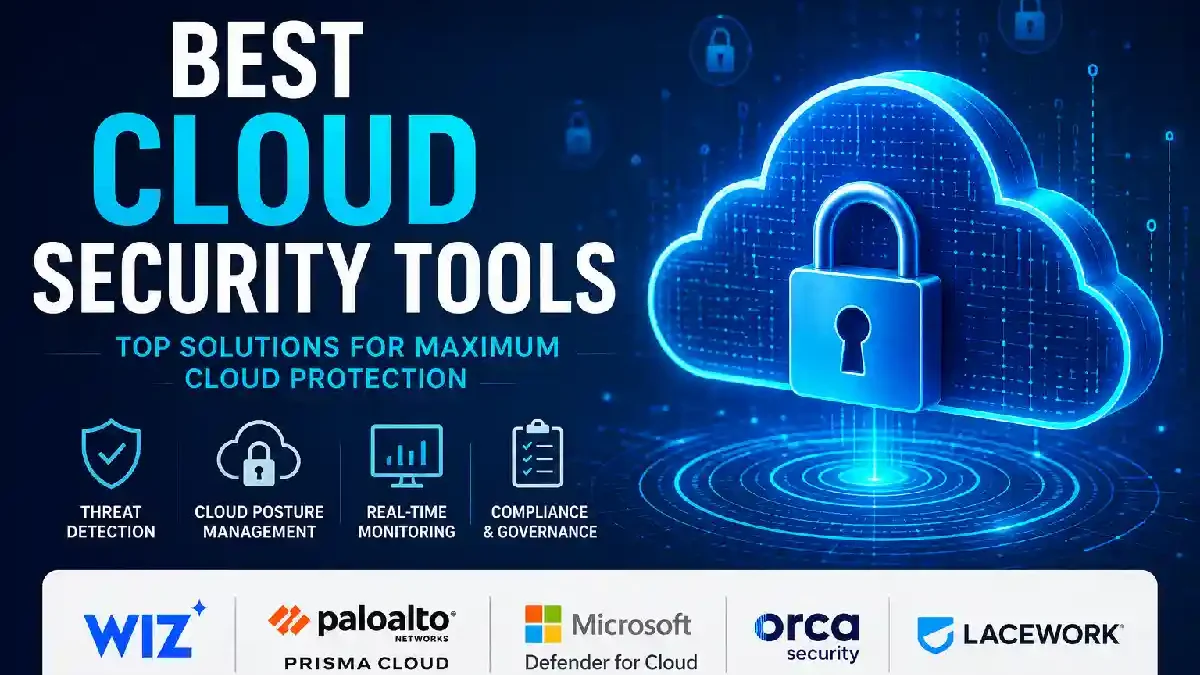
Cloud services are still increasing in 2026; hence, Best Cloud Security Tools is an important concern for companies of all sorts. Whether your cloud native workloads are operating in Google Cloud, AWS, Azure or multi cloud, selecting the right security platform will allow for workload security, adversary discovery and auditability to prevent any misconfigurations.
Discover the top cloud security platforms through this comprehensive review, and understand what core technologies should the get you started with.
Before selecting any security platform, it’s important to understand the cloud data security fundamentals that protect sensitive information across cloud environments.
 This article is part of
Security Resources
Table of Contents
Cloud Security Platforms
Cloud security platforms aim to offer a comprehensive, consolidated view and security for all cloud platforms. The traditional multi-window approach to managing vulnerability, security compliance, workload protection, and detection of threats is being replaced by integrated platforms offering all these functions from one unified dashboard.
Today‘s premier platforms are most frequently Cloud-Native Application Protection Platform (CNAPP), binding CSPM, CWPP, container security, vulnerability management, identity security and runtime protection to each other.
Core Features of Cloud Security Platforms
Most enterprise-grade cloud security platforms include:
- Continuous asset discovery
- Cloud configuration monitoring
- Identity and Access Management (IAM) analysis
- Vulnerability management
- Compliance reporting
- Threat detection
- Malware protection
- Container security
- Kubernetes security
- API security
- Automated remediation
- Security dashboards
- Risk prioritization
These features enable security teams to automate and automate activities, and offer increased visibility into multi-cloud and hybrid environments.
Even the best software is most effective when combined with proven cloud security best practices across your organization.
Cloud Security Posture Management (CSPM)
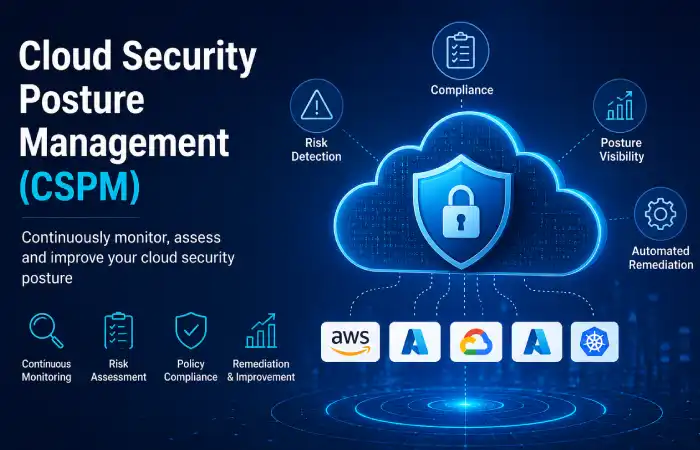
Cloud Security Posture Management (CSPM), is likely the most important factor to consider in today‘s cloud security. It provides continuous monitoring of cloud infrastructure for configuration mistakes, policy breaches and compliance failures which may lead to data breaches.
While traditional security tools are generally concerned with endpoint security and protection, CSPM tools can enable organizations to pinpoint cloud-specific risks before any security breach occurs.
How CSPM Works
A CSPM solution connects to your cloud accounts using secure APIs and continuously scans cloud resources such as:
- Virtual machines
- Storage buckets
- Databases
- Kubernetes clusters
- Identity and Access Management (IAM) policies
- Network security groups
- Serverless applications
Cloud configurations are checked with security best practice and compliance standards, and when a risky configuration is discovered the administrator is notified.
A complete protection plan should also include reliable backup and disaster recovery strategies to minimize downtime after incidents.
Cloud Workload Protection Platform (CWPP)
CSPM Clouds of course is only going to look on how the cloud (including the cloud native services) is configured. If your main concern is to secure your workload, then a CWPP is what you need.
A workload includes any computing resource such as:
- Virtual machines
- Containers
- Kubernetes pods
- Serverless functions
- Cloud applications
CWPP regularly observes workload actions to identify malware, anomalies, vulnerabilities, and any unauthorized modifications.
Key CWPP Features
Modern CWPP solutions typically include:
- Runtime threat detection
- Malware protection
- Vulnerability assessment
- File integrity monitoring
- Container image scanning
- Kubernetes security
- Serverless security
- Host intrusion detection
- Application control
CSPM vs CWPP
| Feature | CSPM | CWPP |
| Protects Cloud Configurations | Yes | No |
| Protects Running Workloads | No | Yes |
| Detects Misconfigurations | Yes | Limited |
| Runtime Protection | No | Yes |
| Compliance Monitoring | Yes | Partial |
| Malware Detection | No | Yes |
| Vulnerability Management | Partial | Yes |
Most leading security tools include cloud data encryption features to protect information both in transit and at rest.
SIEM Integration
Security Information and Event Management (SIEM) platforms collect and analyze security logs from different sources and types, such as cloud security monitoring tools.
Upon a SIEM solution being used alongwith a CSPM and CWPP, the security events within the environment are showcased in one single view.
Benefits of SIEM Integration
- Centralized log management
- Real-time threat correlation
- Automated incident response
- Compliance reporting
- Faster investigations
- Historical security analysis
- Improved visibility across hybrid environments
Popular SIEM Platforms
| SIEM Platform | Common Integrations |
| Microsoft Sentinel | Defender for Cloud, Wiz, Prisma Cloud |
| Splunk Enterprise Security | Wiz, Lacework, Orca, Prisma Cloud |
| IBM QRadar | Prisma Cloud, AWS Security Hub |
| Google Chronicle | Wiz, Google Cloud Security |
| Elastic Security | Most major cloud security vendors |
Threat Detection Tools
Cloud threat detection tools analyze behavior using sophisticated analytics, machine learning, and behavioral analysis that looks for anomalous activity throughout the cloud.
Instead of using any predefined signature, the modern platforms detect abnormal behavior which may be the part of an ongoing attack.
Common Threats Detected
Modern cloud security tools can identify:
- Credential theft
- Account compromise
- Ransomware activity
- Cryptocurrency mining malware
- Privilege escalation
- Lateral movement
- Data exfiltration
- Insider threats
- Suspicious API usage
- Container escape attempts
Many modern cloud security platforms support the Zero Trust security model through continuous verification and least-privilege access.
Choosing the Right Solution
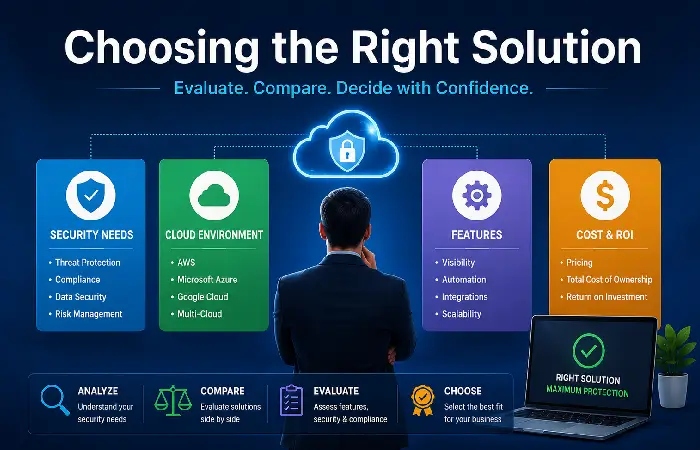
The most effective cloud security platform for you will depend on your cloud platform, organization size, regulations and security maturity. Although each of these platforms enables a similar set of core security features, its real advantages will be in its deployment model, integrations, automation and usability.
Before making a decision and evaluate the following factors:
- Supported cloud providers (AWS, Azure, Google Cloud)
- Multi-cloud capabilities
- Compliance requirements (ISO 27001, HIPAA, PCI DSS, SOC 2, GDPR)
- Container and Kubernetes support
- Identity and Access Management (IAM) analysis
- Threat detection and response
- Automation and remediation features
- Integration with existing security tools
- Licensing model and total cost of ownership
- Ease of deployment and management
Any management decision that would favor one platform over another due to number of features it offers, will likely lead to lesser value over the long term.
Enterprise security suites often include cloud data loss prevention capabilities to stop sensitive information from leaving authorized environments.
Frequently Asked Questions
What is the top cloud security tool in 2026?
There is not one single answer. Wiz is billed as being agentless and is multi-cloud, Prisma Cloud is great for large enterprises who need a lot of compliance and Microsoft Defender for Cloud works well for companies deeply embedded in Azure.
What is the difference between CSPM and CWPP?
The CSPM has only one—but a very critical—subject; the misconfigurations (absence of security controls, access controls, non-security and not-confidentiality of data, etc.), non-respect of the policy and risk of non-conformity.
Are cloud security tools required for SMBs?
Yes. Cloud security tools are used to scan or identify any threat or to make the cloud more secure, evident from the following point.
Can cloud security tools work with SIEM?
Yes. Numerous cloud security tools can be integrated with SIEM solutions like: Microsoft Sentinel, Splunk, IBM QRadar, Google Chronicle or Elastic Security. Allowing the cloud monitoring to be cascaded on one single platform creating a better incident response.
What is a CNAPP?
A Cloud-Native Application Protection Platform (CNAPP) consolidates various cloud security features or tools such as CSPM, CWPP, vulnerability management, identity security and runtime protection into a single platform to enable cloud security management.
Conclusion
As organizations keep scaling their cloud estate, choosing the right cloud security tools becomes essential to safeguard critical data, ensure compliance and lower the cyber risk. Today‘s platforms integrate traditional security with posture management, workload protection, machine learning-powered threat detection and response solutions to form integrated offerings.
Organizations looking for wider multi-cloud visibility should consider Wiz as a good option. Prisma Cloud has rich enterprise functions, Microsoft Defender for Cloud is good to use in Azure clouds, Orca Security is easier to deploy as it uses agentless scanning, and Lacework is good at behavioral threat detection.
Kashifa Jafar is a technology writer and contributor at FutureTechExpert with 4+ years of experience in technology writing and content creation.
Read Full Bio of Author →Sameena reviews selected health, wellness, technology, and digital content for clarity, factual presentation, and reader usefulness.
Read Full Bio of Reviewer →