

Last Updated: September 18, 2026
The future of mobile apps is shaped by the mobile app trends. They are changing the way how business interacts with customers, improves the user experience and utilizes mobile apps to generate income. In 2026, the future of mobile app will include AI, PWA, cross-platform app development, cloud and security.
Remember these may not always be the right trends for every product but in order to stay relevant in the market as well as to keep providing the best experiences to the end users you should know them and incorporate them into the next application you develop.
Expert Tip: Incorporate actual screenshots of app analytics dashboards, AI recommendation engines, and mobile security applications to enhance E-E-A-T and increase user engagement.
Table of Contents
What Are Mobile App Trends?
Mobile app trends are the newest technologies, development methods, design styles, and user experience techniques. They are what are affecting how mobile applications are made and used.
As smartphone technology advances (Global 5G, cloud computing, and AI), Mobile apps are getting smarter, faster, and more personalised. Trends are being identified by the businesses and developers to develop applications with better performance, security and user engagement.
By 2026, the future of app trends goes far beyond the simple feature. It has evolved to include AI integrated capabilities, cross-platform frameworks, cloud-based architecture, more robust security and performance safeguards, augmented reality (AR) immersive experiences, all of which helps organizations to cut investment and implementation costs but also improves customer satisfaction.
Key Drivers of Mobile App Trends
| Driver | Impact |
| AI Adoption | Smarter automation and personalization |
| 5G Networks | Faster mobile experiences |
| Cloud Computing | Scalable app infrastructure |
| Cybersecurity Requirements | Enhanced protection |
| Cross-Platform Frameworks | Faster development cycles |
| User Experience Demands | More intuitive applications |
Resource: Flutter Official Website
Artificial Intelligence in Mobile Applications
AI isn‘t just an upgrade anymore. It is becoming a core component of many mobile app experiences. Today, a mobile app is almost a non-starter without an AI component for recommendations, automations, predictive analytics, and even AI-powered personal assistants like Siri or Google Voice Search.
Popular AI Features
- Personalized recommendations
- AI chatbots
- Voice assistants
- Predictive search
- Fraud detection
- Content generation
AI Mobile App Comparison
| AI Capability | Traditional Apps | AI-Powered Apps |
| Personalization | Limited | Advanced |
| Customer Support | Manual | Automated |
| Search Results | Keyword-Based | Context-Aware |
| User Retention | Moderate | High |
Real-World Examples
- Netflix recommendations
- Spotify music suggestions
- Google Assistant
- AI shopping assistants
Per industry data, AI-native applications is not just a new feature for mobile but starting to be the foundation of mobile experience.
Cross-Platform Development
One of the most noticeable trends in mobile applications development in 2026 is cross platform development.
For developers they can develop for 2 platforms using 1 base code, this benefits the developer by saving development time hence reducing the cost.
Popular Frameworks
| Framework | Best For |
| Flutter | High-performance UI |
| React Native | Rapid development |
| Kotlin Multiplatform | Enterprise apps |
| .NET MAUI | Microsoft ecosystem |
Benefits
- Lower development costs
- Faster deployment
- Easier maintenance
- Consistent user experience
Framework Comparison (2026)
| Framework | Market Adoption |
| Flutter | ~42-46% |
| React Native | ~35-39% |
| Kotlin Multiplatform | Growing rapidly |
| MAUI | Enterprise adoption |
Progressive Web Applications
PWas are ‘combining the best of websites and the best of apps’.
PWAs are increasingly common also because they do not need to be installed using the app store, but have many of the features of native apps.
Key Features
- Offline access
- Push notifications
- Fast loading speeds
- Home screen installation
PWA vs Native Apps
| Feature | PWA | Native App |
| Installation Required | No | Yes |
| App Store Approval | No | Yes |
| Offline Support | Yes | Yes |
| Device Access | Moderate | Full |
| Development Cost | Lower | Higher |
Best Use Cases
- E-commerce
- News websites
- Educational platforms
- Service booking apps
Mobile App Personalization
People now want the app to know more about themselves, such as:
Today’s apps are built with machine learning and analytics to deliver incredibly personalized experiences.
Personalization Examples
- Product recommendations
- Dynamic content feeds
- Personalized notifications
- Customized interfaces
Benefits
| Benefit | Business Impact |
| Higher Engagement | Increased app usage |
| Better Retention | Lower churn rates |
| Improved Conversions | Higher revenue |
| Better User Experience | Increased satisfaction |
Security will also be one of the preeminent concerns of mobile app developers as more and more online security issues continue to evolve.
Enhanced Mobile Security
With increasing cyber threats, security remains a top priority for mobile app developers.
Security Trends
- Biometric authentication
- Multi-factor authentication
- End-to-end encryption
- Zero-trust architecture
- Secure cloud storage
Security Feature Comparison
| Security Method | Protection Level |
| Passwords | Basic |
| MFA | High |
| Biometrics | Very High |
| Behavioral Authentication | Advanced |
Applications that deal with personal or financial data are using more and more sophisticated security methods.
Cloud-Based Mobile Applications
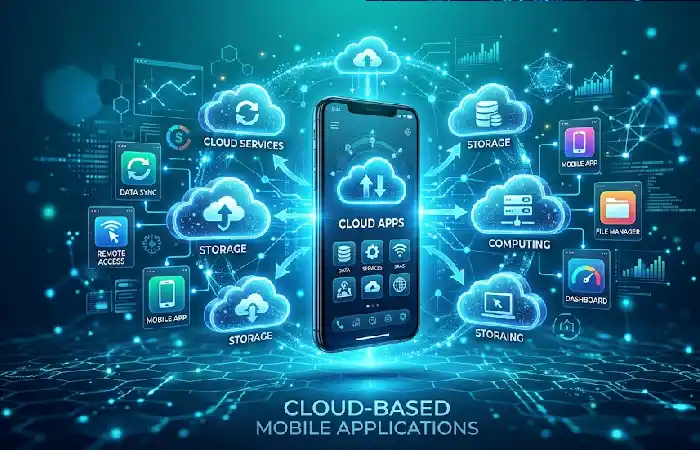
Cloud computing can allow mobile apps to provide scalable and adaptable experiences.
Benefits of Cloud-Based Apps
- Reduced storage requirements
- Real-time synchronization
- Better scalability
- Lower infrastructure costs
Popular Cloud Platforms
| Platform | Strength |
| AWS | Scalability |
| Google Cloud | AI Integration |
| Microsoft Azure | Enterprise Solutions |
Cloud-based applications are able to handle any number of users without crash and excellent performance.
Emerging Mobile Technologies
With the advent of the following new technologies, are impacting towards the new generation mobile application development:
Technologies to Watch
- Augmented Reality (AR)
- Virtual try-ons
- Interactive learning
- Product visualization
- Internet of Things (IoT)
- Smart home integration
- Connected healthcare devices
- Industrial monitoring
- Voice Interfaces
- Hands-free interactions
- Accessibility improvements
- Edge Computing
- Reduced latency
- Faster processing
- Enhanced privacy
- AI Agents
The use of AI-enabled agents that can perform a task on behalf of the user.
How Mobile Apps May Continue to Evolve
Future mobile applications will become:
- More intelligent
- More personalized
- More secure
- More automated
- More connected
Future Trend Outlook
| Trend | Growth Potential |
| AI-Native Apps | Very High |
| On-Device AI | Very High |
| Cross-Platform Development | High |
| PWAs | High |
| AR Experiences | Moderate to High |
| AI Agents | Emerging |
According to industry forecasts, application with AI, ambient intelligence on-device in all devices and cross-platform ecosystem will be leading the creation of mobile apps until 2027.
Frequently Asked Questions
What is the top trend for mobile applications in 2026?
The biggest trends include artificial intelligence, cross-platform development, PWAs, cloud computing, mobile personalization and the improved security.
In what ways is AI of significance in relation to mobile apps?
AI boost personalization, automation, customer assistant, recommendations and user experience.
Are they taking over native apps?
Actually not. PWAs are expanding rapidly on content and commerce for hosted activities, desktop apps including native are still vital for more sophisticated functions of devices.
Any framework for cross-platform development?
Flutter and React Native continued to be the most popular choices, with Kotlin Multiplatform seeing the uptake by enterprises.
How does cloud computing improve mobile apps?
Cloud platforms provide scalability, storage, synchronization, and better performance management.
Conclusion
In 2026, the key developers leading the way are smarter with artificial intelligence, more versatile with cross-platform tools, and more confident with improved security policies. Companies that tap into these future mobile app trends will create a faster, wiser, more enthralling mobile user experience.
As AI-native applications, PWAs, and cloud-powered ecosystems grow more sophisticated, the evolution of mobile applications will revolve around intelligent automation, frictionless experiences, and privacy-centred development. Companies that keep pace with these advancements will have a distinct advantage in engaging customers, retaining users, and building sustainable businesses.