

Last Updated: September 19, 2026
Web Application Technologies include the programming languages, frameworks, databases, cloud platforms, APIs and development tools used to develop modern web applications. From eCommerce, SaaS, business portals to enterprise applications, the choice of technology stack reflects on performance, scalability, security and the time to develop.
Today‘s web applications depend on a number of technologies working in conjunction. User interfaces are built on front-end technologies while the back-end processes the business logic.
Databases are used to hold the data with cloud computing platforms used to push the application across the globe. Having an understanding of these technologies can help businesses and developers develop an efficient product for the future.
Table of Contents
What Technologies Are Used for Web Applications?
In today‘s web development, web applications consist of a combination of several technologies that work in synergy to create fast, secure, and interactive websites. Unlike that in the past, web developers build up the web applications using a whole technology stack rather than just one programming language or piece of software.
Most web applications typically consists of four parts. On the front side it deals with everything the user can see or control. They then communicate with the back end, which controls the requests and communicates with the database, it is also where the actual business logic is located. APIs allow data transfer between different applications and clound platforms allow the web application to be hosted.
A modern web application typically consists of the following technology layers:
| Technology Layer | Purpose | Popular Technologies |
| Front-End | User Interface | React, Angular, Vue.js |
| Back-End | Business Logic | Node.js, Python, Java, PHP |
| Database | Data Storage | PostgreSQL, MySQL, MongoDB |
| Frameworks | Development Structure | Next.js, Django, Laravel |
| APIs | System Communication | REST, GraphQL |
| Cloud Platforms | Hosting & Scalability | AWS, Azure, Google Cloud |
| Development Tools | Productivity | GitHub, Docker, VS Code |
Today our tech stacks are often powered by TypeScript, React-based frameworks, PostgreSQL databases, cloud-native infrastructure, and API first architecture.
Front-End Technologies
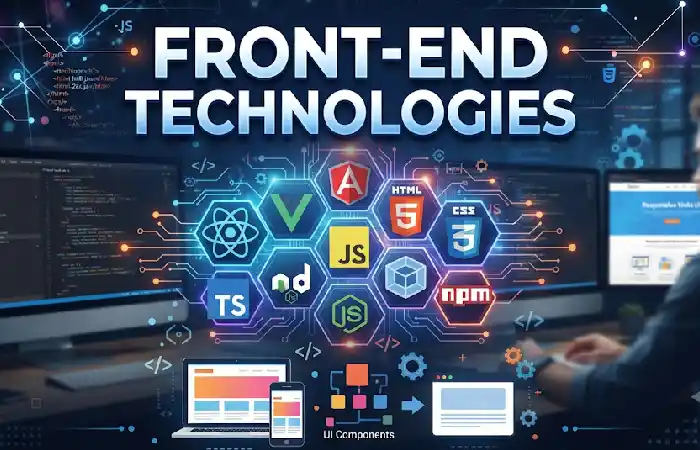
The front-end technology comes under operation at user end side.
Core Front-End Technologies
- HTML5
- CSS3
- JavaScript
- TypeScript
Popular Front-End Frameworks
| Framework | Best For | Key Benefits |
| React | Dynamic Applications | Large ecosystem |
| Angular | Enterprise Apps | Complete framework |
| Vue.js | Startups & SMEs | Easy learning curve |
| Svelte | High Performance Apps | Smaller bundle size |
Why Front-End Technologies Matter
Modern front-end frameworks provide:
- Responsive design
- Fast page loading
- Component reusability
- Better SEO
- Improved user experience
React, Vue, Angular, and Svelte remain top front-end frameworks due to their scalability and speed benefits.
Back-End Technologies
Back End technologies. This encompasses the server side of web applications.
Popular Back-End Technologies
| Technology | Language | Best Use Case |
| Node.js | JavaScript | Real-time applications |
| Python | Python | AI and data-driven apps |
| Java Spring | Java | Enterprise systems |
| ASP.NET | C# | Corporate applications |
| PHP Laravel | PHP | Content and business websites |
Core Responsibilities
Back-end technologies handle:
- User authentication
- Business logic
- API management
- Data processing
- Security controls
Node.js is still the, one of the most common back-end experience, while FastAPI and Django are continuing to soar as a result of their additional and increased use with AI and automations.
Databases for Web Applications
Databases: They are used for storing application data.
Relational vs NoSQL Databases
| Database | Type | Best For |
| PostgreSQL | Relational | Business applications |
| MySQL | Relational | Websites and eCommerce |
| MongoDB | NoSQL | Flexible applications |
| Redis | In-Memory | Caching and sessions |
Database Comparison
| Feature | PostgreSQL | MongoDB |
| Scalability | High | Very High |
| Structured Data | Excellent | Moderate |
| Performance | Excellent | Excellent |
| ACID Compliance | Yes | Limited |
Because it supports relational data, JSON storage, full-text search, and vector databases, it has become the database of first preference for a large number of popular web applications.
Web Application Frameworks
Frameworks makes development easier by enclosing it in reusable tools, structures and libraries.
Popular Frameworks
| Framework | Type | Technology |
| Next.js | Full-Stack | React |
| Django | Back-End | Python |
| Laravel | Back-End | PHP |
| Express.js | Back-End | Node.js |
| Spring Boot | Back-End | Java |
Benefits of Frameworks
- Faster development
- Better security
- Code organization
- Scalability
- Easier maintenance
Frameworks like React, Angular, Vue, Django and Laravel are still the base technologies that we develop applications on.
APIs and Integrations
Application Program Interface API This allows various services and systems to communicate with each other.
Common API Technologies
| API Type | Description |
| REST API | Standard web service communication |
| GraphQL | Flexible data querying |
| WebSockets | Real-time communication |
| gRPC | High-performance service communication |
Common Integrations
- Payment gateways
- CRM systems
- Email services
- Analytics tools
- Authentication providers
API-first architecture is the future of building scalable web applications.
Cloud Technologies
Serves as the platform (Hardware/Host/Scale) of Cloud.
Leading Cloud Providers
| Platform | Strength |
| AWS | Largest ecosystem |
| Microsoft Azure | Enterprise integration |
| Google Cloud | AI and analytics |
| Cloudflare | Edge computing |
Cloud Benefits
- Global deployment
- Automatic scaling
- Enhanced security
- Lower infrastructure costs
- Disaster recovery
Cloud-native development and edge computing still define the architecture of the web application in 2026.
Resources
| Cloud Platform | Official Website |
| AWS | Amazon Web Services |
| Azure | Microsoft Azure |
| Google Cloud | Google Cloud Platform |
Development Tools
Development tools (IDEs, debuggers, SVN, SVN) enhance efficiencies in coding, enable collaboration and accelerate deployment.
Essential Tools
| Tool | Purpose |
| Git | Version Control |
| GitHub | Code Collaboration |
| Docker | Containerization |
| VS Code | Code Editor |
| Postman | API Testing |
| Jenkins | CI/CD Automation |
Modern Development Trends
- DevOps automation
- Continuous integration
- Containerization
- Infrastructure as Code
- AI-assisted development
The software development workflows largely depend on Docker, GitHub Actions, CI/CD, and cloud native tooling.
How to Choose the Right Technology Stack
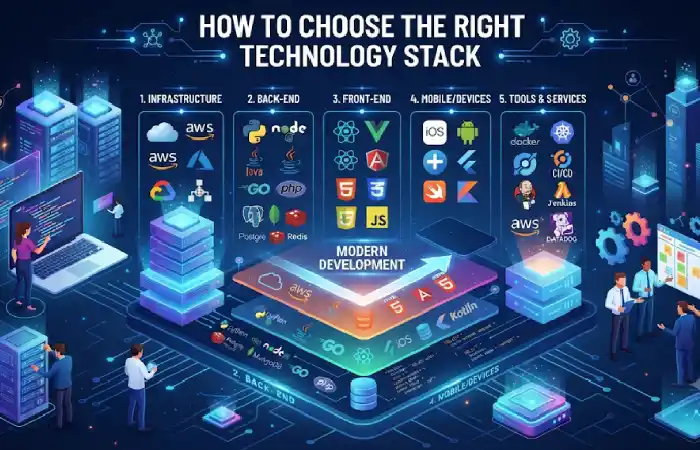
Choose a technology stack that suits the requirements, budget, number of scales you need and the developers you have.
Technology Selection Checklist
| Requirement | Recommended Technology |
| Startup MVP | React + Node.js + PostgreSQL |
| Enterprise Application | Angular + Java Spring |
| AI Platform | React + FastAPI |
| eCommerce Website | Next.js + Laravel |
| SaaS Product | Next.js + Node.js |
Key Considerations
- Scalability requirements
- Development speed
- Security needs
- Maintenance costs
- Community support
- Integration requirements
The optimal technology stack is the one that supports the business, not the one that follows the latest technology trends.
Frequently Asked Questions
What are web application technologies?
Web application Technologies’ include the tools, frameworks, programming languages, database and cloud plays used to develop web applications.
Which front-end technology is most popular?
React is still one of the most popular front-end libraries because of its ecosystem, its flexibility and the potential to scale it.
Which database is best for web applications?
PostgreSQL is often chosen for newer apps due to its robustness and ability to scale, along with having many features for writing modern apps.
What is a technology stack?
Technology Stacks are a collection of technologies from the front-end, back-end, database, API, and infrastructure that are used to create an application.
Which cloud platform is best?
AWS, Azure and Google Cloud are the favorite options as they allow high mobility between service options, best option depends on business need and current bases.
Conclusion
Web application technologies form the backbone of the modern era. With front end frameworks such as React and Vue, to back end technologies such as Node. JS and Python there is a role for every layer to contribute to the efficiency of an application in areas such as security, performance and scalability. When combined with frameworks, databases, web APIs, and cloud services can really come together to develop a powerful web application.
The majority of today projects occurring in 2026 will be adequately covered by using a development stack of React or Next.js, Node.js or FastAPI, PostgreSQL, REST or GraphQL APIs and cloud native infrastructure.