
 Kashifa Jafar
Technology Writer & Contributor
Kashifa Jafar is a technology writer and contributor at FutureTechExpert with 4+ years of experience in technology writing and content creation.
Read Full Bio of Author →
Kashifa Jafar
Technology Writer & Contributor
Kashifa Jafar is a technology writer and contributor at FutureTechExpert with 4+ years of experience in technology writing and content creation.
Read Full Bio of Author →
 Sameena Begum
Health, Technology & Digital Content Reviewer
Sameena reviews selected health, wellness, technology, and digital content for clarity, factual presentation, and reader usefulness.
Read Full Bio of Reviewer →
Sameena Begum
Health, Technology & Digital Content Reviewer
Sameena reviews selected health, wellness, technology, and digital content for clarity, factual presentation, and reader usefulness.
Read Full Bio of Reviewer →
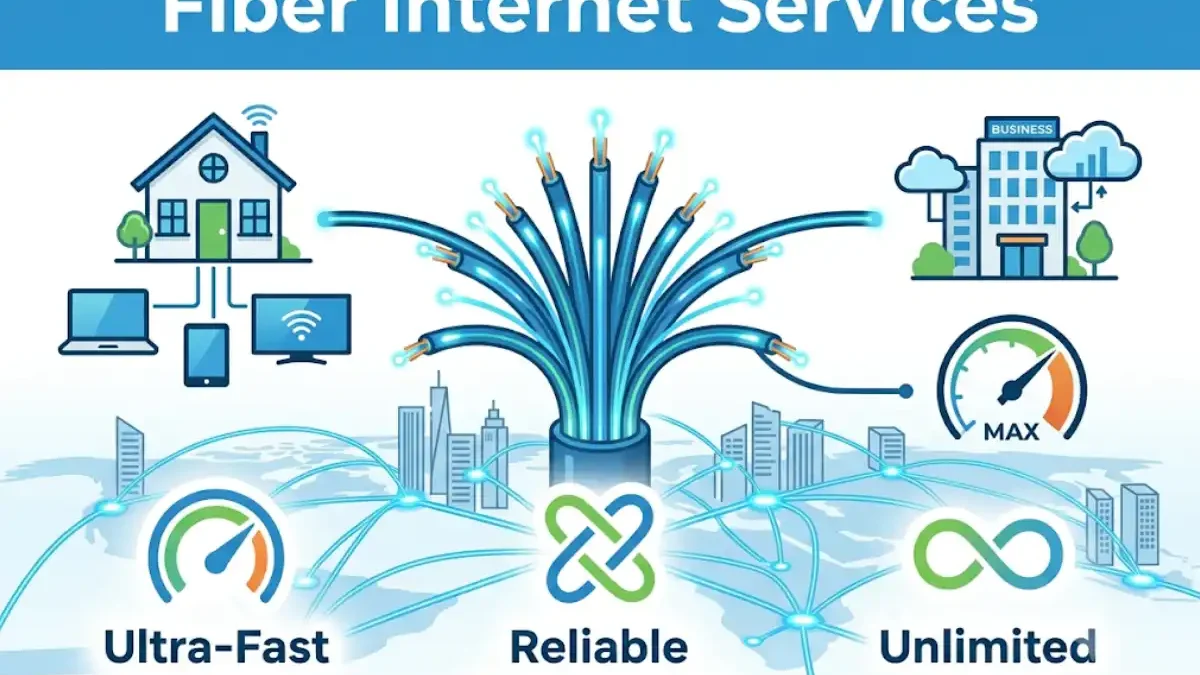
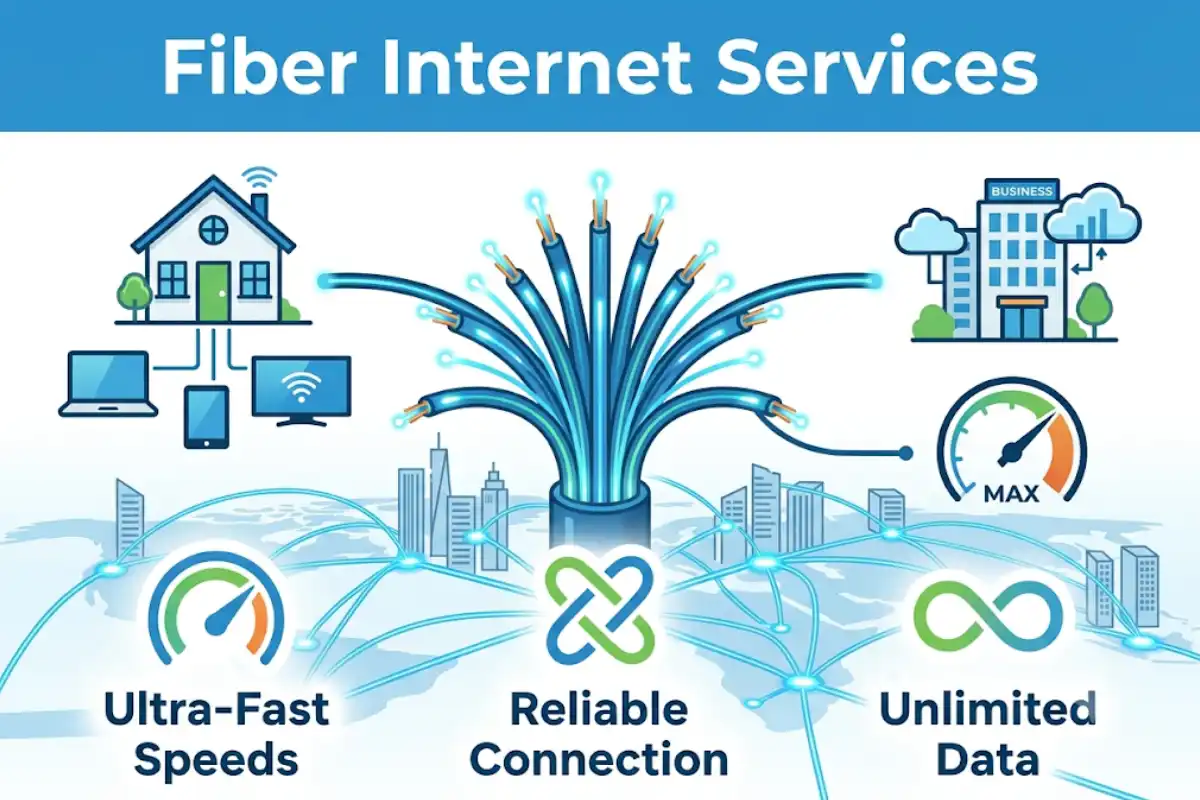
Fiber Internet Services will be the new norm for internet connections in 2026. With homes streaming 4K video, gamers requiring a minimum latency and the cloud living within the workplace, older broadband technologies are not cutting it. Fiber internet is simply the use of fiber-optic cables to communicate data via light signals providing enhanced speed, latency and uptime compared to traditional broadband.
If you‘re looking into getting fiber internet for your house or office, then knowing a little bit about how it functions and what to expect can help you make a more informed choice.
 This article is part of
Internet & Connectivity Resources
Table of Contents
What Are Fiber Internet Services?
Fiber delivers connectivity over fiber optic cable; a thin strand of either glass or plastic. Unlike a standard cable or DSL service, signals are not carried electrically, but with pulses of light.
This technology allows:
- Faster download speeds
- Faster upload speeds
- Lower latency
- Better reliability
- Higher bandwidth capacity
Most of the current providers offer a good range of bandwidths, for example from 300Mbps up to 10Gbps.
How Fiber Internet Works
Fiber internet involves the transfer of data via light signals over fiber-optic cables rather than electrical signals over typical copper ones. Because of this, data transfer rates over fiber can be significantly faster, and have less signal loss than other forms of transfer.
Typical Fiber Network Path
Internet Backbone
↓
Regional Fiber Network
↓
Local Distribution Hub
↓
Neighborhood Fiber Lines
↓
Optical Network Terminal (ONT)
↓
Home or Business Router
The ONT (Optical Network Termination) takes the light from the Fibre installation and turns it into an internet connection that you can use in your building.
Fiber is one of the fastest and most reliable types of internet services available today, offering superior speed and low latency for modern households.
Benefits of Fiber Internet
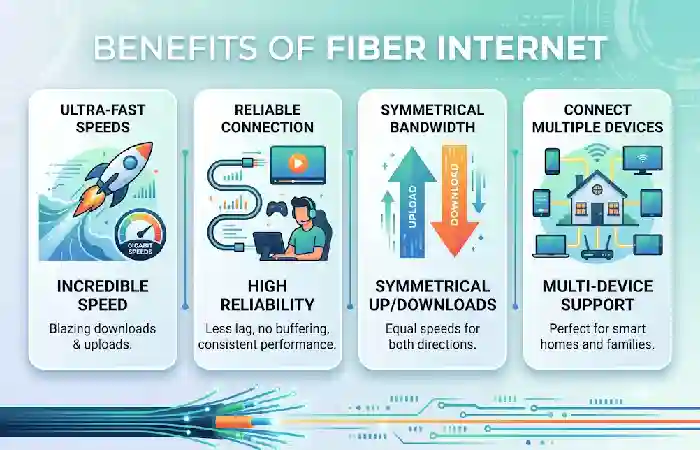
Fiber internet has emerged as the dominant broadband technology for residential and enterprise use due to the superior quality, reliability, and speed it offers. With ever-increasing bandwidth requirements for online, fiber networks are the solution to support current and future needs.
| Benefit | Description |
| Ultra-Fast Speeds | Up to 10 Gbps plans available |
| Symmetrical Speeds | Equal upload and download performance |
| Low Latency | Better for gaming and video conferencing |
| Reliability | Less affected by weather and interference |
| Scalability | Supports growing bandwidth demands |
| Future-Proof | Designed for next-generation applications |
Why It Matters
Activities such as:
- 4K and 8K streaming
- Cloud gaming
- Remote work
- Smart home automation
- Large file transfers
all perform significantly better on fiber connections.
Fiber infrastructure improves overall internet connectivity by providing stable connections with minimal signal degradation and downtime.
Fiber vs Cable Internet
When selecting your broadband connection, many consumers compare Fiber Internet vs Cable Internet. While they both provide high speed internet connections, there are distinct differences in the speed, reliability, latency and long-term scalability for both technologies. Consider these critical differences when choosing an internet connection for your home or business.
Fiber vs Cable Comparison Table
| Feature | Fiber Internet | Cable Internet |
| Download Speed | Up to 10 Gbps | Up to 2 Gbps |
| Upload Speed | Up to 10 Gbps | Typically 20–100 Mbps |
| Latency | Very Low | Moderate |
| Reliability | Excellent | Good |
| Congestion Impact | Minimal | Can slow during peak times |
| Future Scalability | Excellent | Moderate |
Resource Links
| Resource | Purpose |
| AT&T Fiber | Fiber plans and availability |
| Verizon Fios | Residential fiber services |
| Google Fiber | Gigabit fiber offerings |
| HighSpeedInternet.com | ISP comparisons |
Fiber Internet Speed
Fiber Internet Speed is the key factor why customers and business use fiber-optic broadband instead of other internet technology. As data transferred by light signals instead of electrical signals, internet speed over fiber is extremely fast with low lag and stability.
With the rise of internet usage in 2026, fiber networks offer the high capacity lines required for streaming, gaming, teleworking, cloud computing and smart home linking.
Typical Fiber Speed Tiers (2026)
| Plan Tier | Download Speed | Best For |
| Basic Fiber | 300 Mbps | Small households |
| Standard Fiber | 500 Mbps | Streaming and remote work |
| Gigabit Fiber | 1 Gbps | Large families and gamers |
| Multi-Gig Fiber | 2–10 Gbps | Power users and businesses |
Estimated Performance
| Activity | Recommended Speed |
| HD Streaming | 10 Mbps |
| 4K Streaming | 25 Mbps |
| Online Gaming | 25–50 Mbps |
| Video Conferencing | 20 Mbps |
| Smart Homes | 100+ Mbps |
| Multiple Users | 500 Mbps+ |
Fiber Internet for Home
Residential Fiber services offer the people of today a strong, dependable connection to the outside world.
Common Home Uses
- Streaming multiple devices simultaneously
- Online gaming
- Smart security cameras
- Remote work
- Virtual learning
The reason they are looking at fiber is because the upload speed is as vital as the download speed.
Fiber has become a popular choice for home internet because it supports streaming, gaming, remote work, and smart home devices simultaneously.
Fiber Internet for Businesses
Reliable connectivity is essential for the day-to-day running of business.
Business Advantages
| Feature | Benefit |
| Cloud Application Access | Faster performance |
| VoIP Communications | Clearer calls |
| Data Backup | Faster uploads |
| Video Conferencing | Reduced lag |
| Network Reliability | Less downtime |
Business fiber plans often include:
- Service Level Agreements (SLAs)
- Static IP addresses
- Priority support
- Enhanced security options
Fiber Network Infrastructure
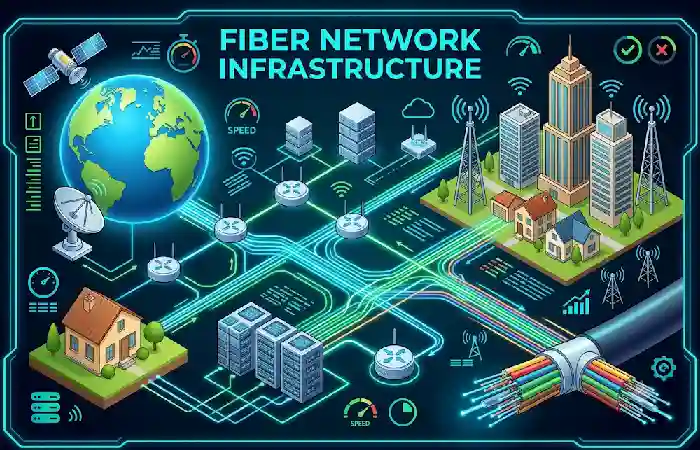
Fiber networks require large investments in their infrastructure.
Key Components
- Backbone Fiber Networks
- Distribution Hubs
- Local Fiber Lines
- Optical Splitters
- Optical Network Terminals (ONTs)
Further, the governments & ISPs move for the future digital needs, they are still pushing the deployment of fiber pipes.
Before choosing a fiber plan, compare different internet service providers to find the best combination of speed, coverage, and pricing.
Fiber Internet Availability
The presence of fiber is ever expanding around the world, albeit at different speeds in different areas.
Factors Affecting Availability
- Population density
- Existing infrastructure
- ISP investment levels
- Local regulations
How to Check Availability
- Visit provider websites.
- Enter your address.
- Compare available plans.
- Review speeds and pricing.
- Confirm installation requirements.
Fiber technology is considered the gold standard of broadband internet, delivering significantly faster upload and download speeds than many traditional connections.
Choosing a Fiber Internet Service
Choosing the “best” provider is not just about comparing speed.
Evaluation Checklist
| Factor | Why It Matters |
| Speed Options | Match your usage |
| Upload Performance | Important for cloud work |
| Reliability | Consistent experience |
| Contract Terms | Avoid hidden fees |
| Customer Support | Faster issue resolution |
| Availability | Coverage in your area |
Questions to Ask
- Are speeds symmetrical?
- Is equipment included?
- Are there data caps?
- Is professional installation required?
- What support options are available?
One of the biggest advantages of fiber is its exceptional internet speed and performance, making it ideal for bandwidth-intensive activities.
FAQ
Does fiber connections have higher speeds than cable.
Yes. Fiber typically offers faster download and upload speeds as well as lower latency.
What speed should I get for fiber internet?
The majority of households get by fine with 500 Mb/s to 1 Gbit/s plans, with multi-gig services serving the needs of larger families.
Is fiber internet offered everywhere?
No. It can vary depending on the community infrastructure and the number of providers covered.
Is fiber broadband worth it?
When it comes to streaming, gaming, working from home and smart home usage, the best broadband service typically a fiber connection.
Is the weather a factor for fiber internet?
Fiber has proven to be much more resilient with respect to weather blindess than legacy cable networks.
Conclusion
Fiber Internet Services is the industry standard for residential and business broadband in 2026. With equal upload and download speeds, low latency, excellent reliability and cutting-edge infrastructure, fiber provides a superior experience to most established alternatives. Knowing how fiber works, comparing providers, finding out what is available and choosing the best plan can help users enjoy better service and get ready for growing connected experiences.
Kashifa Jafar is a technology writer and contributor at FutureTechExpert with 4+ years of experience in technology writing and content creation.
Read Full Bio of Author →Sameena reviews selected health, wellness, technology, and digital content for clarity, factual presentation, and reader usefulness.
Read Full Bio of Reviewer →