

Last Updated: September 13, 2026
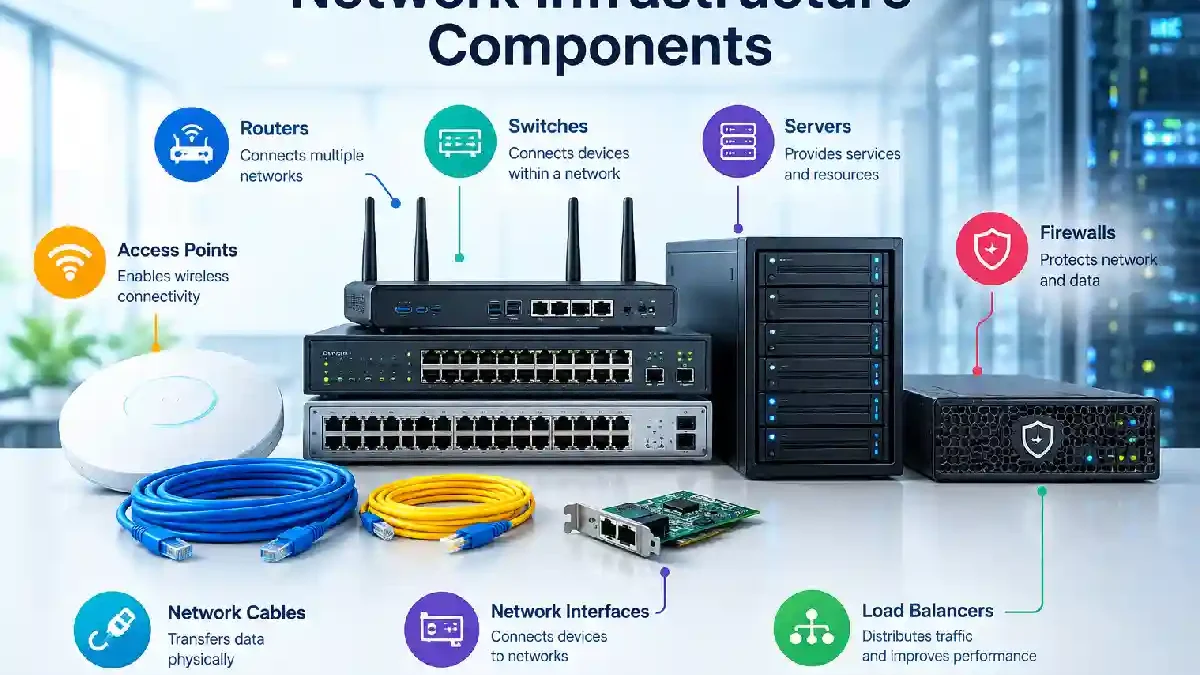
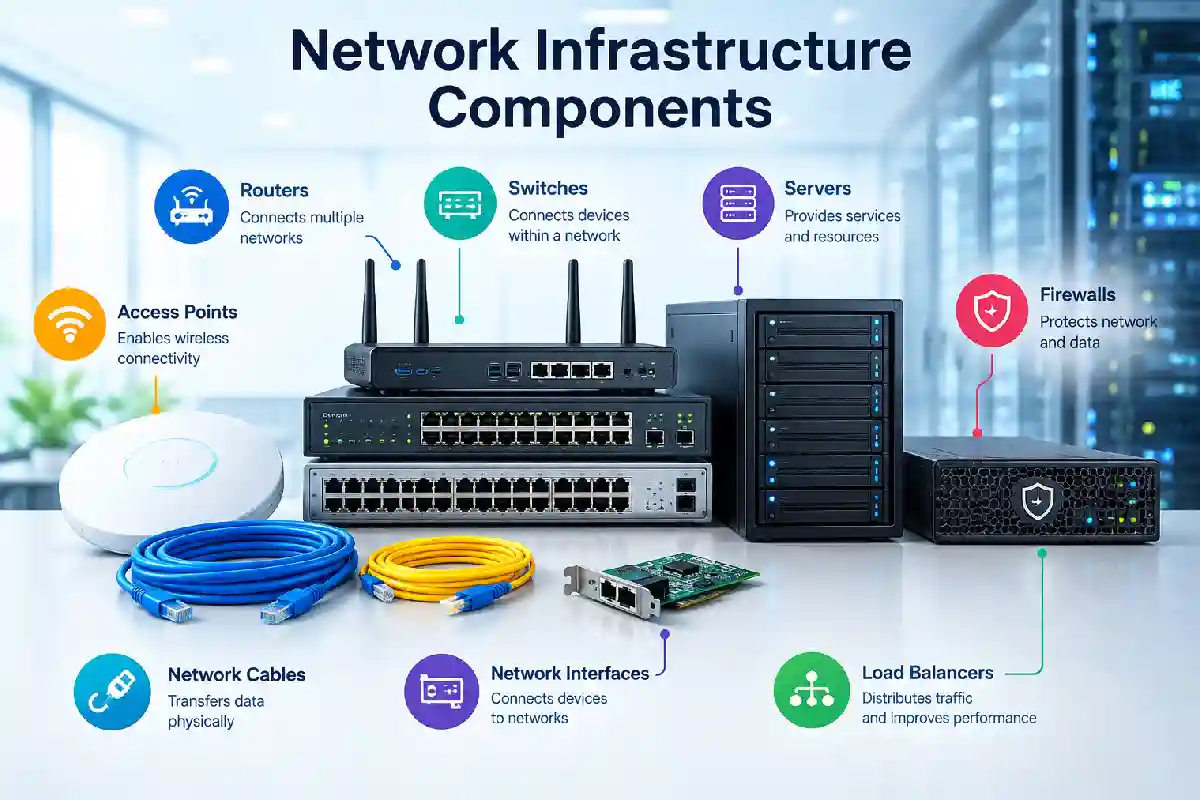
Network Infrastructure Elements include all the hardware and software facilities that establish, manage and maintain the network. These elements include facilities that connect, control and secure the network.
With all organizations moving toward cloud services, working remotely, and expanding operations in the digital world, getting a solid grasp of the pieces making up network infrastructure has become inevitable for IT professionals, business owners and tech lovers alike.
Table of Contents
What are Network Infrastructure Components?
Network infrastructure: are the physical and virtual resources that form the network and enable network connectivity, communications, operations, and management.
They are also an essential part of our modern networking infrastructure as they allow data to flow across endpoints, servers, applications as well as the in cloud.
Core Categories
| Category | Function |
| Routing Devices | Network vs, specifically; various network traffic. |
| Switching Devices | Connect to local devices Don‘t sync – The arrow icon means not to send data to local computer. |
| Servers | Offering services and resources |
| Security Devices | Use network to protect assets: |
| Wireless Devices | Enable Wi-Fi connectivity |
| Cabling | Transfer the data physically. |
| Interfaces | Connect devices to networks. |
| Load Balancers | Optimize application performance. |
Routers and Switches
Routers and switches are vital parts of network infrastructure, and their role is essential in today‘s communication and data transfer operations. These two devices all play critical roles in networking, though they have diverse functions they work together in establishing fast, stable and safe connectivity, that capture today‘s need.
Routers
A router is a device used for interconnecting networks. Routers are used as traffic officers for data packets, selecting the best path between two networks, such as between a local network (for office users) and the internet.
Common router functions include:
- Internet connectivity
- Traffic routing
- VPN support
- Network segmentation
- Bandwidth management
Switches
Switches.Connected to devices within the LAN are switches.
Benefits include:
- Faster communication
- Less network congestion.
- Improved scalability
- VLAN support
Router vs Switch Comparison
| Feature | Router | Switch |
| Connects Networks | Yes | No |
| Connects Devices | Limited | Yes |
| IP Routing | Yes | No |
| Internet Access | Yes | Indirect |
| Security Features | High | Moderate |
Network Servers
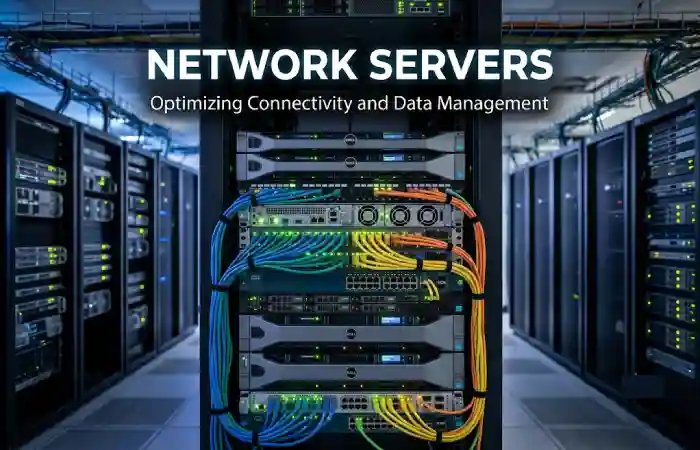
Servers centralize resources, applications and services across the network.
Common Server Types
| Server Type | Purpose |
| File Server | Files are either stored or shared |
| Web Server | Hosts websites |
| Mail Server | Manages email |
| Database Server | Stores business data |
| Application Server | Performs payment transactions completes payment transactions and conducts business applications. |
Why Servers Matter
- Centralized management
- Better security
- Resource sharing
- Supports backup and recovery.
- Improved collaboration
Most contemporary businesses now employ a hybrid approach, where they integrate both on-premise servers and cloud infrastructure, adding to the overall flexibility and scalability in such enterprise systems.
Firewalls and Security Devices
Cyber security continues to be one of the most important issues of 2026. Firewalls and security devices inspect and regulate incoming and outgoing network traffic according to established security policies.
Security Components
- Next-Generation Firewalls (NGFW)
- Intrusion Detection Systems (IDS)
- Intrusion Prevention Systems (IPS)
- VPN Gateways
- Secure Web Gateways
Security Comparison
| Security Device | Purpose |
| Firewall | Traffic filtering |
| IDS | Threat detection |
| IPS | Threat prevention |
| VPN Gateway | Secure remote access. |
| Web Gateway | Web protection |
Access Points
-wireless AP‘s connect network devices to each other using Wi-Fi.
Modern Wi-Fi 6E and Wi-Fi 7 access points deliver:
- Higher throughput
- Lower latency
- Higher device density. This means that there are more piles per square-inch area of the device pack, which would potentially increase the able to be done on a pack quickly.
- Enhanced coverage
Access Point Benefits
- Wireless connectivity
- Mobility support
- Network scalability
- Enhanced user experience
- Use Multiple Access Points Organizations often use multiple access points for continuous coverage across the office and campus.
Network Cables
Wireless networking is expanding, but network cables continue to be important for dependable and fast data transfer.
Common Cable Types
| Cable Type | Speed | Typical Use |
| Cat5e | As high as 1 Gbps | Small offices |
| Cat6 | For example, transfers with 10 Gbps., or even higher. | Business networks |
| Cat6a | Any reading rate lower than 10 Gbps | Data centers |
| Fiber Optic | 100+ Gbps | Enterprise backbones |
Why Fiber Is Growing
Fiber-optic cables offer:
- Bandwidth up to 1000Gb.
- Long-distance connectivity
- Low latency
- Improved reliability
More details we attached our cluster article of Fiber Optic Communication and Network Infrastructure.
Network Interfaces
A Network Interface Card allows users to connect to the network.
Types of Network Interfaces
- Ethernet NICs
- Wireless NICs
- Fiber Channel Adapters
- Virtual Network Interfaces
Today’s servers typically have multiple 1GbE ports.
Load Balancers
Load balancers. These are devices used to distribute network traffic. Load balancers enable organizations to ensure the availability and performance of their applications.
Key Benefits
- Reduced downtime
- Provides a better user experience as it is easier to use than spell check, and the needs for the user to use the wrong spelling disappears.
- Improved scalability
- Traffic optimization
- Assistancd for disaster recovery.
Load Balancer Types
| Type | Function |
| Hardware Load Balancer | Dedicated appliance |
| Software Load Balancer | Virtual deployment |
| Cloud Load Balancer | -managed cloud service, for example. |
Resource: Cloudflare Load Balancing
Network Infrastructure Components for Businesses
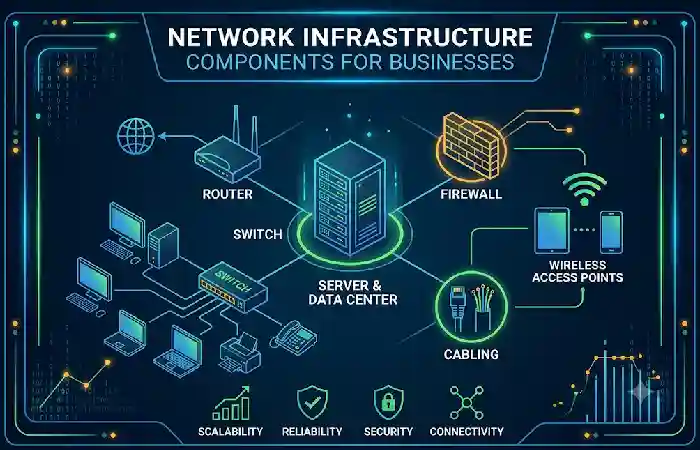
Companies need all the constituencies to develop secure and scalable networks.
Typical Business Network Stack
| Layer | Components |
| Connectivity | Routers, Switches |
| Wireless | Access Points |
| Security | Firewalls, IDS/IPS |
| Services | Servers |
| Performance | Load Balancers |
| Cabling | Fiber, Ethernet |
| Management | Monitoring Tools |
2026 Enterprise Trends
| Trend | Adoption Growth |
| Cloud Networking | High |
| SD-WAN | High |
| Zero Trust Security | Very High |
| AI Network Monitoring | Rapid |
| Wi-Fi 7 Deployment | Growing |
Choosing the Right Network Components
Selecting the appropriate network infrastructure components depends on:
Considerations
- Business size
- Number of users
- Security requirements
- Budget
- Scalability needs
- Plans for cloud integration
Buying Checklist
- Future growth support
- Vendor compatibility
- Security capabilities
- Management simplicity
- Performance requirements
- Technical Support Available
Organizations should concentrate on wide coverage, scalability, and security instead of security in initial costs.
Frequently Asked Questions
What are the major elements of the network infrastructure?
The basic building blocks are; the routers, switches, servers, firewall, access points, network cables, network interfaces and load balancers.
Why is it that routers and switches are so important?
The function of the router is to interconnect networks and to route the traffic passing through; the switch interconnects devices within a network and allows them to communicate.
What is the purpose of a firewall?
Any computer connected to the network is protected from a firewall, which examines and filters the both inward and outward traffic, from the network.
Is it are wireless networks replacing cable?
No, for high speed, low latency and reliability, hardwired infrastructure is still considered essential while they are more flexible.
In what way does load balancing optimize performance?
A load balancer is a device or software that acts as a reverse proxy in order to spread requests across multiple servers. Load balancers increase application availability and make sure no one server gets overwhelmed.
Conclusion
Network Infrastructure Components form the foundation of any state-of-the-art network. Every network comprises of routers, switches, servers, firewalls, access points, network cables, network interfaces and load balancers which together provide connectivity, security and performance.
With the ongoing adoption of cloud use, AI based work, and hybrid working environments, selecting the right network infrastructure elements will be crucial for future success. A strategic network can enhance both working efficiency and business security, and also enable the scalability of the network in future.