

Last Updated: September 13, 2026
Network Infrastructure Management refers to the activities to monitor, sustain, optimize, and protect network components, links, and services as a foundation for smooth conducting of business. With the rapid growth of cloud computing, remote work, Internet of Things, and fast Internet access, network infrastructure management is critical to ensuring high performance, minimizing downtime, and strengthening security.
The implementation of a systematic network management plan can enhance its visibility and efficiency in any circumstances, whether it is a small business network or enterprise-wide complex architecture.
Table of Contents
What is Network Infrastructure Management?
Network Infrastructure Management refers to the Administration, administration of the hardware, software and services that reside within the network of any organization. It also includes the monitoring, maintenance, and optimization of network resources and enhance overall network performance, security and reliability of network resources like routers, switches, firewall, servers, wireless access points, cloud networking resources etc.
Managing network infrastructure has become even more crucial as organizations significantly depend on cloud applications, work from home, connected devices in the Internet of Things (IoT), and real-time communication.
Network Infrastructure Management includes but is not limited to the planning, operation, administration of the following:
- Routers
- Switches
- Firewalls
- Wireless Access Points
- Servers
- Network Cables
- Cloud Networking Components
The goal is to ensure networks remain:
- Available
- Secure
- Scalable
- Efficient
- Reliable
Core Management Functions
| Function | Purpose |
| Monitoring | Troubleshoot 15. Network problems met function and how to troubleshoot them. |
| Performance Management | Explain a method to optimize the speed and accuracy to ensure. |
| Configuration Management | Keep device settings as they are. |
| Security Management | Network.50003.4 Protect network resources |
| Automation | Automate here activities don‘t reinvent the wheel. |
| Troubleshooting | Troubleshoot connectivity issues |
Network Monitoring
Network Monitoring is the practice of actively monitoring, analyzing, and tracking the performance, availability and health of network devices, applications and connections. It allows an IT Department to proactively identify problems before they affect end users.
Since today‘s organizations rely heavily on cloud computing, telecommuting, internet-based communication tools (VoIP), and mission critical applications, network monitoring has emerged as an essential component of network infrastructure management. With the help of monitoring tools, administrators can gain instant insight into network performances that allows for swift diagnosis of bottlenecks, outages or intrusions.
Key Monitoring Metrics
| Metric | Importance |
| Latency | How long it takes to get a response to a question. |
| Packet Loss | Identifies any transmission failures; |
| Bandwidth Usage | Prevents congestion |
| Device Availability | Ensures uptime |
| CPU & Memory Usage | Detects overloads |
Benefits
- Identify how to detect issues more quickly
- Reduced downtime
- What enhances usability? Better user experience
- Improved SLA compliance
Utilising today’s emerging monitoring standards, intelligent monitoring solutions provide AI led diagnosis that find the anomalies long before the user does.
Network Performance Management
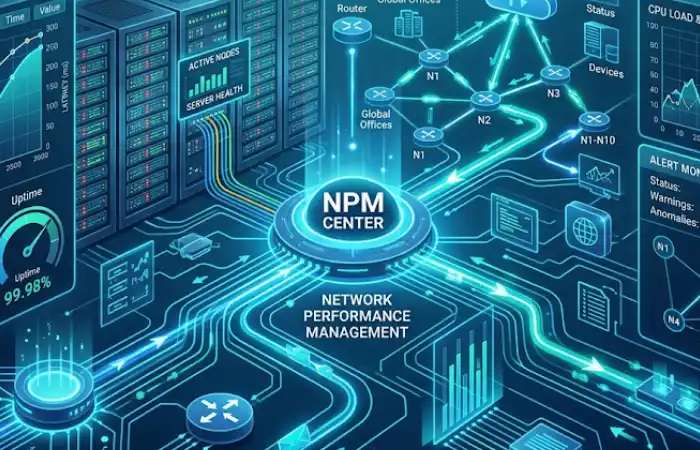
Performance management of a network, more commonly called Network Performance Management (NPM), is intended to advance the performance, reliability, and efficiency of a network.
Common Performance Challenges
| Challenge | Impact |
| Bandwidth Congestion | Slow applications |
| High Latency | What can seriously hurt your chances on the freelance market are your user experiences. |
| Packet Loss | Service interruptions |
| Device Failures | Downtime |
Performance Optimization Techniques
- Traffic prioritization (QoS)
- Load balancing
- Bandwidth management
- Capacity planning
- Performance analytics
Organizations using proactive performance management tend to perform better in response to application demand, avoiding network bottlenecks.
Network Configuration Management
Configuration management ensures the network devices are configured properly
Key Activities
- Configuration backups
- Change tracking
- Version control
- Compliance verification
- Policy enforcement
Benefits
| Benefit | Description |
| Consistency | Standardized settings |
| Faster Recovery | Fast recovery time. |
| Compliance | Regulatory adherence |
| Reduced Errors | Reduced manual errors |
Automation of configuration management is a key to reduce operational risk.
Network Device Management
Network device management The handling and administration of the hardware before and during its lifetime.
Devices Commonly Managed
- Routers
- Switches
- Firewalls
- Wireless Controllers
- Load Balancers
- Network Appliances
Device Management Tasks
- Firmware updates
- Security patching
- Health monitoring
- Capacity planning
- Asset tracking
Device management leads tobetter reliabilityand longer equipment life.
Network Troubleshooting
Quickly isolating network problems with troubleshooting.
Common Network Problems
| Problem | Possible Cause |
| Slow Network | Congestion |
| Connectivity Loss | Device failure |
| DNS Issues | Misconfiguration |
| Wireless Problems | Signal interference |
| Security Incidents | Opening attachments could lead to viruses infecting the system. |
Troubleshooting Process
- Describe the problem.
- Collect diagnosis information.
- Isolate root cause. Identify solutions The second thing you need to do is to identify appropriate solutions.
- Use a corrective action . Create a corrective action and sound on it by clicking on it.
- Verify resolution
- Document findings
Samples of Images: Engineer investigates the network devices via monitoring tools.
Network Automation
Network automation is the use of software and scripting to automates common networking tasks.
Automated Tasks
- Device provisioning
- Configuration deployment
- Compliance checks
- Performance monitoring
- Security updates
Benefits of Automation
| Benefit | Impact |
| Faster Operations | Less effort. |
| Improved Accuracy | Lower rate of human errors |
| Enhanced Security | Consistent policies |
| Scalability | Easier expansion |
By 2026, automation driven by AI is the norm across enterprise network management.
Network Management Tools
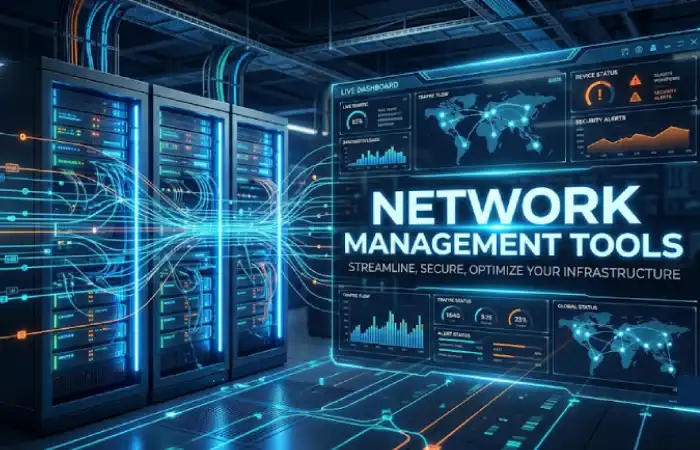
Network management capabilities offer a Birds-eye view and powerful control across all the infrastructure.
Popular Network Management Tools (2026)
| Tool | Primary Focus | Official Resource |
| PRTG Network Monitor | Monitoring | PRTG |
| SolarWinds NPM | Performance Management | SolarWinds |
| ManageEngine OpManager | Infrastructure Monitoring | ManageEngine OpManager |
| Datadog Network Monitoring | Cloud Visibility | Datadog |
| Cisco DNA Center | Network Automation | Cisco |
Comparison Table
| Feature | Basic Tools | Enterprise Platforms |
| Monitoring | Yes | Advanced |
| Automation | Limited | Extensive |
| AI Analytics | Basic | Advanced |
| Multi-site Support | Limited | Full |
| Cloud Integration | Moderate | Extensive |
Network Infrastructure Maintenance
Maintenance Provides long-term reliability and performance of the network.
Essential Maintenance Activities
- Firmware updates
- Hardware inspections
- Security patching
- Configuration reviews
- Backup verification
- Capacity assessments
Maintenance Schedule Example
| Activity | Frequency |
| Device Health Check | Daily |
| Performance Review | Weekly |
| Configuration Backup | Weekly |
| Security Audit | Monthly |
| Capacity Planning | Quarterly |
Best Practices for Network Management
Utilizing established best practices from research and practical experience ensures operations stay safe and efficient.
Recommended Best Practices
- Enabler 4 Implementing continuous monitoring.
- Automate routine jobs.
- Have backups of the configuration files.
- Utilize urgent and security patches in a timely manner.
- Keep a record of any changes made to the network.
- Establish a cycle for conducting performance audits.
- Good. You have a solution that successfully delivers the traffic. But you need a way of understanding and controlling the traffic across your network.
- Ensure that your IT support maintains its skills by providing ongoing training to its staff.
- Prepare a disaster recovery plan.
- Utilize centralized management systems.
The organizations who take on these would most likly have better uptime and a strong cybersecurity resilience.
FAQ
Defining Network Infrastructure Management:
Network Infrastructure Management focuses on monitoring, managing, securing and optimizing Network devices and services within a network to maintain overall network connectivity and performance.
What is the significance of monitoring networks?
Network monitoring ensures early detection of problems reduces downtime. Increases performance and sustains the service available.
Which is the best network management tool?
PRTG, SolarWinds, ManageEngine OpManager, Datadog, Cisco DNA Center have gained popularity.
What are the benefits of network automation?
Automation cuts down on manual labor, enhances accuracy, reduces human errors, and expedites network management.
Question:How is network monitoring different from network management?
Monitoring involves observation of the performance of the network, whereas management deals with the observations, maintenance, security, configuration, troubleshooting, and optimization of the network.
Conclusion
Network Management. Network Infrastructure Management is an essential part of today‘s contemporary IT functioning. By utilizing network monitoring, fine-tuning of network performance, configuration management, fault detection and resolution, automation and proactive care, a robust, secure and expandable network can be established.
AI insights and automation will advanced further by 2026. Businesses adopting new network management approaches will enjoy higher efficiency at lower cost, and thus be able to sustain superior performance.